Team Psychological Safety Training | Nick Jonsson & Dona Amelia – Certified Practitioners
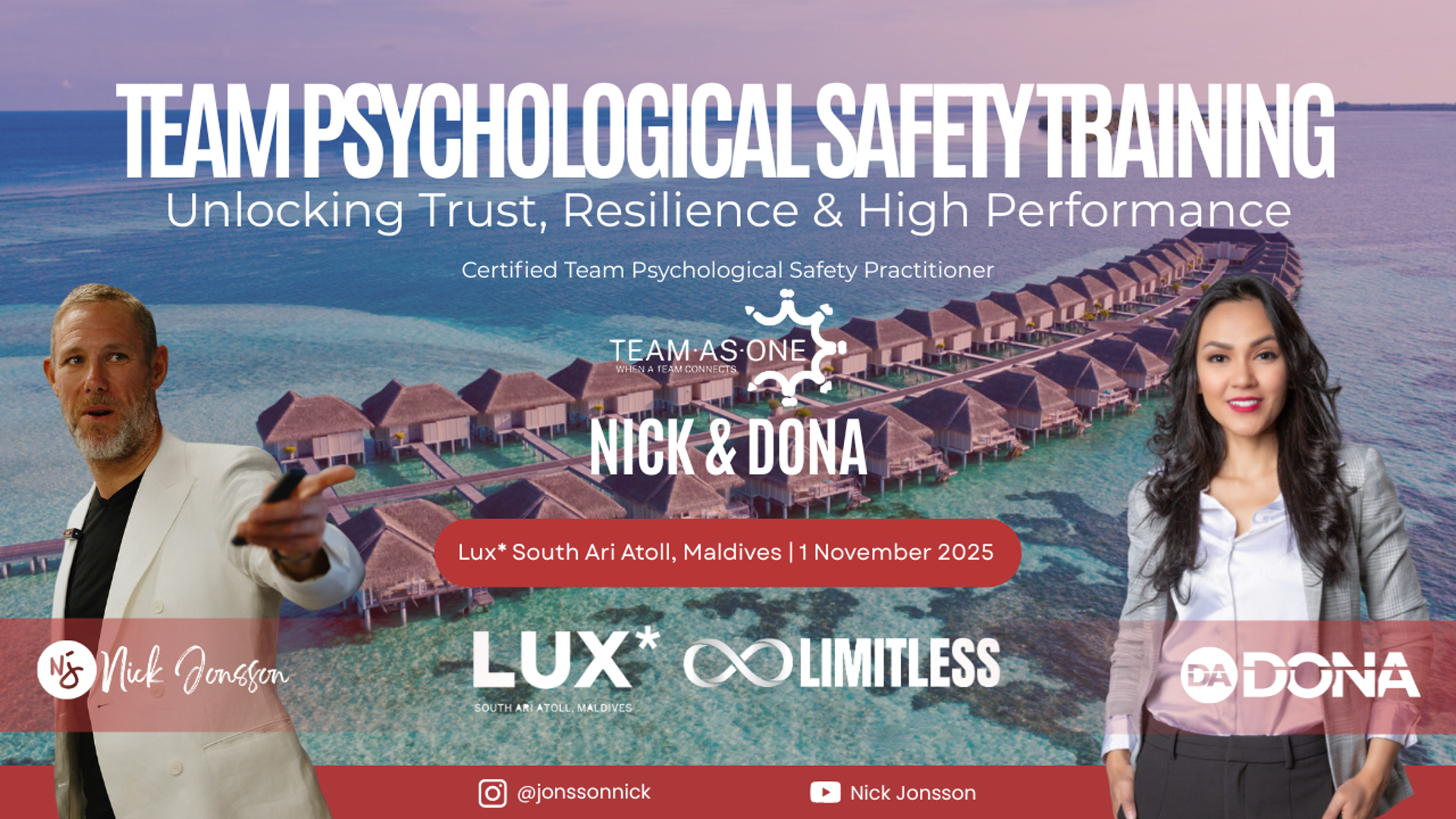
Team Psychological Safety Training at LUX* South Ari Atoll, Maldives
Where Trust, Courage, and Connection Create Exceptional Teams
Facilitated by Certified Team Psychological Safety Practitioners — Nick Jonsson & Dona Amelia
A Transformative Workshop for Leaders in Paradise
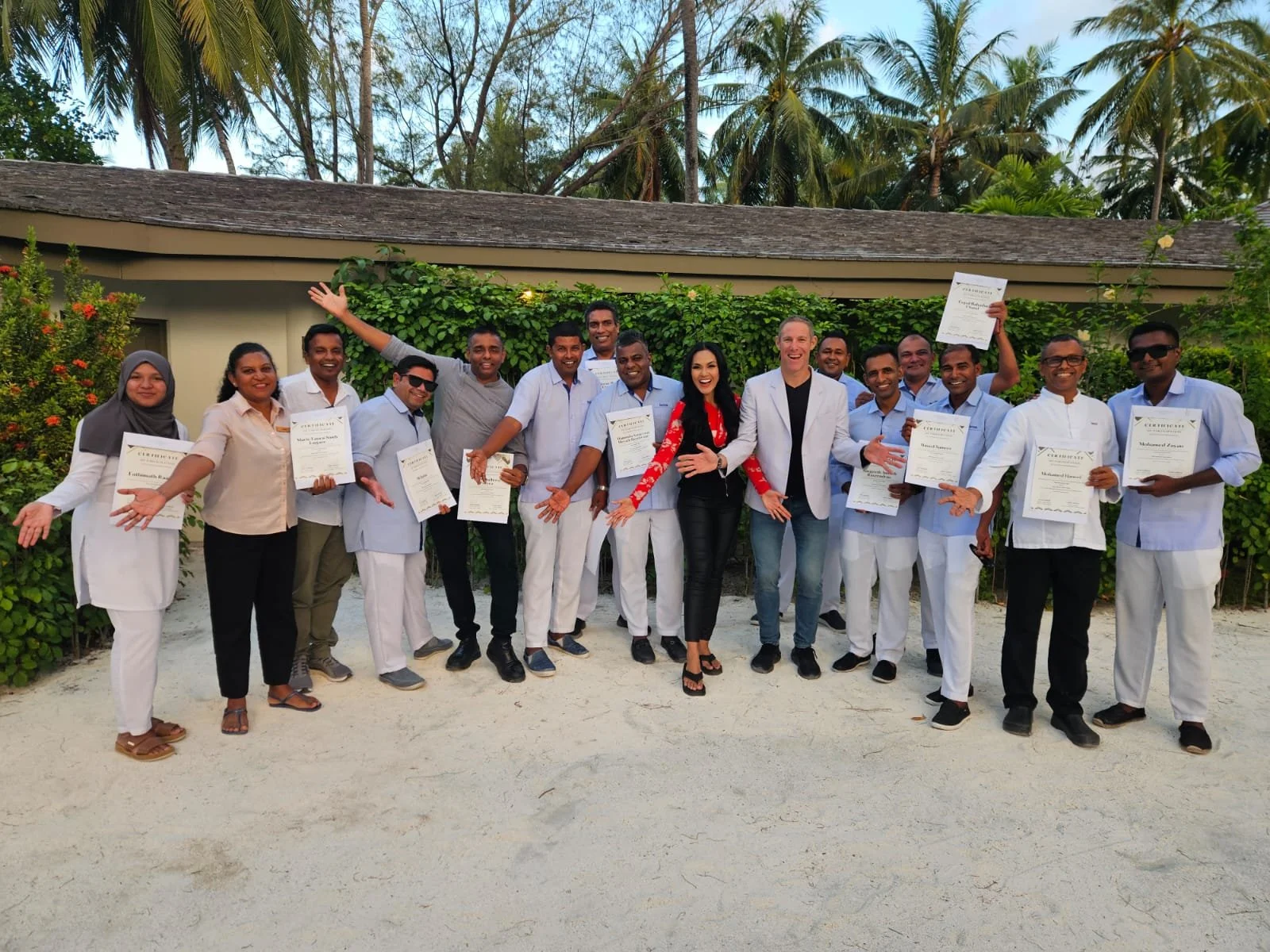
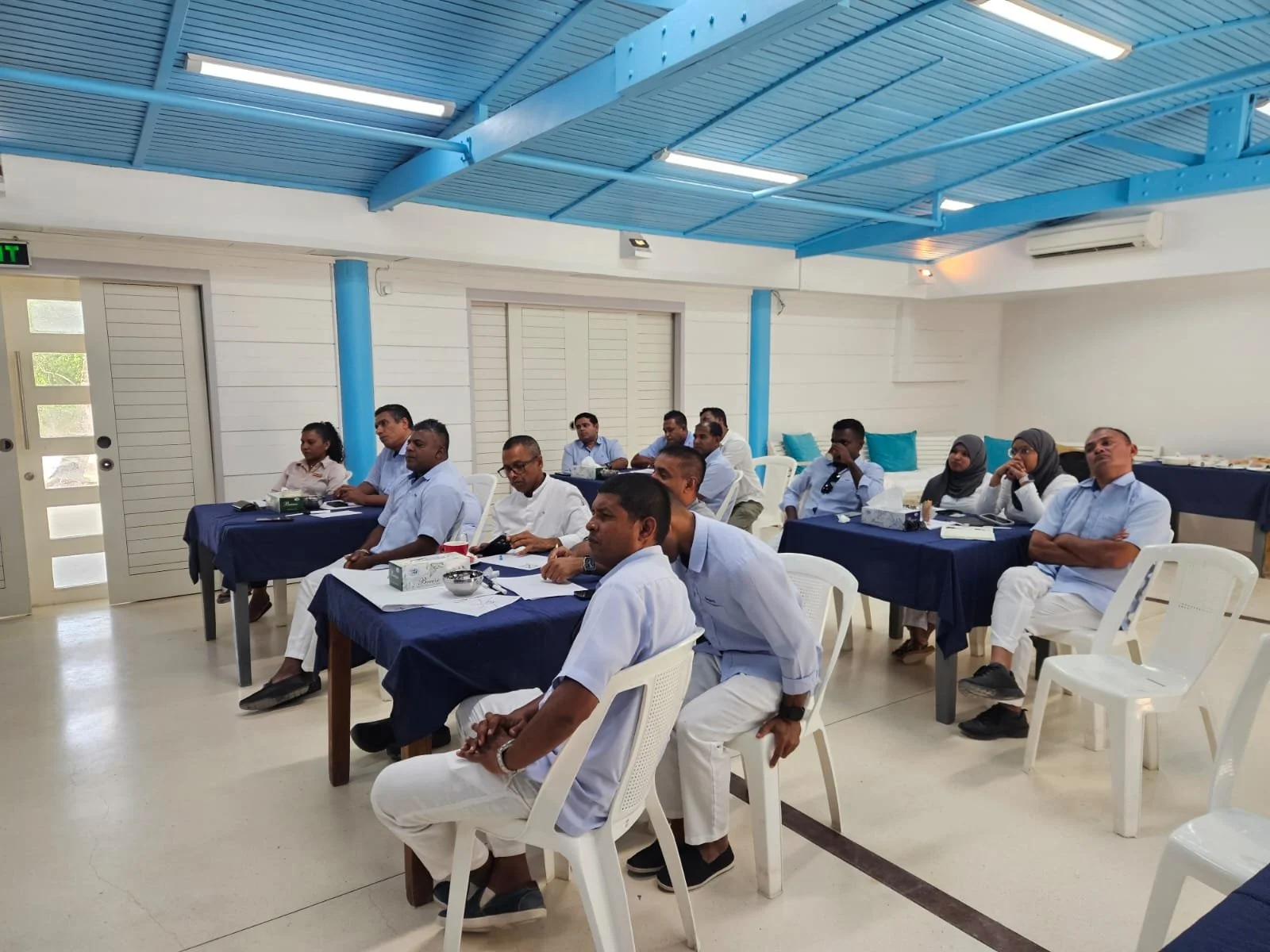
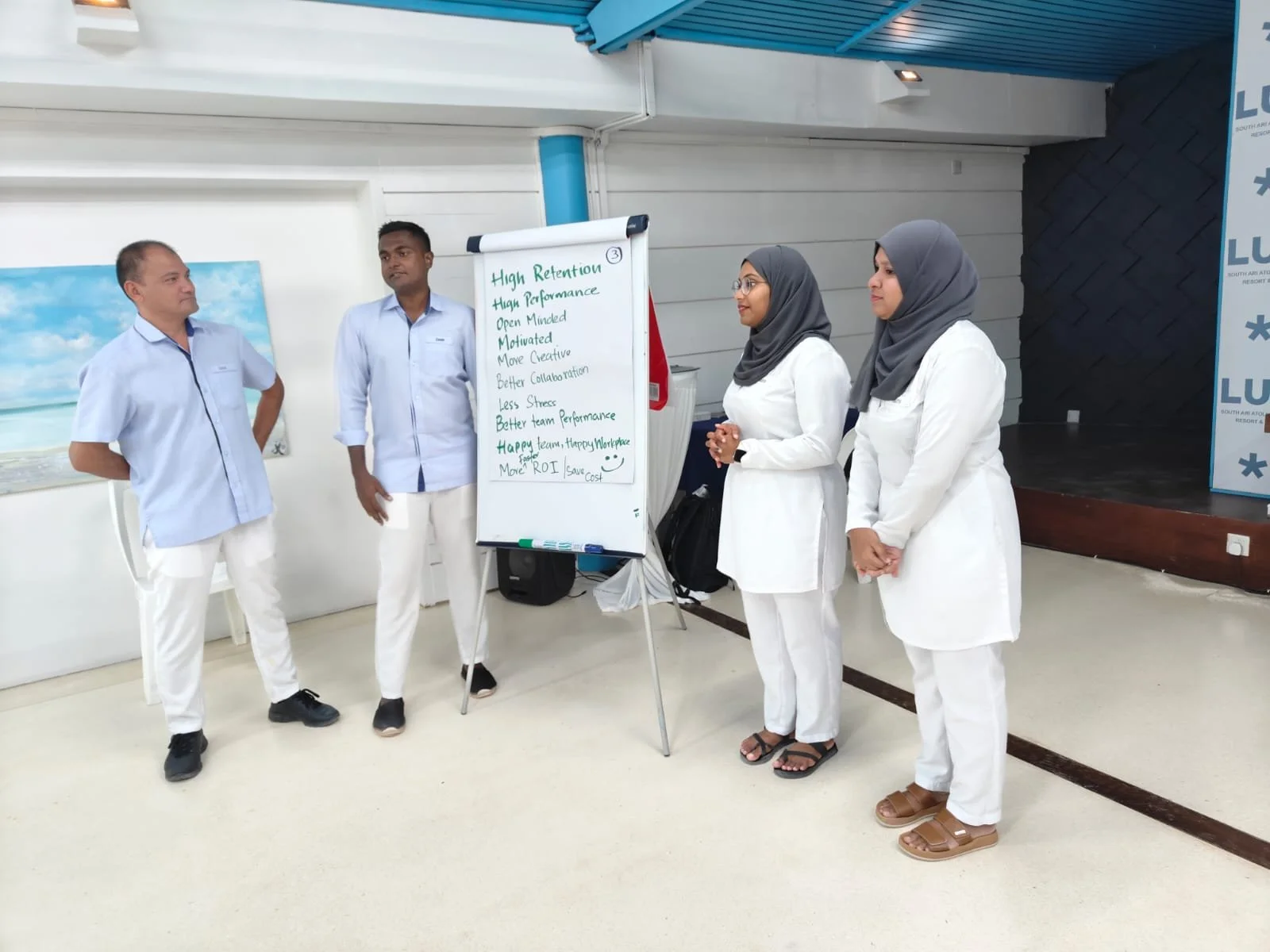
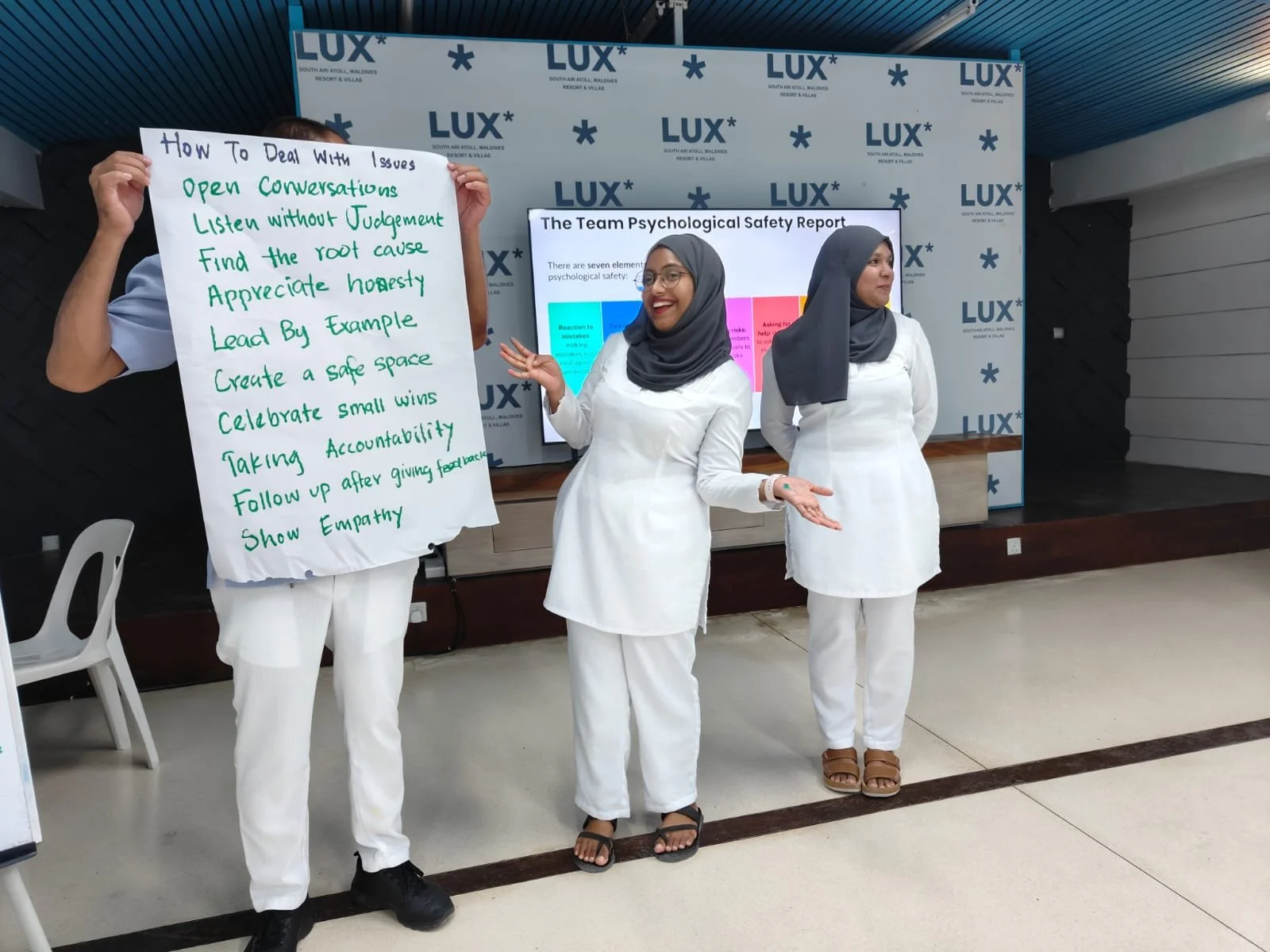
On November 1, 2025, Nick Jonsson and Dona Amelia delivered an immersive Team Psychological Safety Training at LUX South Ari Atoll*, Maldives — a powerful half-day learning experience for leaders and department heads.
The session explored how trust, communication, and emotional courage shape high-performing teams. Participants gained clarity on what it means to create an environment where everyone feels safe to share ideas, ask for help, and learn from mistakes — the true foundation of innovation and resilience.
Understanding Team Psychological Safety
The concept of Psychological Safety was pioneered by Professor Amy C. Edmondson of Harvard Business School, who defines it as
“a shared belief held by members of a team that the team is safe for interpersonal risk-taking.”
When psychological safety is high, people feel comfortable admitting mistakes, asking questions, and offering feedback without fear of judgment or punishment.
In psychologically safe teams:
Mistakes are discussed, not hidden.
Feedback flows freely.
Diversity of thought is welcomed.
Everyone feels seen, heard, and valued.
The Research Behind the Practice
Amy Edmondson’s early research revealed the Error Reporting Paradox — the best teams don’t make more mistakes, they report more, because they feel safe to speak up.
Years later, Google’s Project Aristotle (2012–2015) confirmed these findings: after studying 180 teams, Google discovered that psychological safety was the single most important factor in determining team effectiveness — even more than skill, seniority, or structure.
This insight redefined what drives performance in modern organizations: how teams relate to each other matters more than who’s on the team.
When Speaking Up Saves Lives — and When Silence Costs Billions
Nick and Dona illustrated the real-world importance of speaking up through powerful examples:
1977 Tenerife Air Disaster — 583 lives lost when crew members hesitated to challenge a senior pilot.
NASA Challenger (1986) — warnings from engineers ignored out of fear of conflict.
Boeing 737 MAX (2018–2019) — catastrophic results of a culture that discouraged questioning.
Volkswagen Dieselgate — ethical silence in pursuit of impossible goals.
Nokia’s collapse — brilliant engineers who stayed quiet rather than challenge leadership decisions.
Conversely, Bridgewater Associates and Pixar show how transparency fuels excellence:
At Bridgewater, mistakes are logged and studied — learning is built into the system.
At Pixar, open critique sessions during the making of Toy Story turned vulnerability into a creative superpower.
These stories brought the message home: speaking up isn’t a soft skill — it’s a survival skill.
From Friendship to Fearless Dialogue
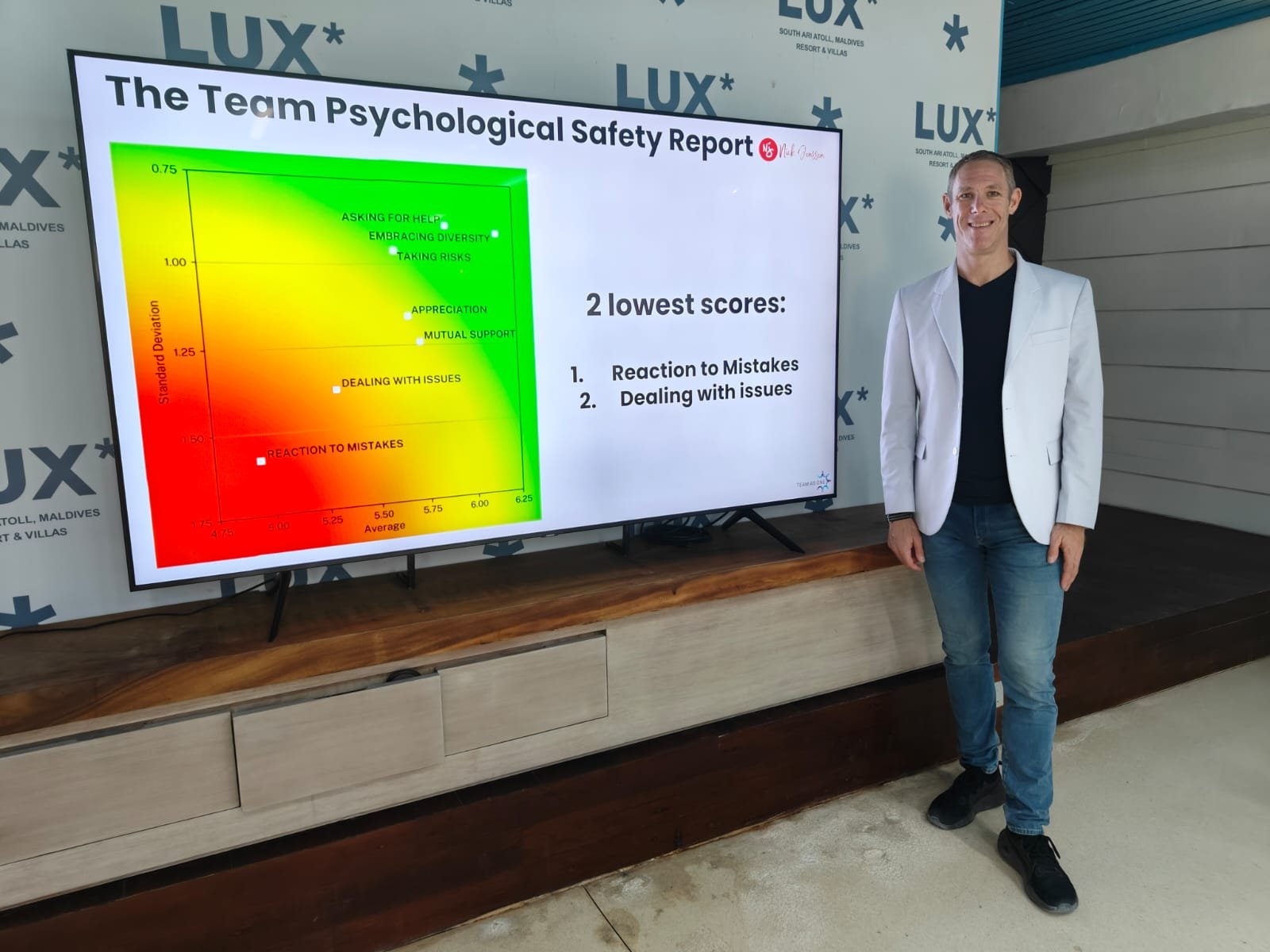
At LUX South Ari Atoll*, the session highlighted how the team’s warmth and collaboration already formed a strong foundation for success.
The conversation then evolved toward the next level of growth — learning how to pair harmony with honest dialogue.
Participants reflected that even the most positive, close-knit cultures can benefit from more open feedback and constructive challenge. Together, the group explored how genuine trust isn’t about avoiding tension, but about creating space for respectful disagreement and shared learning.
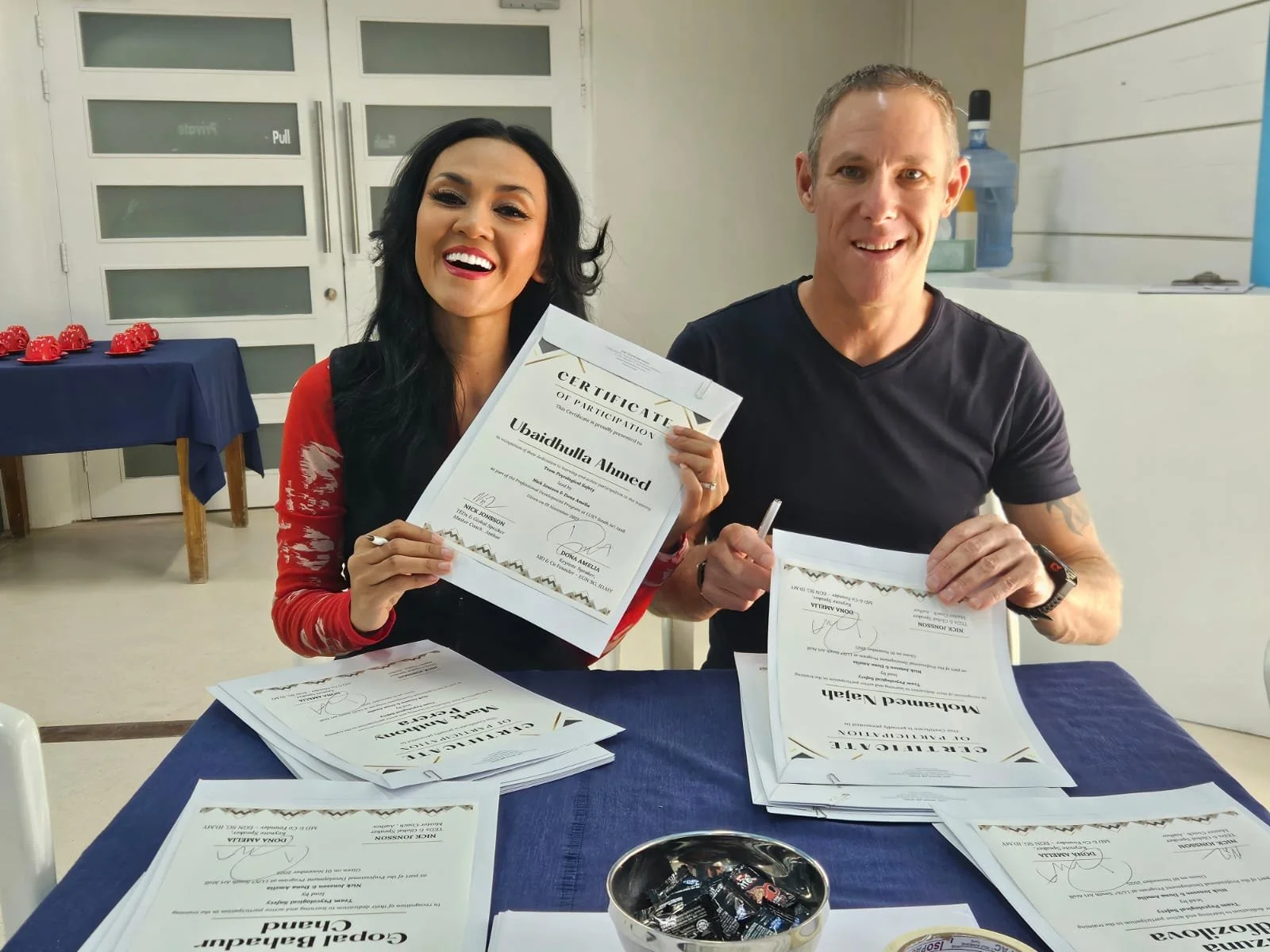
By the end of the workshop, every leader left with practical actions to strengthen communication, invite dialogue, and keep psychological safety alive in everyday interactions.
Real Outcomes and Individual Commitments
Each participant designed a CONTINUE – STOP – START action plan to strengthen communication and accountability:
CONTINUE: collaboration, empathy, and team spirit.
STOP: staying silent or avoiding difficult feedback.
START: initiating regular, open, and honest conversations such as frequent 1 on 1 meetings.
Participant Reflections
“An enlightening session — a brand-new topic for me, and I’m so glad I attended. Super inspiring!”
— Front Office Leader
“Fun, insightful, and full of learning. I now have a clear understanding of how to build stronger connections within a team.”
— HR & Training Representative
“Excellent training — productive, relevant, and delivered with great energy.”
— Operations Supervisor
“I learned that asking questions and allowing team members to find their own solutions builds trust and accountability.”
— Department Head
Certified Expertise & Measurable Progress
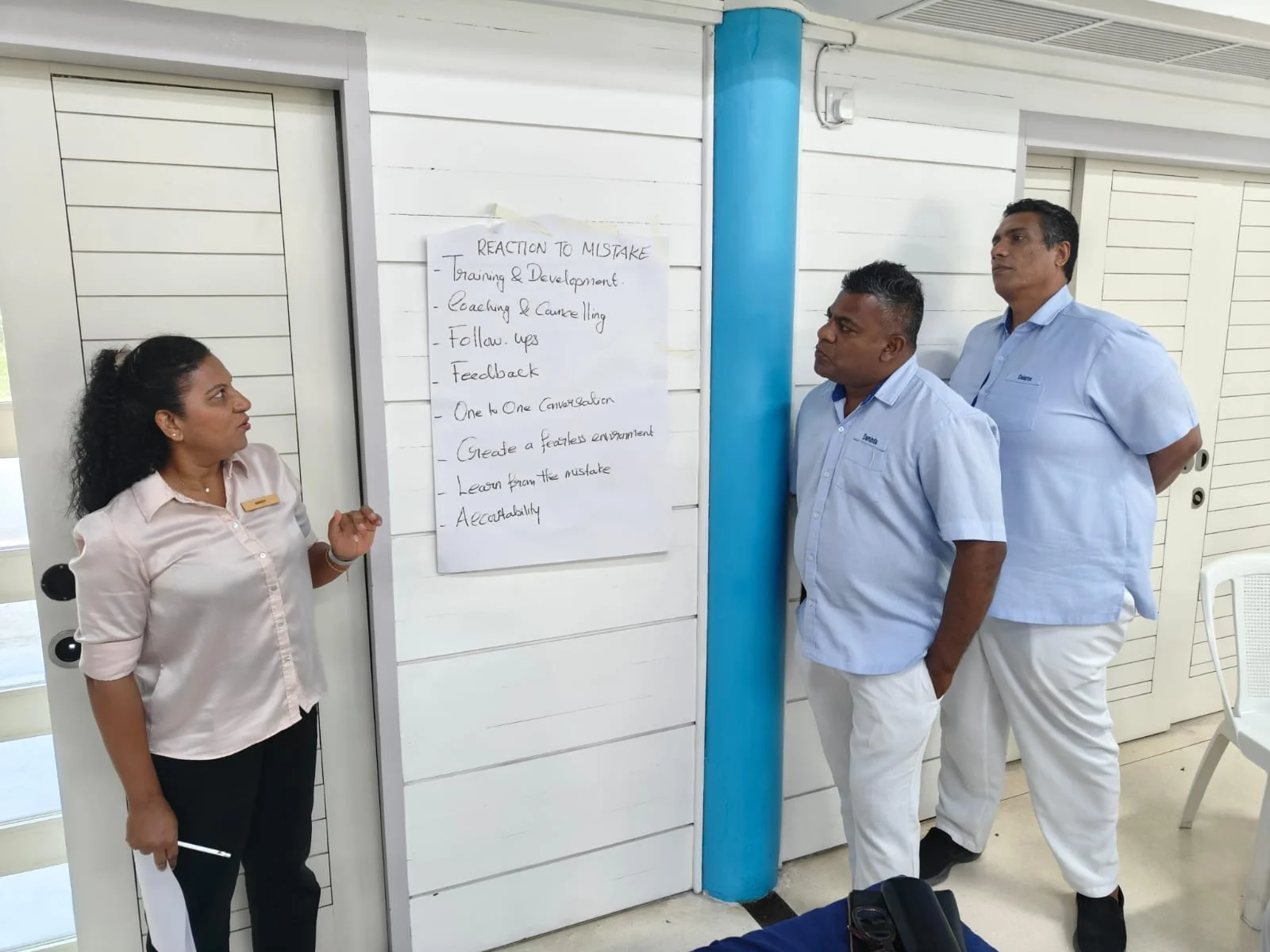
Nick Jonsson and Dona Amelia are Certified Team Psychological Safety Practitioners, accredited by Team.As.One, the international authority on team diagnostics.
Their programs include the official Team Psychological Safety (TPS) Survey, a data-driven tool that measures team culture across seven dimensions.
Why It Matters
When leaders foster psychological safety, engagement rises, innovation flourishes, and wellbeing improves.
As Nick often says:
“A team that dares to speak the truth is a team that dares to grow.”
This training equips teams with the awareness and tools to make that truth-telling safe, natural, and empowering.
Bring Psychological Safety to Your Organization
Nick and Dona deliver Team Psychological Safety Training across Asia, Europe, Africa and the Middle East — helping leaders create teams that are open, resilient, and connected.
📞 Book a Connection Call to explore how your organization can benefit from a certified Team Psychological Safety program.
Empower your people to speak up, listen deeply, and perform fearlessly.
Or follow Nick on LinkedIn for weekly insights on coaching, leadership, wellbeing, and performance.