Problem Solving & Decision Making Workshop for Leaders by Nick Jonsson
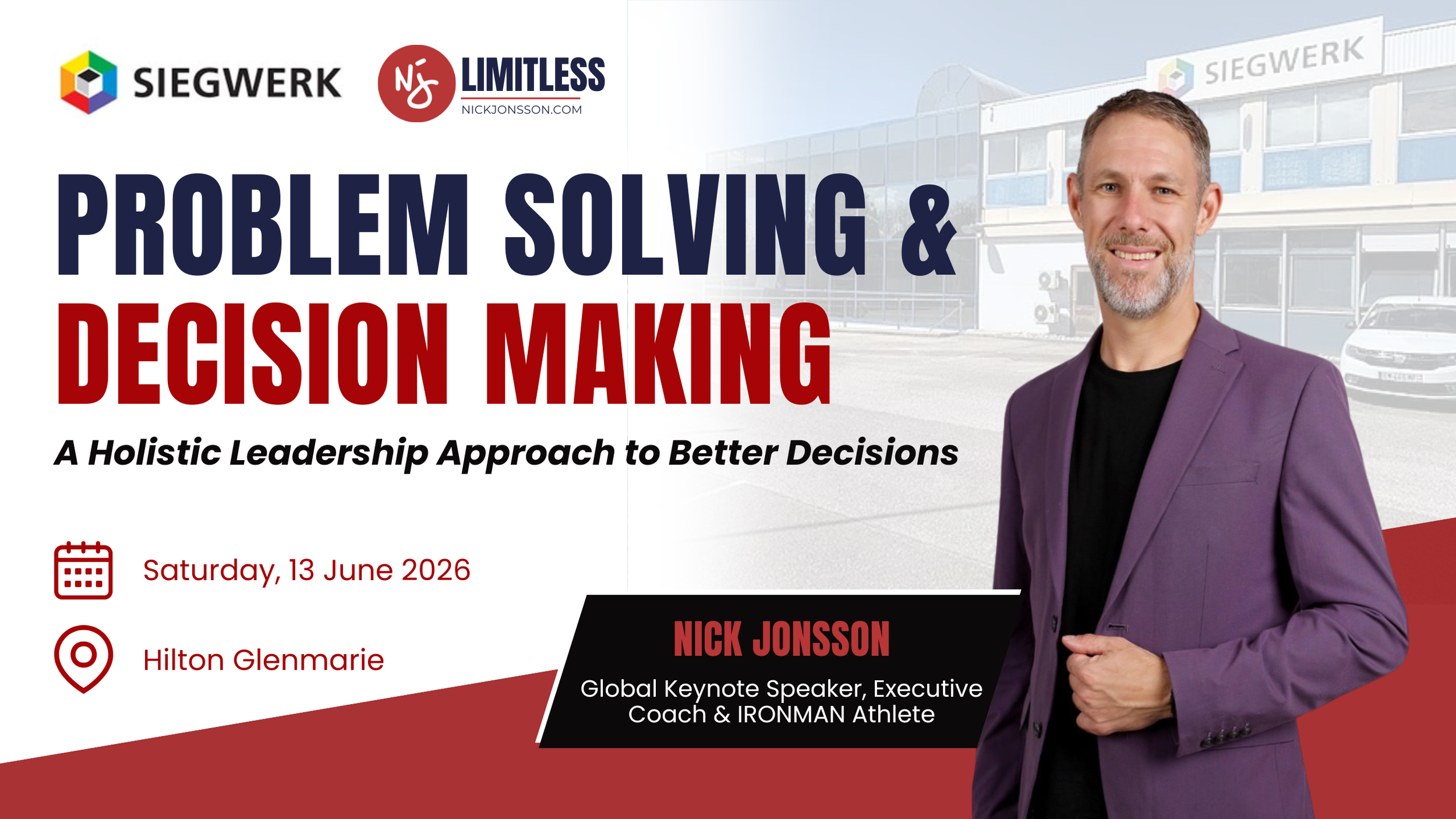
Problem Solving & Decision Making Workshop for Leaders
A Holistic Leadership Approach to Better Decisions, Stronger Collaboration, and Higher Accountability
Siegwerk Malaysia Leadership Development Programme with Nick Jonsson
Client: Siegwerk Malaysia Sdn Bhd
Programme: Problem Solving & Decision Making - A Holistic Leadership Approach to Better Decisions
Facilitator: Nick Jonsson
Date: 13 June 2026
Venue: Hilton Glenmarie, Malaysia
Audience: Executives, Managers, and Senior Decision-Makers
Introduction
In every organisation, the quality of leadership is directly connected to the quality of decisions being made every day.
Leaders make decisions about people, priorities, customers, operations, performance, communication, resources, and culture. Some decisions are strategic. Others are made quickly under pressure. Some are visible to the whole organisation. Others happen quietly in conversations, meetings, emails, and daily interactions.
Yet the impact of these decisions is significant.
A delayed decision can slow down execution.
A reactive decision can damage trust.
A poorly communicated decision can create confusion.
A decision based on assumptions can lead teams in the wrong direction.
A decision without accountability can disappear without action.
This is why problem solving and decision making are two of the most important leadership capabilities for managers, executives, and high-performing teams.
On 13 June 2026, Siegwerk Malaysia partnered with Nick Jonsson to deliver a full-day leadership development workshop titled Problem Solving & Decision Making - A Holistic Leadership Approach to Better Decisions.
The workshop was designed to help participants make better decisions, solve problems more effectively, strengthen accountability, improve collaboration, and apply practical leadership tools in real workplace situations.
Rather than focusing only on technical problem-solving models, the programme explored the human side of decision-making. Participants examined how mindset, assumptions, communication, trust, Psychological Safety, coaching conversations, goals, and discipline all influence the quality of decisions and the ability to solve problems effectively.
This made the programme highly practical, personal, and relevant for leaders operating in today’s complex business environment.
About the Workshop
The Problem Solving & Decision Making Workshop was created for leaders who want to improve how they think, communicate, decide, and act.
The programme combined:
· Practical problem-solving tools
· Decision-making frameworks
· Psychological Safety principles
· Coaching skills for leaders
· Root cause thinking
· Accountability practices
· Personal leadership reflection
· Nick Jonsson’s 5 Steps of Holistic Leadership
The workshop was built around one central idea:
Better decisions require better leadership.
Leaders do not make decisions in isolation from who they are. Their decisions are influenced by stress, pressure, emotions, communication habits, personal values, assumptions, blind spots, priorities, relationships, and confidence.
That is why a Holistic Leadership approach is powerful.
It helps leaders understand not only how to solve problems, but also how to become the kind of leader who creates clarity, trust, ownership, and consistent action.
Audience Profile
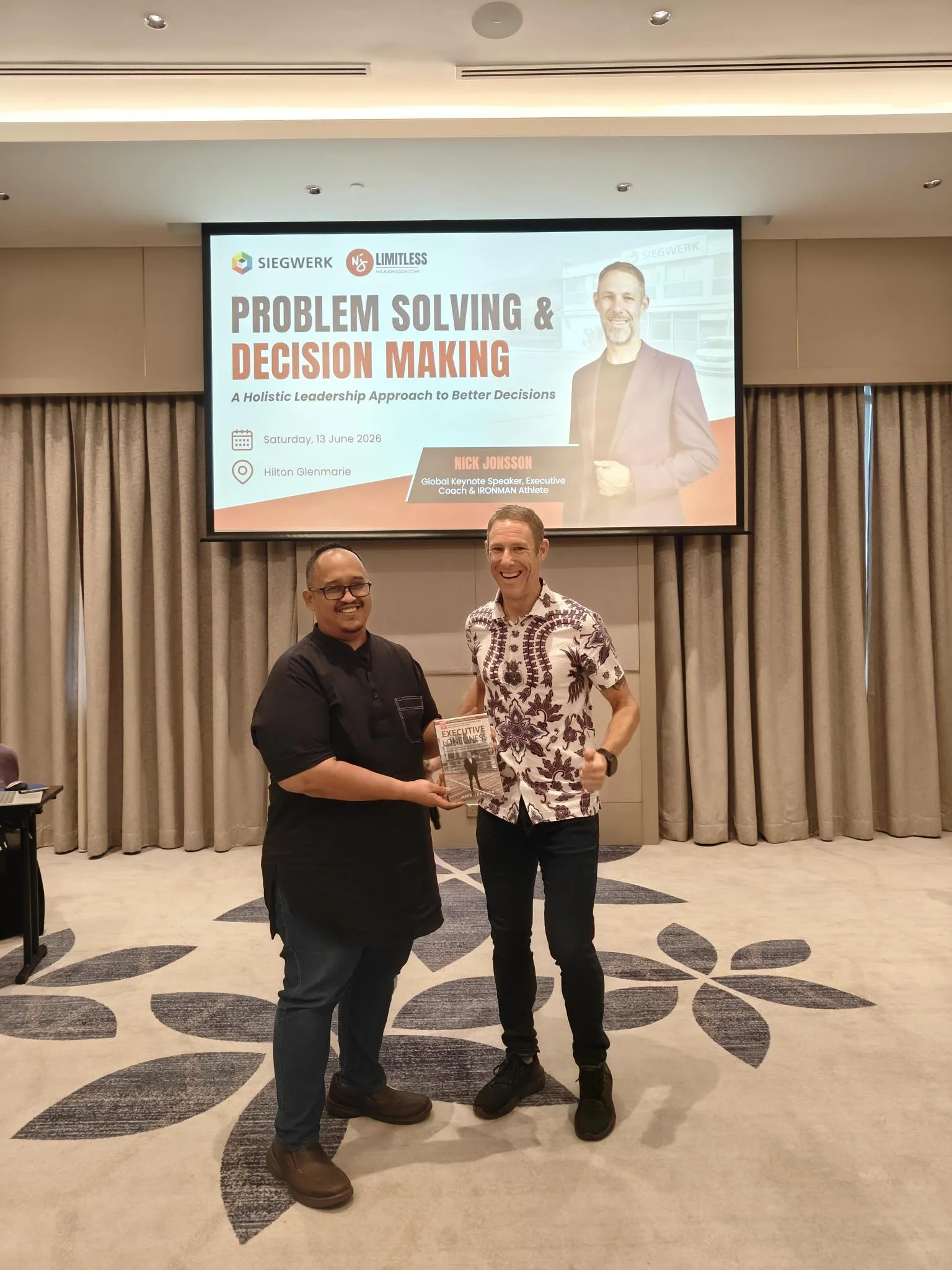
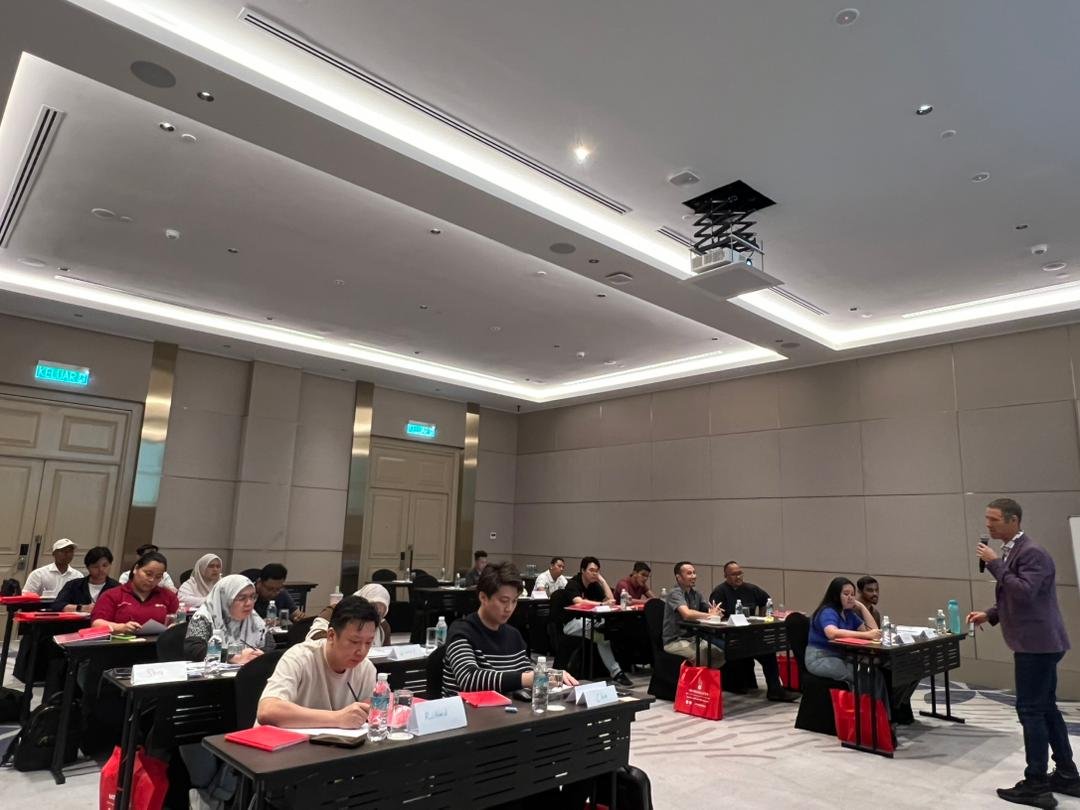
The workshop brought together 22 participants from Siegwerk Malaysia, including:
· 15 Executives
· 6 Managers
· 1 Company Director
This made the programme highly relevant for professionals responsible for leading teams, managing operational challenges, serving customers, improving performance, and making decisions that affect business outcomes.
The audience included leaders and emerging leaders who deal with real workplace challenges such as:
· People issues
· Performance problems
· Customer challenges
· Communication breakdowns
· Cross-functional collaboration
· Prioritisation challenges
· Accountability gaps
· Operational decisions
· Difficult conversations
· Pressure to act quickly
This created a strong learning environment because participants could connect the content directly to their daily leadership responsibilities.
Why Problem Solving and Decision Making Training Is Essential for Leaders
Many organisations invest heavily in technical skills, systems, processes, and procedures.
However, the success of those systems still depends on people making good decisions.
Even with strong processes in place, teams can struggle when leaders:
· Avoid difficult conversations
· Make assumptions instead of seeking facts
· React emotionally under pressure
· Try to solve everything alone
· Confuse symptoms with root causes
· Fail to create ownership
· Delay important decisions
· Focus on too many priorities at once
· Do not communicate clearly
· Lack follow-through
In today’s workplace, leaders are expected to make decisions faster than ever before.
They face constant change, competing priorities, stakeholder demands, rapidly evolving technology, too much information, and high expectations from customers and teams.
This makes decision-making more complex.
Good leadership is no longer about having all the answers. It is about knowing how to pause, think clearly, ask better questions, involve the right people, create trust, make intentional decisions, and turn those decisions into action.
This was the foundation of the Siegwerk Malaysia workshop.
Workshop Objectives
The objectives of the programme were to help participants:
· Make more effective and intentional decisions
· Improve problem-solving skills in real workplace situations
· Recognise decision-making traps, assumptions, and blind spots
· Identify root causes instead of only addressing symptoms
· Strengthen accountability and ownership
· Improve collaboration through communication and Psychological Safety
· Apply coaching principles to problem-solving conversations
· Use active listening and powerful questions to improve team thinking
· Give feedback and feedforward more effectively
· Handle difficult conversations with clarity and respect
· Convert decisions into clear goals and action plans
· Build daily discipline and follow-through
· Apply the 5 Steps of Holistic Leadership to workplace challenges
These objectives ensured the workshop was not only conceptual, but practical and action-oriented.
The aim was for every participant to leave with tools they could immediately apply in their leadership role.
The Core Framework: 5 Steps of Holistic Leadership
The workshop was built around Nick Jonsson’s 5 Steps of Holistic Leadership:
1. Surrender
2. Purpose
3. Connection
4. Goals
5. Discipline
This framework provided a roadmap for better decisions and more effective problem solving.
Each step addressed a different leadership challenge.
Step 1: Surrender - Letting Go of Ego, Assumptions, and Reactive Thinking
The first step in making better decisions is learning to pause.
Many poor decisions happen because leaders react too quickly.
They may react from pressure, emotion, fear, ego, frustration, past experience, or incomplete information.
The Surrender stage encouraged participants to examine what they may need to let go of in order to become more effective leaders.
This included:
· Letting go of ego
· Letting go of assumptions
· Letting go of the need to be right
· Letting go of defensiveness
· Letting go of blame
· Letting go of the belief that leaders must solve everything alone
Participants explored the idea that better decisions begin when leaders pause, reflect, and challenge their assumptions.
In many organisations, leaders get stuck because they are afraid to appear weak, avoid difficult conversations, try to solve everything independently, or make decisions based on incomplete information.
The workshop helped participants understand that asking for help is not a weakness. It is often a sign of maturity, self-awareness, and responsible leadership.
One key message from this section was:
A problem shared is a problem halved.
When leaders create space to discuss problems openly, they increase the chances of finding better solutions.
Step 2: Purpose - Making Decisions with Clarity and Intent
Once leaders are willing to challenge their assumptions, they can move into clarity.
Purpose is about understanding what outcome matters most.
Many teams rush into solving problems before they have clearly defined what success looks like.
This leads to wasted time, misalignment, repeated mistakes, and solutions that do not address the real issue.
Participants were encouraged to ask:
· What outcome are we trying to achieve?
· Why does this matter?
· Who will be impacted?
· What does success look like?
· What is the real problem we are solving?
A major focus of this section was the difference between symptoms and root causes.
For example:
· Low sales may not mean the company needs more salespeople. It may point to retention, positioning, customer experience, or process issues.
· High turnover may not only require higher pay. It may reveal a leadership, culture, or engagement issue.
· Slow growth may not simply require more marketing. It may indicate unclear strategy or weak positioning.
The message was clear:
Do not confuse symptoms with root causes.
This section helped participants slow down and define success before solving problems.
Purpose creates better decisions because it gives leaders a clearer filter for choosing what matters.
Step 3: Connection - Better Conversations Create Better Decisions
The third step focused on communication, trust, and Psychological Safety.
Decision-making is not only an individual skill. It is also a team capability.
Teams make better decisions when people feel safe to speak up, raise concerns, admit mistakes, ask for help, and challenge assumptions.
This is where Psychological Safety becomes critical.
Participants explored the importance of creating an environment where people feel safe to speak the truth.
Psychological Safety is not about being nice all the time. It is not about avoiding difficult conversations. It is not about lowering standards.
It is about creating a team culture where honesty, learning, accountability, and respectful challenge are possible.
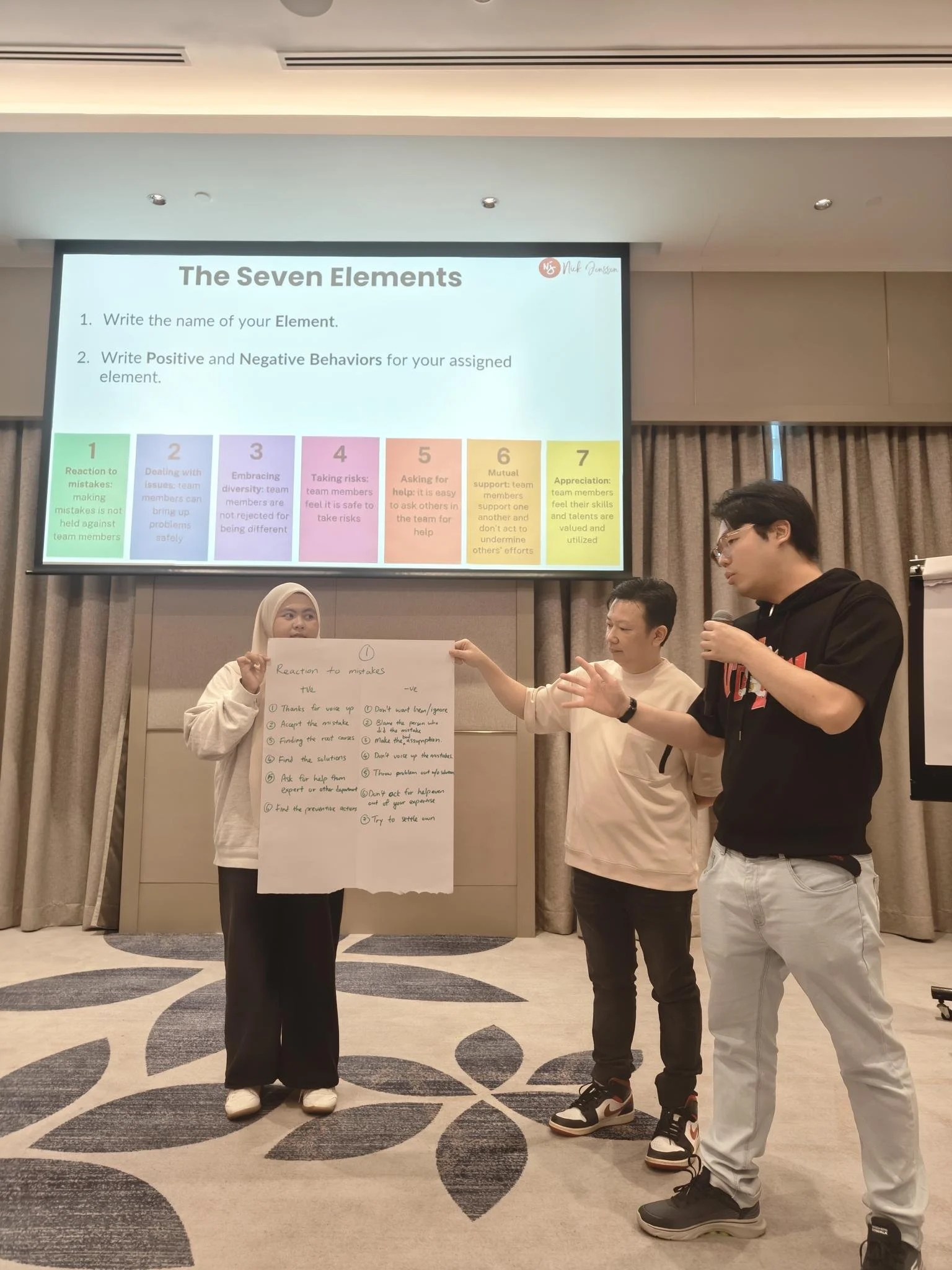
Participants explored the 7 elements of Team Psychological Safety:
1. Reaction to mistakes
2. Dealing with issues
3. Embracing diversity
4. Taking risks
5. Asking for help
6. Mutual support
7. Appreciation
The workshop also examined how silence can damage performance.
When people do not speak up, organisations may miss important warning signs. Problems remain hidden. Mistakes repeat. Innovation slows. Trust declines.
The participants reflected on where silence may show up in teams, such as:
· Challenging decisions
· Admitting mistakes
· Asking for help
· Raising concerns early
· Junior team members speaking up
This section was especially powerful because it linked Psychological Safety directly to better problem-solving and decision-making.
Coaching Skills for Better Problem Solving
A major part of the workshop focused on coaching skills for leaders.
The message was simple:
Great leaders do not create more followers. They create more problem-solvers.
Instead of solving every problem for their team, leaders can help people think through challenges more effectively.
Participants learned the difference between mentoring and coaching.
Mentoring is guidance-based and uses expertise.
Coaching is question-based and helps people develop their own thinking, ownership, and clarity.
Both approaches are useful, but leaders often default too quickly to telling, advising, or solving.
The workshop encouraged a stronger coaching mindset.
Active Listening
Active Listening was presented as one of the most important leadership skills for improving decision-making.
The objective was to help leaders listen deeply before responding or acting.
Key principles included:
· Listen to understand, not to reply
· Pay attention to tone, body language, and emotions
· Let silence create space
· Reflect back what you hear
· Avoid interrupting or problem-solving too soon
Leaders were encouraged to use language such as:
· “It sounds like you’re saying…”
· “That seems important to you…”
· “Tell me more about that.”
· “Are you saying that…”
This helps people feel heard and often reveals information that would otherwise remain hidden.
Powerful Questions
Powerful Questions help leaders unlock clarity, ownership, and action.
Participants learned to ask questions that start with “what” or “how”, rather than questions that sound judgmental or closed.
Examples included:
· What is the real challenge here for you?
· How would you like to move forward?
· What support do you need from me?
· What are we missing?
· What assumptions are we making?
· Who else should be involved?
· What would success look like?
These questions help teams think more clearly and take greater ownership of solutions.
Feedback
Feedback was explored as a tool for continuous improvement.
The workshop encouraged leaders to create a culture where feedback is welcomed, appreciated, and used to improve future problem-solving, decision-making, and performance.
Key principles included:
· Welcome feedback instead of waiting for it
· Thank people genuinely when they offer it
· Be specific, timely, and kind
· Model how to receive feedback with humility
Participants were asked to reflect on how they genuinely thank and celebrate feedback in their teams.
This is important because many organisations say they want feedback, but people only speak honestly when they believe feedback will be received constructively.
Feedforward
Feedforward was introduced as a future-focused alternative to traditional feedback.
Instead of focusing only on what went wrong in the past, feedforward focuses on what can be improved in the future.
It is:
· Forward-looking
· Solution-focused
· Growth-oriented
· Supportive rather than critical
Examples included:
· “One thing I believe could help you in the future is…”
· “Going forward, you might want to try…”
· “May I give you a suggestion for next time?”
Feedforward supports a more positive and practical approach to performance improvement.
Difficult Conversations
No leadership development programme on problem solving is complete without addressing difficult conversations.
Many workplace problems remain unresolved because leaders delay or avoid conversations that feel uncomfortable.
The workshop helped participants understand how to address problems early while preserving trust and strengthening relationships.
Key principles included:
· Prepare with clarity
· Know your purpose and desired outcome
· Stay calm, grounded, and non-reactive
· Listen actively
· Speak honestly and respectfully
· Acknowledge emotions
· Focus on solutions
· Shift from blame to learning and action
Difficult conversations are often where leadership is tested.
Handled poorly, they damage trust. Handled well, they create clarity, accountability, and growth.
Step 4: Goals - Turning Decisions into Action
Great decisions are meaningless without action.
The Goals section helped participants translate insights and decisions into practical next steps.
Many teams make decisions in meetings but fail to follow through because actions are unclear, ownership is vague, timelines are missing, or too many priorities compete for attention.
Participants explored the importance of:
· Choosing what matters most
· Setting clear priorities
· Turning challenges into SMART goals
· Creating measurable outcomes
· Identifying key actions
· Clarifying ownership
· Taking action within a specific timeline
The workshop also introduced the idea that leaders often do not fail because they have too few ideas. They fail because they have too many.
This made prioritisation a major theme.
Participants were encouraged to turn their real workplace challenges into SMART goals by asking:
· What specific outcome do I want to achieve?
· How will I measure success?
· Is it realistic and achievable?
· Why does it matter?
· What is my target date?
One example used in the workshop was:
Challenge: Poor collaboration between departments causing delays and rework.
SMART Goal: Improve cross-functional project completion rates from 70% to 90% by 31 December 2026 through monthly alignment meetings and clearer accountability.
This helped participants see how vague challenges can become clear action plans.
AI as a Thought Partner for Decision Making
The workshop also introduced participants to the CRIT framework for using AI as a thought partner in problem-solving and decision-making.
CRIT stands for:
· C - Context
· R - Role
· I - Interview
· T - Task
This framework helps leaders structure better prompts and use AI more effectively as a thinking partner.
Instead of asking vague questions, leaders learn how to give AI the right context, define the role they want AI to take, conduct an interview-style exploration of the situation, and clarify the exact task they want completed.
This supports better thinking, stronger analysis, clearer options, and more intentional decisions.
For example:
Context: Customer reports inconsistent print quality across multiple batches.
Role: Act as an experienced Packaging and Operations Consultant.
Interview: Ask me the key questions needed to understand the possible causes, affected batches, production variables, customer impact, and urgency.
Task: Identify likely root causes, suggest possible solutions, and recommend the next best step.
This gave participants a practical way to use AI responsibly and effectively in business decision-making.
The key message was:
Use AI as a thought partner to improve problem-solving and decision-making.
Step 5: Discipline - Consistency, Accountability, and Better Daily Decisions
The final step focused on discipline.
A decision only creates results when followed by consistent action.
The Discipline section helped participants understand that follow-through is a leadership behaviour.
Topics included:
· Building disciplined leadership habits
· Tackling the most important problem first
· Avoiding procrastination
· Creating decision routines
· Strengthening accountability
· Building sustainable performance
· Developing personal and team discipline
Participants explored the concept of “eating the frog”, which means tackling the most important and often most avoided challenge first.
They reflected on the question:
What is the one problem, decision, or action that would create the biggest positive impact if completed this week?
This helped participants connect problem-solving with daily leadership discipline.
They also explored how small habits create better decisions.
The session reinforced that leaders do not simply rise to the level of their goals. They fall to the level of their systems.
Better decision-making is therefore not just a skill. It is a practice.
Workshop Results and Participant Feedback
The workshop received very strong participant feedback across all key areas.
Quantitative Feedback Results
Facilitator’s Interaction with Participants
4.78 / 5
This result reflects the strong engagement, openness, and connection created throughout the session.
Facilitator Responded Well to Questions
4.78 / 5
Participants felt their questions were heard, addressed, and integrated into the learning experience.
Practical and Useful Content
4.67 / 5
This shows that participants found the workshop highly relevant and applicable to their real work.
Content Organisation and Structure
4.67 / 5
The 5 Steps of Holistic Leadership provided a clear and memorable structure for the workshop.
Facilitator Presentation Style
4.61 / 5
Participants responded positively to Nick’s delivery, storytelling, and facilitation style.
Workshop Activities and Exercises
4.56 / 5
The interactive exercises helped participants connect the concepts to their own workplace challenges.
What Participants Said
The participant comments revealed several powerful themes.
1. Authenticity and Real-Life Experience
One of the strongest themes was appreciation for Nick’s honesty and personal storytelling.
Participants valued that the workshop was not delivered as abstract theory. It was grounded in lived experience, leadership lessons, vulnerability, and real-world application.
Participant Feedback
“Real life experience coach that motivate you to become a better person.”
“Facilitators is very honest with his life experience which give us insights that we all just human being who try to navigate through life no matter what position we holding at workplace.”
“Presentation is great as using his own real story.”
These comments show that the personal dimension of the workshop created deeper connection and stronger learning.
Many leadership programmes teach tools. This workshop connected tools with humanity.
That difference matters.
When leaders see that decision-making is not only technical but personal, they become more willing to reflect, take ownership, and change.
2. High Engagement and Strong Facilitation
Participants also highlighted Nick’s engagement style.
Participant Feedback
“The approach used by facilitator is amazing, the engagement with audience is great.”
“Very interactive.”
“You are doing an amazing job Nick. Keep it up.”
This feedback aligns with the high rating of 4.78 / 5 for facilitator interaction with participants.
Leadership workshops are most effective when participants do not feel like passive listeners.
The high engagement allowed participants to reflect, discuss, share perspectives, and learn from one another.
3. Practical Relevance to Real Workplace Problems
Participants also valued the real-world relevance of the workshop.
Participant Feedback
“Able to connect with the real world problem and getting insight from other people perspective.”
“Good materials & having excellent experience during training.”
“Good presentation and very insightful.”
These comments show that participants could connect the workshop content to actual business and leadership challenges.
This is important because problem-solving training must be practical.
Leaders need tools they can use in meetings, team conversations, customer situations, performance discussions, and cross-functional collaboration.
The workshop gave them exactly that.
4. Motivation and Personal Development
The feedback also showed that participants experienced the workshop as personally meaningful.
The programme helped participants think not only about decisions at work, but also about the kind of leaders and people they want to become.
This is part of what makes Holistic Leadership different.
It recognises that the same person who makes decisions at home also makes decisions at work.
Leadership is holistic.
When leaders improve their self-awareness, emotional regulation, purpose, relationships, goals, and discipline, they also improve their professional decisions.
Key Learning Outcomes
Based on the workshop design and participant feedback, the programme helped leaders strengthen several core capabilities.
Better Decision-Making
Participants learned how to pause, reflect, challenge assumptions, clarify outcomes, and make more intentional decisions.
Better Problem-Solving
Participants learned to distinguish symptoms from root causes and avoid jumping too quickly to solutions.
Stronger Communication
Through active listening, powerful questions, feedback, feedforward, and difficult conversations, participants developed practical tools for improving leadership conversations.
Greater Psychological Safety
Participants explored how trust and openness improve team performance, learning, and decision-making.
Stronger Accountability
The workshop helped participants understand how to turn decisions into goals, actions, ownership, and follow-through.
More Holistic Leadership
Participants connected professional performance with personal leadership, wellbeing, discipline, relationships, and purpose.
Smarter Use of AI
Participants were introduced to the CRIT framework as a way to use AI more effectively for structured thinking, root cause analysis, business problem-solving, and decision-making.
Why This Workshop Was Different
Many problem-solving workshops focus mainly on models, tools, and techniques.
This programme went deeper.
It combined practical decision-making tools with leadership psychology, team dynamics, coaching conversations, accountability, AI-assisted thinking, and personal reflection.
The difference was the Holistic Leadership approach.
Participants were not only asked:
· What decision should you make?
· What problem should you solve?
· What action should you take?
They were also asked:
· What assumption do you need to challenge?
· What outcome truly matters?
· Who do you need to involve?
· What conversation are you avoiding?
· What relationship needs to be strengthened?
· What goal needs to be clarified?
· What habit will help you follow through?
· What decision are you delaying?
· How can AI help you think more clearly without replacing your leadership judgement?
This created a richer and more transformational learning experience.
Business Relevance for Organisations
The topics covered in this workshop are highly relevant for organisations that want to improve:
· Leadership decision-making
· Problem-solving capability
· Management effectiveness
· Cross-functional collaboration
· Team accountability
· Psychological Safety
· Communication quality
· Performance culture
· Change readiness
· Employee engagement
· Leadership resilience
· AI-assisted critical thinking
· Root cause analysis
· Follow-through and execution
When leaders make better decisions, teams move faster.
When teams solve problems more effectively, organisations waste less time and energy.
When Psychological Safety improves, people speak up earlier.
When accountability increases, decisions turn into action.
When communication improves, conflict decreases and clarity increases.
When leaders use AI as a structured thought partner, they can explore problems more deeply, consider more options, and make more informed choices.
This is why problem-solving and decision-making training is a powerful investment for companies that want better execution and stronger leadership culture.
Who Should Attend This Type of Workshop?
This programme is suitable for:
· Managers
· Executives
· Senior leaders
· Emerging leaders
· Department heads
· Team leaders
· Project managers
· Operations leaders
· HR leaders
· Sales leaders
· Customer service leaders
· Cross-functional teams
· Leadership teams preparing for change or growth
It is especially useful for organisations where teams need to:
· Make faster and better decisions
· Improve accountability
· Solve recurring problems
· Break silos
· Improve communication
· Strengthen trust
· Build leadership capability
· Handle difficult conversations
· Improve collaboration across departments
· Use AI more effectively for leadership thinking and problem-solving
About Nick Jonsson
Nick Jonsson is a Professional Speaker, Certified Master Coach, ICF-certified Executive and Life Coach, Counsellor, Psychotherapist, entrepreneur, and author of the international bestselling book Executive Loneliness.
He is ranked #28 in the World among the Global Gurus Top 30 Coaching Professionals for 2026.
Nick is known for his work in Holistic Leadership, Mental Wellbeing, Executive Coaching, Psychological Safety, Vulnerability, Resilience, and Sustainable High Performance.
His work is grounded in both professional leadership experience and deeply personal lived experience.
Having experienced burnout, addiction, depression, recovery, and executive loneliness, Nick brings rare authenticity to his workshops and keynote speeches. His sessions combine storytelling, practical frameworks, coaching methodology, psychological insight, and action-oriented leadership development.
Nick’s mission is:
Empowering people to build a Limitless Life through Vulnerability & Holistic Wellbeing.
Through his keynotes, workshops, coaching programmes, and leadership development experiences, Nick helps organisations create healthier leaders, stronger teams, and more accountable cultures.
Conclusion
The Siegwerk Malaysia Problem Solving & Decision Making Workshop demonstrated the power of combining practical leadership tools with Holistic Leadership principles.
Participants left with a clearer understanding of how to make better decisions, solve problems more effectively, build trust, strengthen accountability, use coaching conversations, apply AI as a thought partner, and follow through with discipline.
The strong participant feedback showed that the programme was engaging, practical, insightful, and personally meaningful.
Most importantly, the workshop reinforced a vital leadership message:
Better decisions begin with better leadership.
When leaders pause before reacting, clarify purpose, build connection, set clear goals, and follow through with discipline, they create better outcomes for themselves, their teams, and their organisations.
For organisations seeking a practical, engaging, and transformational leadership development programme, this workshop provides a powerful approach to improving problem-solving, decision-making, communication, accountability, Psychological Safety, AI-assisted thinking, and team performance.
Suggested Call to Action
Bring This Workshop to Your Organisation
If your organisation wants to improve problem-solving, decision-making, accountability, communication, Psychological Safety, AI-assisted thinking, and leadership effectiveness, Nick Jonsson can design and deliver a customised workshop for your leaders and teams.
Through a practical and transformational approach, Nick helps participants move from reactive decision-making to intentional leadership, stronger collaboration, and measurable action.
To explore a Problem Solving & Decision Making workshop for your organisation, contact Nick Jonsson and the Limitless team.
Or follow Nick on LinkedIn for weekly insights on coaching, leadership, wellbeing, and performance.