

When Men Are the Silent Victims: Breaking the Stigma Around Spousal Abuse | Money FM Saturday Sit Down with Nick Jonsson
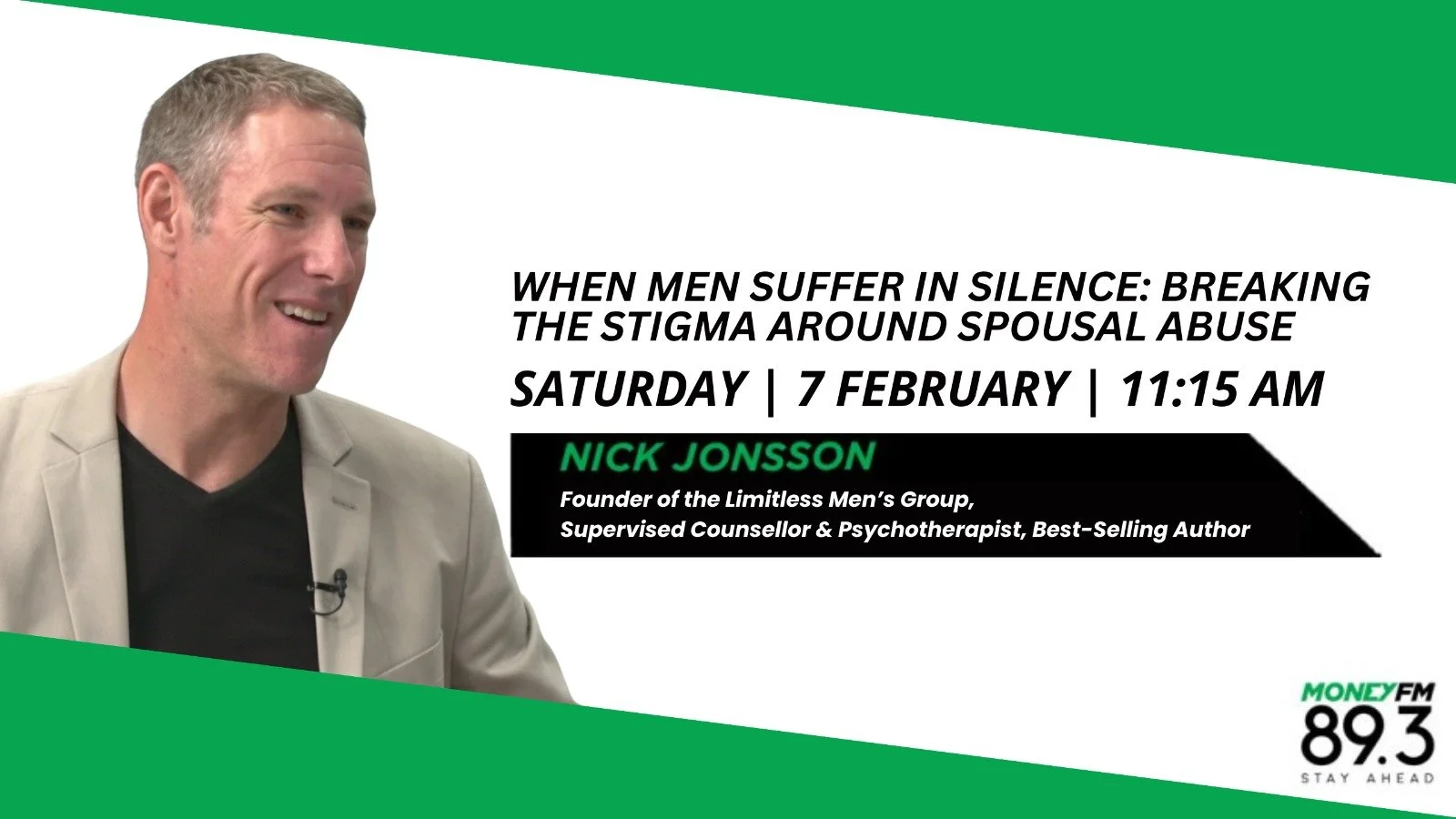
A powerful Money FM Saturday Sit Down conversation with Nick Jonsson on men experiencing spousal abuse, stigma, silence, and why safe support spaces, counselling, and early intervention matter.
Some of the most painful forms of abuse are the ones no one expects.
This week on Money FM’s Saturday Sit Down, we had an honest and necessary conversation about a reality that is still widely misunderstood and often ignored.
Men can be victims of spousal abuse.
And many of them suffer in silence.
In this episode, we explored why men in senior roles, public facing careers, and leadership positions often feel they have no safe space to speak up, ask for help, or even admit what is happening behind closed doors.

What We Discussed
This conversation focused on the emotional, psychological, and social realities men face when they experience abuse, including:
1. Why men stay silent
Many men do not speak up because of:
Fear of shame and stigma
Fear of being perceived as weak
Fear of losing reputation and credibility
Fear of not being believed
Fear of being labelled as the perpetrator rather than the victim
2. The hidden reality behind closed doors
Abuse is not always visible. Many men continue to function at a high level externally, while internally they experience:
Emotional distress and psychological shutdown
Isolation and disconnection
Long term anxiety and depression
Post Covid coping behaviours such as increased alcohol use
Chronic stress and burnout
3. The impact on children and family systems
Highly conflicted relationships do not only affect the couple. Children are often caught in the middle, sometimes consciously or unconsciously used as leverage.
The long term emotional impact on children can be significant, especially when conflict becomes the norm.

Why This Conversation Matters
This is not about blaming women.
This is not about ignoring the reality that many women are victims too.
This is about acknowledging the full truth.
Abuse can happen to anyone.
And when men feel unsafe to speak, they are more likely to suffer alone, delay intervention, and spiral into deeper mental health consequences.
The silence is the danger.
The Importance of Early Intervention and Safe Spaces
One of the most important messages from this conversation is that healing is possible, but support must come early.
We discussed the importance of:
Men’s groups and safe peer support
Psychotherapy and counselling
Emotionally safe environments for disclosure
Early intervention before crisis or collapse
Breaking generational cycles of silence and shame
Seeking support is not weakness.
It is strength.
Listen full conversaion below.
Or follow Nick on LinkedIn for weekly insights on coaching, leadership, wellbeing, and performance.