

Leadership Lessons from Speaking to Thousands of Executives
Lessons from the Stage: What I’ve Learned Speaking to Thousands of Leaders
By Nick Jonsson – Your Trusted Keynote Speaker
What leaders are really struggling with today
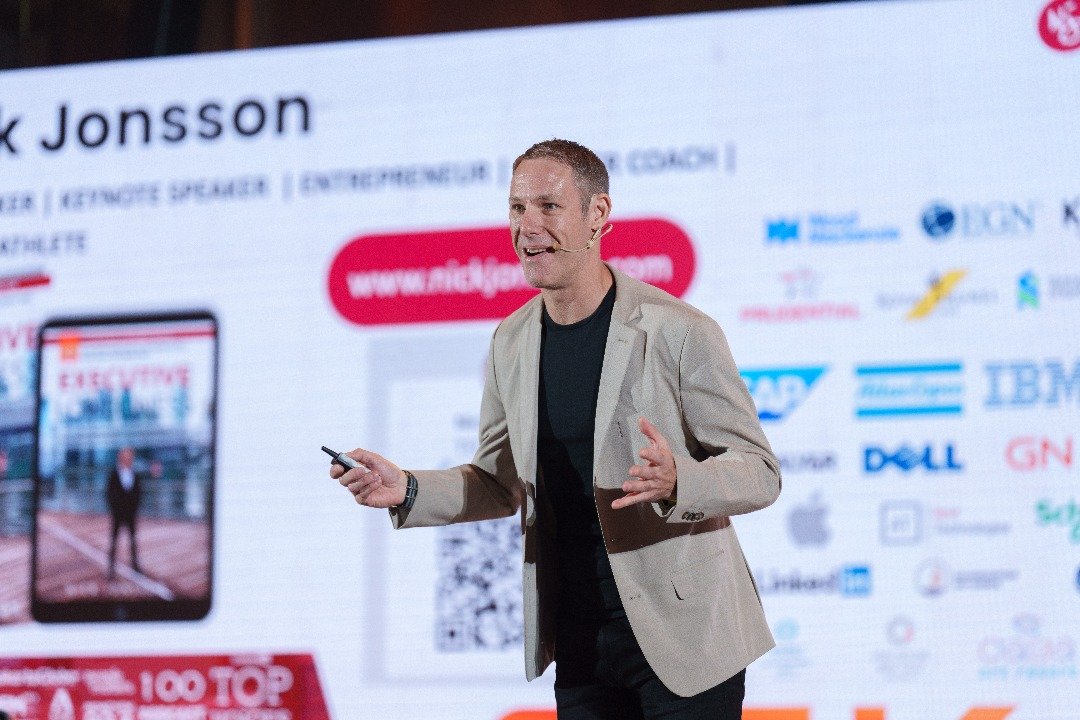
Over the past few weeks, I’ve found myself doing what I love most - standing in front of leaders, sharing stories that matter, and creating spaces where people feel safe enough to be real.
In the last three weeks alone, I’ve delivered keynotes across Singapore and Kuala Lumpur, working with leadership teams from a wide range of organizations. Different industries, different cultures, different challenges. But the conversations underneath are often the same.
Pressure. Isolation. Expectations.
Behind titles and results, many executives are navigating:
Constant performance expectations
A sense of isolation at the top
Burnout and emotional fatigue
A lack of psychological safety within teams
And a quiet question many leaders carry but rarely say out loud:
“Is this all there is?”
This is where my work as a keynote speaker focused on executive wellbeing and authentic leadership really begins, not on the surface, but underneath it.
The Reality of Leadership Today: Success Without Fulfillment
From the outside, leadership often looks successful.
Recognition.
Results.
Career progression.
But inside, many leaders feel:
Disconnected from themselves
Emotionally exhausted
Successful—but not fulfilled
This is one of the most important insights I’ve learned from speaking to leadership teams across industries:
Performance without alignment leads to burnout.
Success without purpose feels empty.
That’s why conversations around executive wellbeing, emotional intelligence, and psychological safety are no longer optional—they are essential for sustainable leadership.
Learn more about executive coaching and leadership development.
The 5 Steps to Holistic Leadership in Practice
In every keynote I deliver, I bring leaders back to a simple framework I’ve developed through experience:
The 5 Steps to Holistic Leadership
Surrender – Let go of control and acknowledge reality
Purpose – Reconnect with what truly drives you
Connection – Build meaningful relationships with yourself and others
Goals – Align actions with purpose, not just pressure
Discipline – Show up consistently, even when it’s uncomfortable
This framework isn’t theory.
It’s built from lived experience—through burnout, addiction, and rebuilding life from the ground up.
That’s why it resonates.
Because leaders don’t need perfection.
They need honesty.
What Happens in a Leadership Keynote
One of the most powerful moments during a recent keynote in Kuala Lumpur wasn’t during a big story or a high-energy segment. It was during a pause. I asked the room a simple question:
“When was the last time you felt truly connected to yourself?”
The silence that followed said everything.
This is the reality we are working with.
Leaders who are constantly connected to work, but disconnected from themselves.
And when that happens, it becomes almost impossible to create psychological safety within teams.
Because you cannot give what you do not have.
Why Psychological Safety Starts with the Leader
A big part of my recent keynotes has focused on team psychological safety.
Not as a buzzword. Not as a theory. But as a daily leadership practice.
Here’s what I’ve seen across organizations:
Teams don’t open up because leaders don’t model vulnerability
Feedback doesn’t flow because people don’t feel safe
Innovation stalls because fear is present in the room
When leaders start to shift, everything changes.
When a leader says:
“I don’t have all the answers”
When a leader admits:
“I’m struggling too”
When a leader creates space instead of pressure.
That’s when trust begins.
And that’s where real leadership starts.
Explore more about executive loneliness and leadership isolation.
The Road Teaches You Everything
Traveling from Singapore to Kuala Lumpur and back again, moving between boardrooms, ballrooms, and conference stages, you start to notice patterns.
No matter the company or country, the human experience of leadership is consistent.
People want:
To be seen
To be heard
To feel that what they do matters
And perhaps most importantly, they want permission to be human again.
This is why executive wellbeing speakers are increasingly in demand - not to motivate, but to create space for real conversations.
Why Authentic Leadership Resonates
There is a shift happening right now. Organizations are no longer looking for speakers who just inspire for an hour. They are looking for conversations that stay with people long after the keynote ends.
That’s where authentic leadership talks come in.
Not polished. Not perfect. But real.
When I share my story, from corporate success to rock bottom and back, it creates a bridge.
It tells every leader in the room:
“You’re not alone.”
And that message travels further than any strategy ever could.
Beyond Motivation - Creating Leadership Transformation
Motivation is easy.
Transformation is harder.
The goal of every leadership keynote I deliver is not just to energize the room, but to create a shift in how leaders think, feel, and show up the next day.
That might look like:
A leader having a more honest conversation with their team
A decision made from purpose instead of pressure
A moment of pause instead of constant reaction
These are small changes. But they create massive impact over time.
Why Organizations Choose a Leadership Keynote Speaker
Organizations today are looking for more than inspiration.
They are looking for:
Practical leadership frameworks
Emotional intelligence development
Executive wellbeing strategies
Psychological safety culture building
This is where keynote speaking becomes more than a talk—it becomes a catalyst.
Discover more about keynote speaking and leadership programs.
Frequently Asked Questions About Leadership Keynotes
What makes a great leadership keynote speaker?
A great leadership keynote speaker combines real-life experience, emotional connection, and practical insights that leaders can apply immediately.
Why is executive wellbeing important in leadership?
Executive wellbeing directly impacts decision-making, team performance, and long-term sustainability. Leaders who neglect wellbeing often experience burnout and reduced effectiveness.
What topics are most relevant for leadership teams today?
The most relevant leadership topics include:
Psychological safety
Emotional intelligence
Executive loneliness
Burnout and resilience
Authentic leadership
Final Reflection: The Future of Leadership Is Human
If there is one thing I’ve learned from being on the road, speaking to thousands of leaders, it’s this:
Leadership is not about having all the answers.
It’s about having the courage to ask better questions.
And sometimes, the most powerful thing a leader can do is not to lead louder.
But to lead more honestly.
As I continue this journey across stages, cities, and organizations, one thing remains clear:
The future of leadership is human.
And the leaders who embrace that will be the ones who truly stand out.
Work With Me
If you are looking for a leadership keynote speaker who brings real stories, practical frameworks, and a focus on executive wellbeing and psychological safety, this is the work I am deeply committed to.
And I’m just getting started.
Or follow Nick on LinkedIn for weekly insights on coaching, leadership, wellbeing, and performance.