Building High-Performing Teams Through Psychological Safety and Holistic Leadership at Noku Maldives with Nick Jonsson
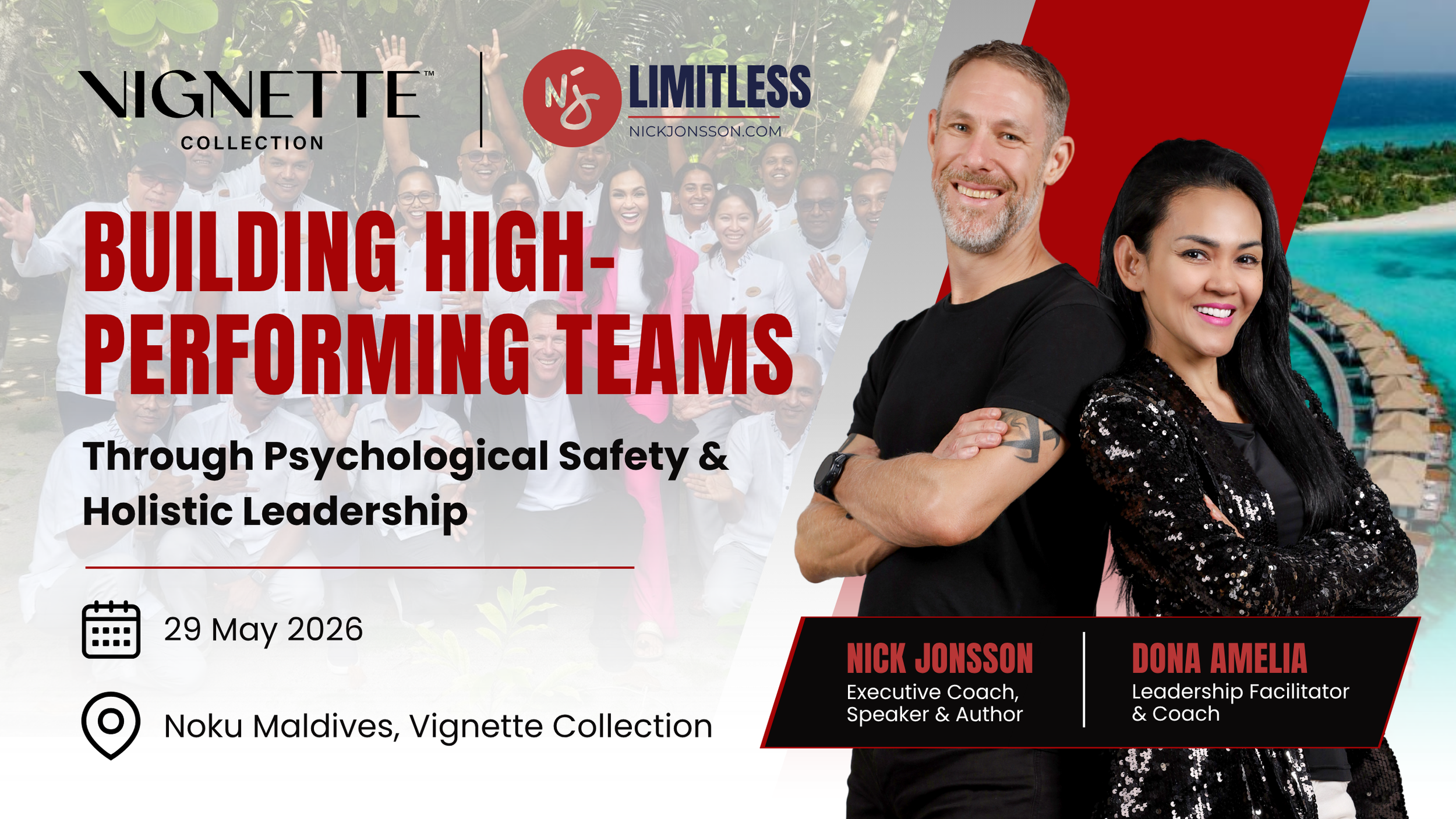
Building High-Performing Teams Through Psychological Safety and Holistic Leadership at Noku Maldives
Leadership Development, Team Psychological Safety and Workplace Culture Transformation at Noku Maldives, a Luxury Island Resort within IHG Hotels & Resorts' Vignette Collection
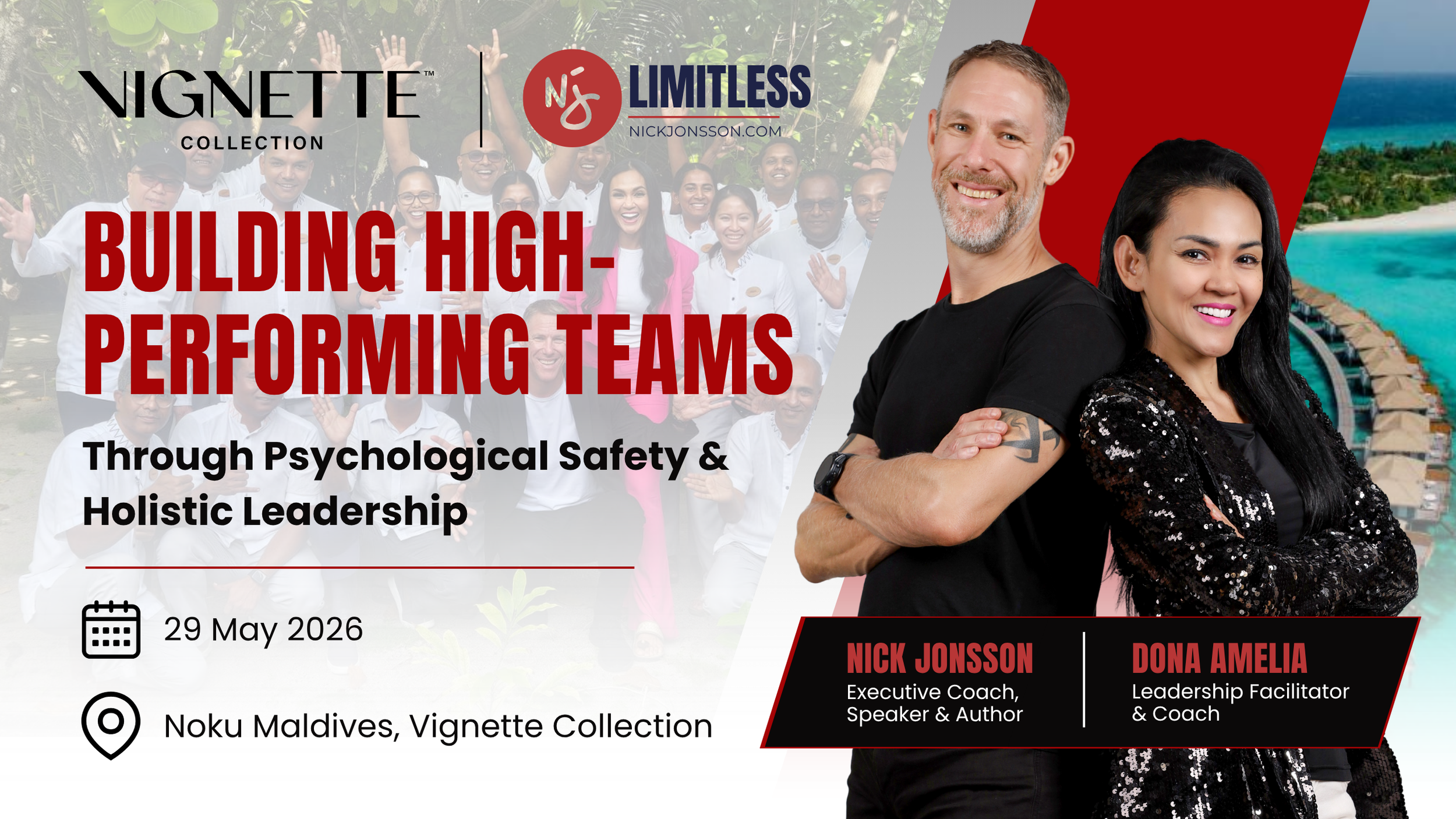
On 29 May 2026, internationally recognized executive coach, TEDx speaker, bestselling author, and Team Psychological Safety expert Nick Jonsson, together with executive coach, facilitator, and global keynote speaker Dona Amelia, delivered a transformational leadership development workshop at Noku Maldives, a luxury island resort within IHG Hotels & Resorts' Vignette Collection.
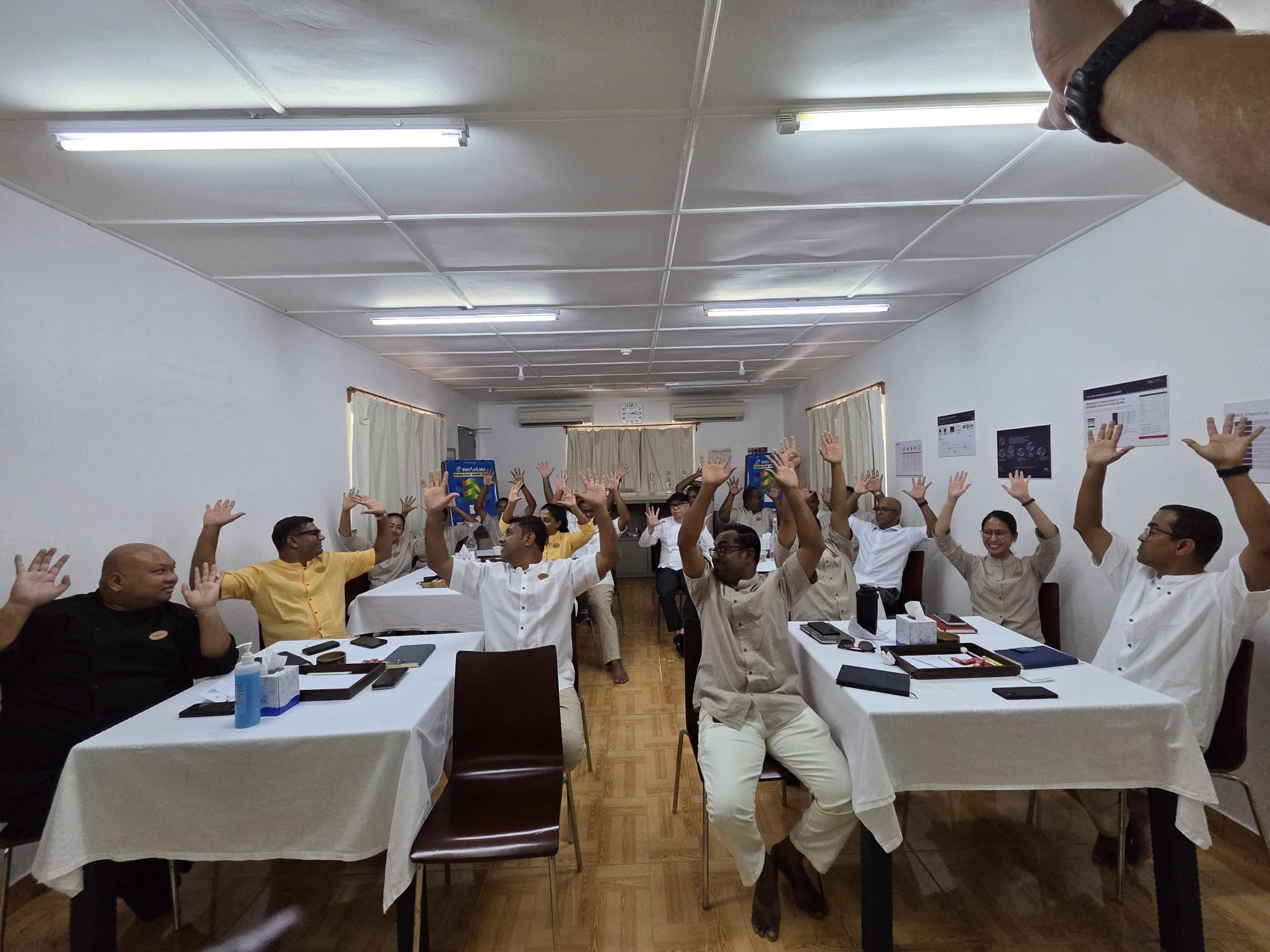
The full-day workshop, Building High-Performing Teams Through Psychological Safety and Holistic Leadership, brought together leaders and team members from across the resort to strengthen communication, trust, collaboration, wellbeing, leadership effectiveness, and team performance.
The program combined two of the most important drivers of sustainable organizational success:
Team Psychological Safety
Holistic Leadership
Together, these frameworks help organizations create environments where people feel safe to contribute, innovate, collaborate, and perform at their highest level.
Why High-Performing Teams Need Psychological Safety
Organizations often focus on strategy, systems, processes, and performance metrics.
However, research consistently demonstrates that one of the strongest predictors of team performance is not intelligence, experience, or technical expertise.
It is Psychological Safety.
Harvard Business School Professor Amy Edmondson defines Psychological Safety as:
"A shared belief that the team is safe for interpersonal risk-taking."
In psychologically safe workplaces, employees feel comfortable:
Sharing ideas
Raising concerns
Asking questions
Admitting mistakes
Seeking support
Challenging assumptions respectfully
Giving and receiving feedback
Learning from failure
When Psychological Safety exists, organizations experience:
Higher employee engagement
Greater innovation
Better decision-making
Faster problem solving
Stronger collaboration
Increased accountability
Improved communication
Better customer and guest experiences
Higher retention rates
Stronger workplace culture
For hospitality organizations, where guest satisfaction depends on teamwork, service excellence, communication, and trust, Psychological Safety can be a significant competitive advantage.
Google's Project Aristotle and the Science of Team Effectiveness
One of the key studies explored during the workshop was Google's famous Project Aristotle.
After examining hundreds of teams, Google discovered that the single most important factor behind high-performing teams was not who was on the team.
It was how team members interacted with one another.
Psychological Safety emerged as the number one characteristic of the most successful teams.
The findings reinforced a powerful truth:
People perform at their best when they feel safe enough to contribute their best.
This research continues to influence leadership development, executive coaching, team coaching, organizational effectiveness, and workplace culture transformation initiatives around the world.
The Hidden Cost of Silence
One of the most impactful conversations during the workshop focused on what happens when employees do not feel safe enough to speak up.
Participants explored real-world examples where fear, hierarchy, or workplace culture prevented individuals from raising concerns, resulting in significant consequences.
The lesson was simple:
Many organizational failures are not competence failures. They are communication failures.
When people stay silent:
Risks remain hidden
Problems escalate
Innovation slows
Learning decreases
Mistakes become more costly
Team morale suffers
High-performing teams create environments where concerns are raised early, ideas are welcomed, and mistakes become opportunities for learning.
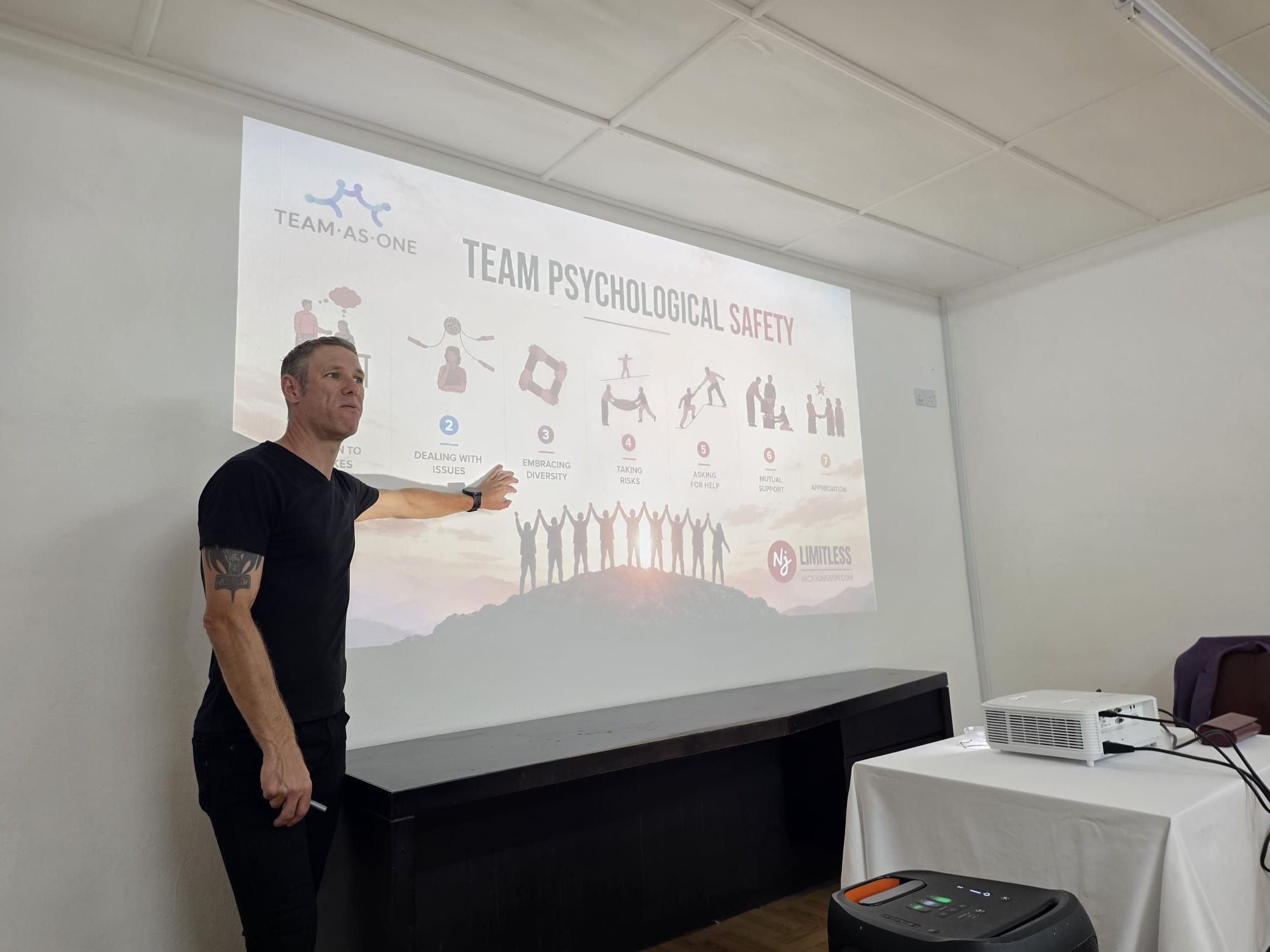
The Seven Elements of Team Psychological Safety™
A central part of the workshop focused on the Seven Elements of Team Psychological Safety™, a globally recognized framework developed by Team As One founder Peter Cauwelier.
The Seven Elements include:
1. Reaction to Mistakes
Viewing mistakes as opportunities to learn rather than opportunities to blame.
2. Dealing with Issues
Creating a culture where difficult conversations can happen openly and respectfully.
3. Embracing Diversity
Welcoming different perspectives, backgrounds, experiences, and viewpoints.
4. Taking Risks
Encouraging people to contribute ideas, challenge assumptions, and innovate.
5. Asking for Help
Normalizing support-seeking behaviours and reducing stigma.
6. Mutual Support
Building a culture of collaboration and teamwork.
7. Appreciation
Recognizing and valuing the contributions of every team member.
Together, these elements create the foundation for trust, engagement, innovation, accountability, and sustainable high performance.
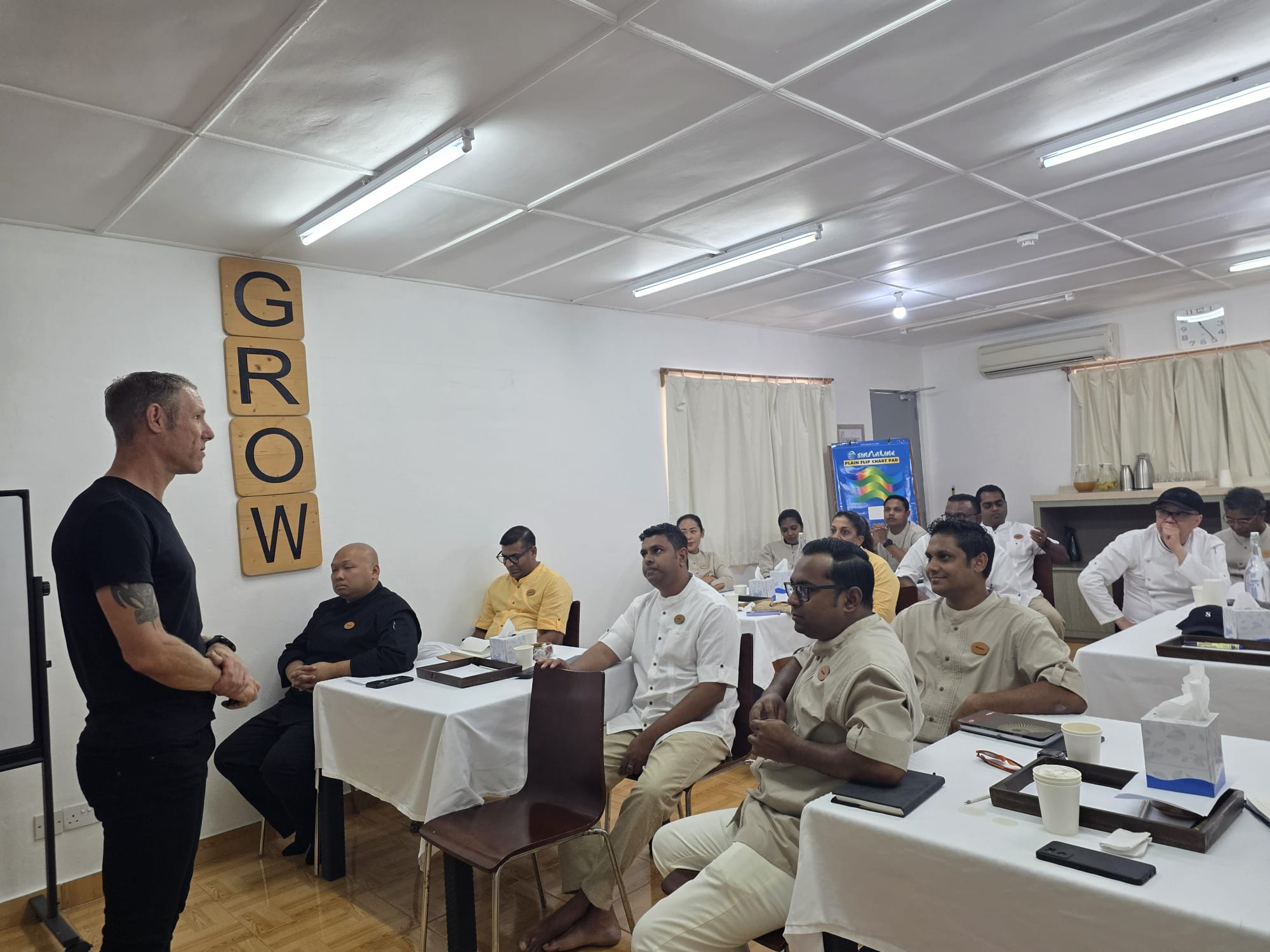
Certified Team Psychological Safety Practitioners
What makes this program unique is that it is delivered by facilitators who are not only experienced leadership practitioners but also formally trained and certified in Team Psychological Safety.
Both Nick Jonsson and Dona Amelia are Certified Team Psychological Safety Practitioners through Team As One, one of the world's leading organizations specializing in Team Coaching, Team Effectiveness, Team Dynamics, and Psychological Safety.
This certification is based on the internationally recognized Seven Elements of Team Psychological Safety™ framework and provides leaders with practical tools for building cultures of trust, openness, accountability, communication, and collaboration.
Their expertise allows them to move beyond theory and provide practical, real-world applications that leaders can immediately implement within their teams.
Why Organizations Choose Nick Jonsson and Dona Amelia
Nick and Dona bring a unique combination of executive coaching expertise, leadership development experience, team coaching methodologies, and real-world business leadership.
Nick Jonsson
Nick Jonsson is:
TEDx Speaker
International Bestselling Author of Executive Loneliness
Certified Master Coach (CMC)
ICF Professional Certified Coach (PCC)
Certified Team Psychological Safety Practitioner
Founder of Limitless Executive Solutions
Co-Founder of EGN Southeast Asia
Executive Coach and Leadership Development Specialist
Mental Health and Resilience Advocate
Nick has worked with executives, leadership teams, entrepreneurs, and organizations throughout Asia, helping leaders improve wellbeing, resilience, psychological safety, leadership effectiveness, and workplace culture.
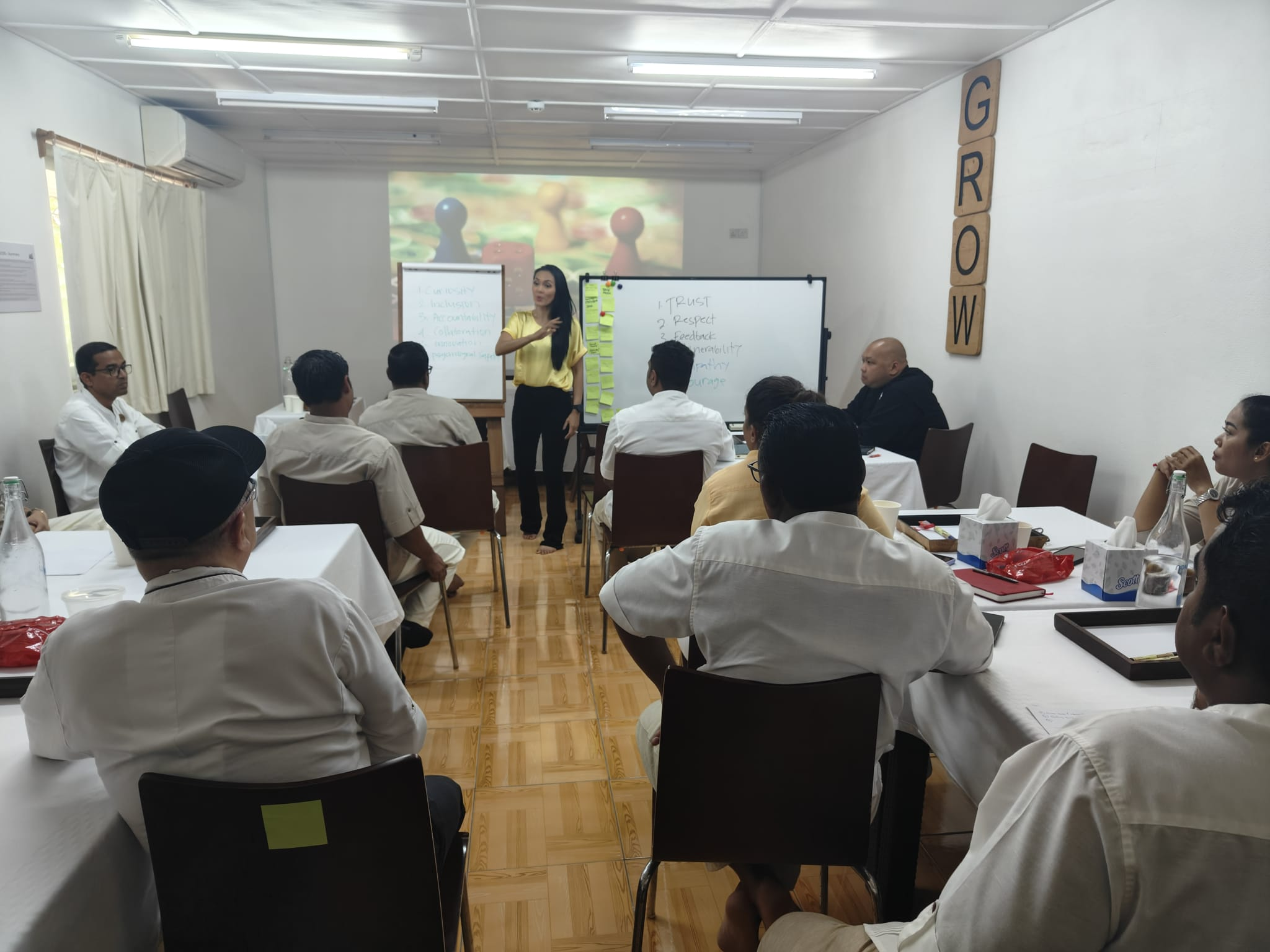
Dona Amelia
Dona Amelia is:
Global Keynote Speaker
Executive Coach and Facilitator
Certified Team Psychological Safety Practitioner
Managing Director and Co-Founder of EGN Indonesia
LinkedIn Top Voice
Former Television Presenter, Actress, and Singer
Leadership and Communication Specialist
Dona is recognized for helping leaders and teams strengthen communication, confidence, collaboration, influence, and authentic leadership.
Together, Nick and Dona create highly engaging, transformational, and practical learning experiences that inspire lasting behavioural change.
Holistic Leadership: The Foundation for Sustainable Performance
The workshop also revisited Nick Jonsson's signature framework, the 5 Steps to Holistic Leadership™.
Holistic Leadership integrates:
Physical Health
Mental Health
Emotional Health
Psychological Health
Social Wellbeing
Resilience
Professional Responsibilities
The framework consists of:
Step 1 - Surrender
Letting go of limiting beliefs, fear, unhealthy habits, and ego.
Step 2 - Purpose
Creating clarity around values, meaning, contribution, and legacy.
Step 3 - Connection
Strengthening relationships with ourselves and those around us.
Step 4 - Goals
Creating clear direction, focus, and accountability.
Step 5 - Discipline
Building habits that create sustainable success.
When combined with Psychological Safety, Holistic Leadership helps organizations create environments where both people and performance thrive.
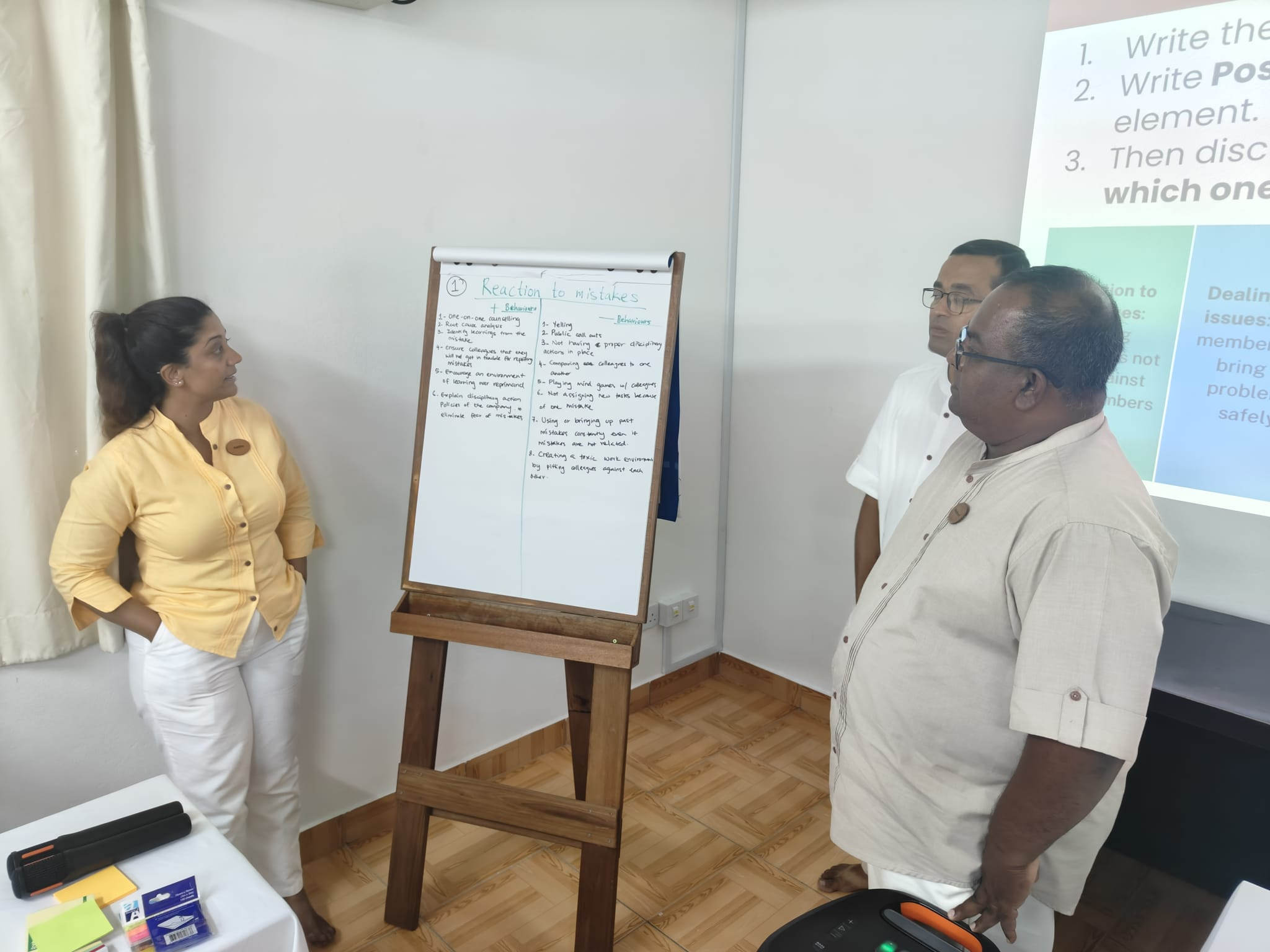
Leadership Behaviours That Build Psychological Safety
Participants explored practical leadership behaviours that strengthen trust and psychological safety every day.
These included:
Responding constructively to mistakes
Inviting input before making decisions
Recognizing people who speak up
Asking powerful questions
Demonstrating vulnerability
Encouraging participation
Creating opportunities for feedback
Showing appreciation
Supporting healthy dialogue
One of the workshop's key messages was:
Psychological Safety is not built through policies. It is built through everyday leadership behaviours.
Participant Feedback
The workshop received exceptional feedback from participants.
"Great experience. The new ideas that were shared were life-changing."
"This session created an internal awareness in me of the need for formulating a platform not only for my staff but also for the broader community about having support groups for anyone with an issue to go to."
"Very inspiring." -
"The session was an eye-opener." -
"Thank you Nick and Dona for the amazing session today." -
"Very effective training." -
The feedback highlighted the workshop's practical relevance, engaging facilitation style, and lasting impact on participants.
Bring Team Psychological Safety and Holistic Leadership to Your Organization
Nick Jonsson and Dona Amelia deliver customized workshops, leadership retreats, keynotes, and development programs focused on:
Team Psychological Safety
High-Performing Teams
Leadership Development
Team Coaching
Executive Coaching
Workplace Culture Transformation
Employee Engagement
Hospitality Leadership
Authentic Leadership
Mental Wellbeing
Resilience
Trust and Communication
Organizational Effectiveness
Sustainable High Performance
Whether working with hospitality teams, executive leadership groups, multinational corporations, family businesses, or fast-growing organizations, their mission remains the same:
To create workplaces where people feel safe, connected, empowered, and able to perform at their very best.
Or follow Nick on LinkedIn for weekly insights on coaching, leadership, wellbeing, and performance.