

Holistic Leadership for Sustainable High Performance in Bangkok: Performing at Your Best While Taking Care of Yourself and Your Team
15 September 2026 | Mandarin Oriental, Bangkok, Thailand

What does it take to sustain high performance while protecting your wellbeing and helping the people around you succeed?
That question shaped the leadership session I delivered at Mandarin Oriental, Bangkok, Thailand, on 15 September 2026. Through personal storytelling, guided reflection and practical exercises, we explored how our health, purpose, relationships and daily habits influence the way we perform—and the experience others have of working with us.
The session’s central message was simple:
High performance is not the problem. Unsustainable performance is.
Ambition, determination and commitment can take us a long way. Sustaining that effort requires an understanding of ourselves: what gives us energy, how we respond to pressure, when we need support and which habits help us stay well.
It also requires awareness of others. Sustainable high performance involves the conditions we create for our colleagues, the relationships we invest in and our willingness to help one another succeed.
A Leadership Session at Mandarin Oriental, Bangkok
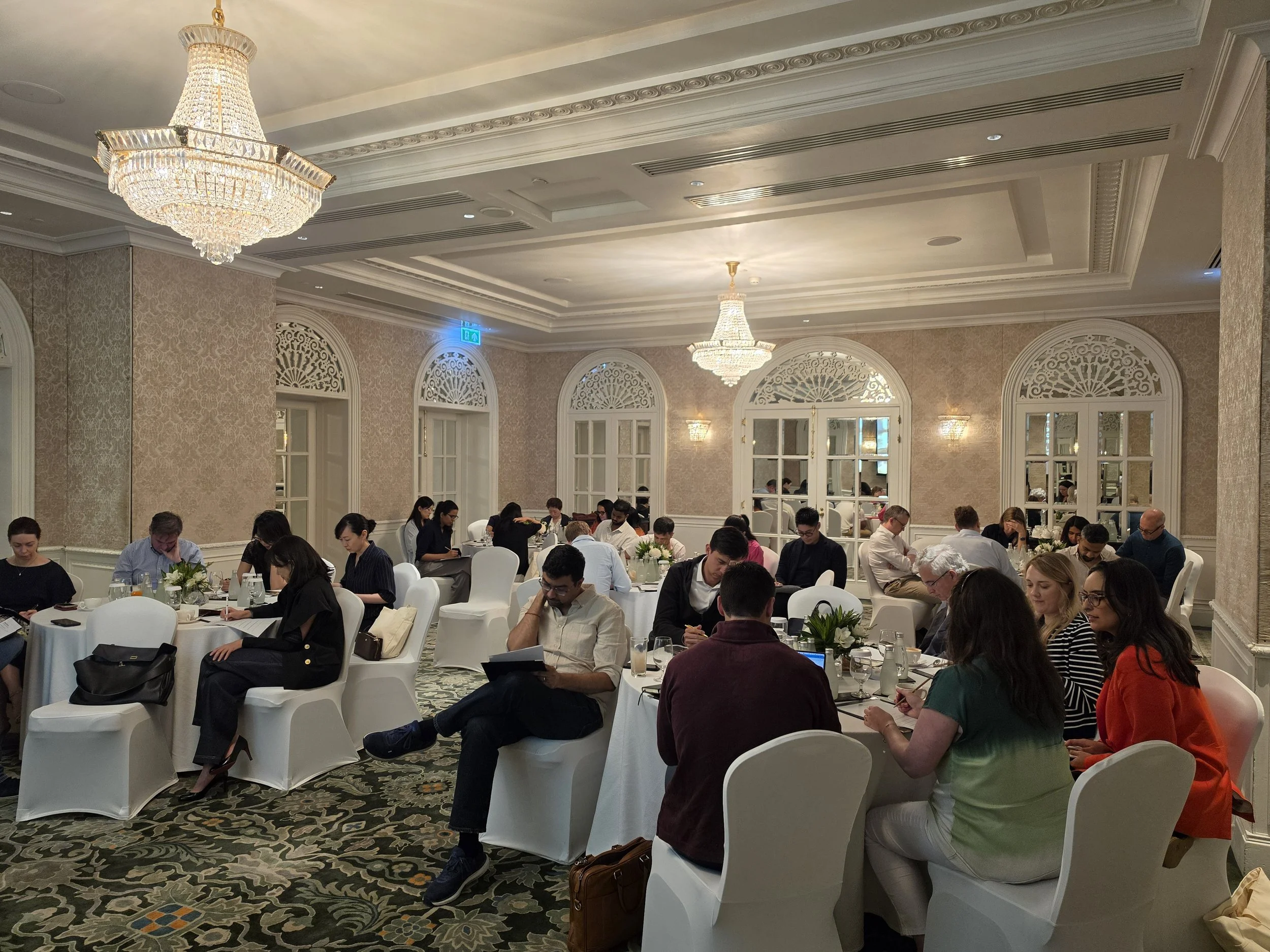
The session took place in the Regency Room at Mandarin Oriental, Bangkok, as part of Hakluyt’s Asia Pacific Offsite.
Its theme, Holistic Leadership for Sustainable High Performance: Performing at Your Best While Taking Care of Yourself and Your Team, brought personal wellbeing and professional responsibility into the same conversation.
Preparation with the organising team helped shape the session around specific priorities: recognising early warning signs, understanding energy and recovery, appreciating different responses to pressure and strengthening team-first behaviours.
These discussions gave the session a practical focus. We wanted to create space for participants to reflect on their own lives and working habits, then connect those insights with actions they could take after the offsite.
The setting in Bangkok provided an opportunity to step away from everyday responsibilities and give these questions proper attention.
Why Sustainable High Performance Matters
In demanding working environments, people often respond to increasing pressure by putting in more effort.
That response may be familiar. It may also be part of what has helped them succeed. Yet there comes a point when it is useful to examine whether the way we work remains sustainable.
Are we making time for recovery? Are we maintaining the relationships that support us? Do we recognise when our behaviour changes under pressure? Are we comfortable asking for help?
These were some of the questions behind the session.
Sustainable high performance asks us to look at the foundations of achievement. It invites us to consider how we can continue contributing at a high level while caring for the person doing the work.
For teams, it also raises a shared question: how can we support one another in ways that make strong performance more sustainable?
Pressure Does Not Look the Same on Everyone
One of the key themes was that people experience and express pressure differently.
Some speak up. Some withdraw. Some become reactive. Some continue performing while privately finding things harder to sustain.
It can be easy to assume that a colleague who is delivering results is coping well. It can also be easy to interpret another person’s behaviour through our own experience, expecting them to show stress in the same way we do.
The session invited participants to examine those assumptions.
What happens to our communication when we are stretched? Do we become quieter, less patient or more controlling? What might colleagues notice about us? What would we want them to understand?
Developing this awareness can help us communicate our needs more clearly. It can also encourage greater empathy towards colleagues whose responses differ from our own.
Recognising When Something Needs Attention
An important part of the brief was to explore warning signs before difficulties become overwhelming.
My personal story includes a significant crisis. The broader invitation to participants was to notice much earlier when something in their own lives or ways of working might need attention.
That could mean reflecting on changes in energy, habits, relationships or behaviour—and being honest about what is becoming difficult to sustain.
The purpose was to create space for self-awareness and conversation. Recognising that something needs attention gives us an opportunity to consider a change or seek support.
The Human Being Behind the Leader
During the session, I shared parts of my journey through executive success, burnout, addiction and recovery.
From the outside, professional achievement can suggest that everything is going well. My experience taught me how different someone’s private reality can be.
A reflection from the presentation captured that lesson:
“I didn’t reach rock bottom because I lacked capability. I reached it because I neglected the human being behind the leader.”
Rebuilding my life involved becoming honest about what was happening, accepting support and paying attention to areas I had neglected.
Looking back, I could see five steps in that process: Surrender, Purpose, Connection, Goals and Discipline.
Those steps became the framework for exploring holistic leadership during the Bangkok session.
What Is Holistic Leadership?
Holistic leadership recognises the connection between professional performance and the whole person.
Our physical, mental, emotional and social wellbeing influence the energy we bring to work. Our relationships, sense of purpose and daily habits shape how we respond to challenges and interact with others.
The way we work also affects the rest of our lives.
During the session, we explored these connections through the 5 Steps to Holistic Leadership. Each step included questions that participants could apply to their own circumstances.
The framework moved from recognising what needs to change towards identifying meaningful goals and consistent action.
Step One: Surrender — Recognising What No Longer Serves Us
We began with a question:
“What habit, belief or way of working is no longer serving you?”
This can be a challenging starting point for people accustomed to solving problems, carrying responsibility and pushing through difficulties.
Some behaviours become so familiar that we rarely question them. We may take on too much, feel that we should always have the answer or hesitate to ask for support.
Surrender involves recognising what needs to change and becoming willing to act on that awareness.
For one person, that might mean accepting help. For another, it could mean reconsidering a habit or having a conversation they have been avoiding.
The reflection gave each participant a personal starting point. It asked them to identify something relevant to their own life.
Step Two: Purpose — Connecting With What Matters Most
Purpose invited us to step back from immediate demands and consider the direction of our lives.
Busy days can be filled with deadlines, responsibilities and expectations. Within that activity, it is useful to pause and ask what gives our efforts meaning.
We explored questions including:
· What matters most to you beyond achievement?
· What did you naturally enjoy doing as a child?
· Which activities make you lose track of time?
· What experiences have shaped you most deeply?
· What problem do you feel drawn to help others solve?
· What human impact do you want your leadership to create?
The session also connected purpose with values, asking what it looks like to live those values when pressure is highest.
Purpose becomes visible through everyday choices. It influences where we invest our time, which relationships we protect and how we treat the people around us.
The reflection encouraged participants to consider whether their daily lives were aligned with what mattered most to them.
Step Three: Connection — Who Do You Turn to When Pressure Builds?
Connection was central to the discussion.
We asked:
“When the pressure builds, who do you turn to?”
Trusted relationships give us people with whom we can be honest. They can also help us recognise our own blind spots and feel more able to ask for support.
In the workplace, connection involves understanding colleagues beyond their responsibilities and output. It means becoming curious about their experience and learning what helps them work well.
The session explored psychological safety through four themes:
Belong. Speak up. Learn. Challenge.
These themes become visible in everyday interactions: how we respond to a question, receive a concern or react when someone offers a different perspective.
Our responses help shape whether others feel comfortable contributing openly.
Supporting the Performance of Others
We also explored a question that broadened the conversation about performance:
“What am I doing to help the people around me perform at their best?”
This asks us to consider our effect on the people we work with.
Do we listen carefully? Do we communicate clearly? Do we understand what support would be useful? Do our behaviours make it easier for colleagues to contribute?
Team-first performance includes the attention we give to these relationships. It recognises that our contribution extends to the working environment we help create.
Step Four: Goals — Looking Across the Whole of Life
Many professionals have clear targets and measures at work. Personal priorities can receive less structure, even when they matter deeply.
The Goals section created space to look more broadly through the Limitless Life Framework, covering eight connected areas:
· Business and career
· Finances
· Health
· Family and friends
· Romance
· Personal growth, contribution and spirituality
· Fun and recreation
· Physical environment
Participants were invited to reflect on their current satisfaction, their desired position and where they saw the greatest opportunity for growth.
The exercise encouraged them to identify where focused attention could make a meaningful difference.
We then connected that reflection with short-, medium- and long-term goals.
The central question was:
“What is one goal that would have the biggest positive impact on your performance and your life?”
A clear answer gives reflection direction. It helps someone decide where to begin and what progress could look like.
Step Five: Discipline — Making Supportive Habits Consistent
The final step focused on turning intentions into action.
Knowing what supports our wellbeing is valuable. Making space for it consistently requires planning and follow-through.
We explored discipline through the habits that support both performance and a fulfilling life: maintaining relationships, protecting recovery, following through on goals and accepting accountability.
The reflection question was:
“What is one habit you can practise consistently to improve your performance and wellbeing?”
The emphasis was on something specific and realistic enough to continue after the event.

Building Guardrails Around Our Own Patterns
We also considered the value of putting practical guardrails in place.
When we understand our tendencies, we can plan around them. For someone who habitually takes on more, that may include protecting time for recovery before the calendar fills.
In my own life, scheduling training helps me make space for swimming, cycling and running. Working with a coach and placing those commitments in my calendar gives structure to an area that could otherwise be pushed aside by work.
The wider principle is to recognise what supports us and make a deliberate place for it.
That can involve a scheduled activity, a boundary or an agreement with someone who helps us follow through.
Understanding What Gives Us Energy
Energy was an important thread in the preparation for the session.
We wanted participants to have space to consider what restores them, what drains them and what they need during demanding periods.
These questions are personal. An activity that energises one person may feel draining to another.
Useful reflections included:
· Which parts of my work give me energy?
· What tends to drain me during the day?
· What am I like to work with when I am at my best?
· How does that change when I am under stress?
· What helps me recover?
· What do I need to communicate to the people around me?
Understanding our answers can help us make more deliberate choices.
Sharing relevant insights with colleagues can also support clearer conversations about how to work well together.
From Individual Awareness to Shared Support
A key part of the session’s purpose was to connect personal goals with the support of others.
Each person has responsibility for their own choices. Colleagues can also play a helpful role in making those choices easier to sustain.
Preparation discussions explored examples such as protecting family time, supporting healthier routines and finding shared activities that create accountability.
The broader question was how people could help one another follow through on what mattered to them.
This connected wellbeing with team-first behaviours in a practical way. It invited participants to consider both the support they needed and the support they could offer.
Turning the Session Into Action
The session concluded with two commitments.
The first focused on individual action:
“What is one action you will take by the end of this month?”
The second brought in team support:
“What is one action you will take with support from your team?”
For both, the instruction was simple: write it down and make it specific.
A commitment could involve a habit, a personal goal, a relationship or a conversation.
The purpose was to give the reflection a clear next step. Naming an action helps make it tangible, while involving others can create opportunities for encouragement and accountability.
These commitments connected the session with life after the offsite.
Reflections on Speaking About Holistic Leadership in Bangkok
As a speaker and facilitator, I value the opportunity to connect a personal story with questions that participants can explore for themselves.
Storytelling can open a conversation. Reflection and practical exercises give people time to consider what that conversation means in their own lives.
At this leadership offsite in Bangkok, the focus remained on the relationship between personal wellbeing and collective performance.
We explored how people can recognise their patterns, remain connected to purpose, strengthen relationships and build habits that support them over time.
The longer-term value will be in what follows: a useful conversation, a protected routine, a clearer priority or a request for support.
Those are the everyday actions through which the ideas can become part of working life.
Thank You to the Team
My sincere thanks to Hakluyt for inviting me to contribute to your Asia Pacific Offsite at Mandarin Oriental, Bangkok, and for the care you put into shaping the session with me.
Your focus on self-awareness, wellbeing and team-first behaviours gave our preparation a clear purpose. It was a privilege to share my story and explore how the five steps could support reflection on living and working more sustainably.
The message I hope continues beyond the event is this:
Sustainable high performance begins with leading yourself—and helping others perform at their best.
About Nick Jonsson
Nick Jonsson is a keynote speaker, executive coach and author of Executive Loneliness. His speaking and facilitation work explores holistic leadership, sustainable high performance, wellbeing and human connection.
Drawing on his executive experience and personal journey, he combines storytelling with practical reflection for conferences, leadership offsites and team workshops in Thailand and across Asia.
The 5 Steps to Holistic Leadership—Surrender, Purpose, Connection, Goals and Discipline—provide a framework for examining how we live, lead and support the people around us.
Or follow Nick on LinkedIn for weekly insights on coaching, leadership, wellbeing, and performance.