

Fearless Leadership in the Agentic Economy The Human Side of AI Transformation at CIO100 India 2026
CIO100 Awards and Conference India 2026 | The Leela Bhartiya City, Bengaluru | 17-19 September 2026

Technology is accelerating. Artificial intelligence is transforming how organisations operate, how work is completed and how leaders make decisions.
But as technology becomes faster and more capable, are the human beings responsible for leading that transformation keeping up?
That was the central challenge international keynote speaker Nick Jonsson brought to the stage at the 21st CIO100 Awards and Conference India in Bengaluru.
Opening Day One of the conference with his international keynote, Fearless and Limitless, Nick addressed an audience of CIOs, CTOs, digital transformation executives and senior technology decision-makers from across India.
The conference theme, The Fearless Vision CIO Leadership for the Agentic Economy, looked towards a future in which AI agents will increasingly plan, decide, act and complete work on behalf of people and organisations.
Nick's keynote examined the other side of that future: the human condition of the leaders expected to make it possible.
AI does not experience exhaustion, loneliness or fear. Human leaders do.
CIO leadership for a new technological era
The CIO100 Awards and Conference India 2026 brought together some of the country's most influential technology leaders at The Leela Bhartiya City in Bengaluru, also widely known as Bangalore.
The three-day conference explored the rapidly evolving role of CIOs in an economy being reshaped by artificial intelligence.
The programme included conversations about moving AI from experimentation to enterprise value, redefining the IT workforce, integrating human and AI teams, improving customer and employee experience, managing emerging risks and building organisational resilience.
These are among the defining leadership questions of the agentic economy.
AI agents will increasingly perform work that previously required continuous human involvement. They will analyse information, coordinate processes, recommend decisions and act autonomously within organisational systems.
For CIOs, this creates extraordinary possibilities. It also brings profound responsibility.
Technology leaders must decide where AI should be introduced, how it should be governed and how organisations can adopt it without losing trust, judgement, accountability or human connection.
The role of the CIO is therefore expanding far beyond technology management. Today's CIO must help shape organisational strategy, culture, resilience and the future relationship between people and intelligent systems.
That requires fearless vision. But, as Nick explained in Bengaluru, fearless leadership cannot be measured only by how courageously a leader transforms an organisation. It must also be measured by how courageously that leader is willing to transform themselves.
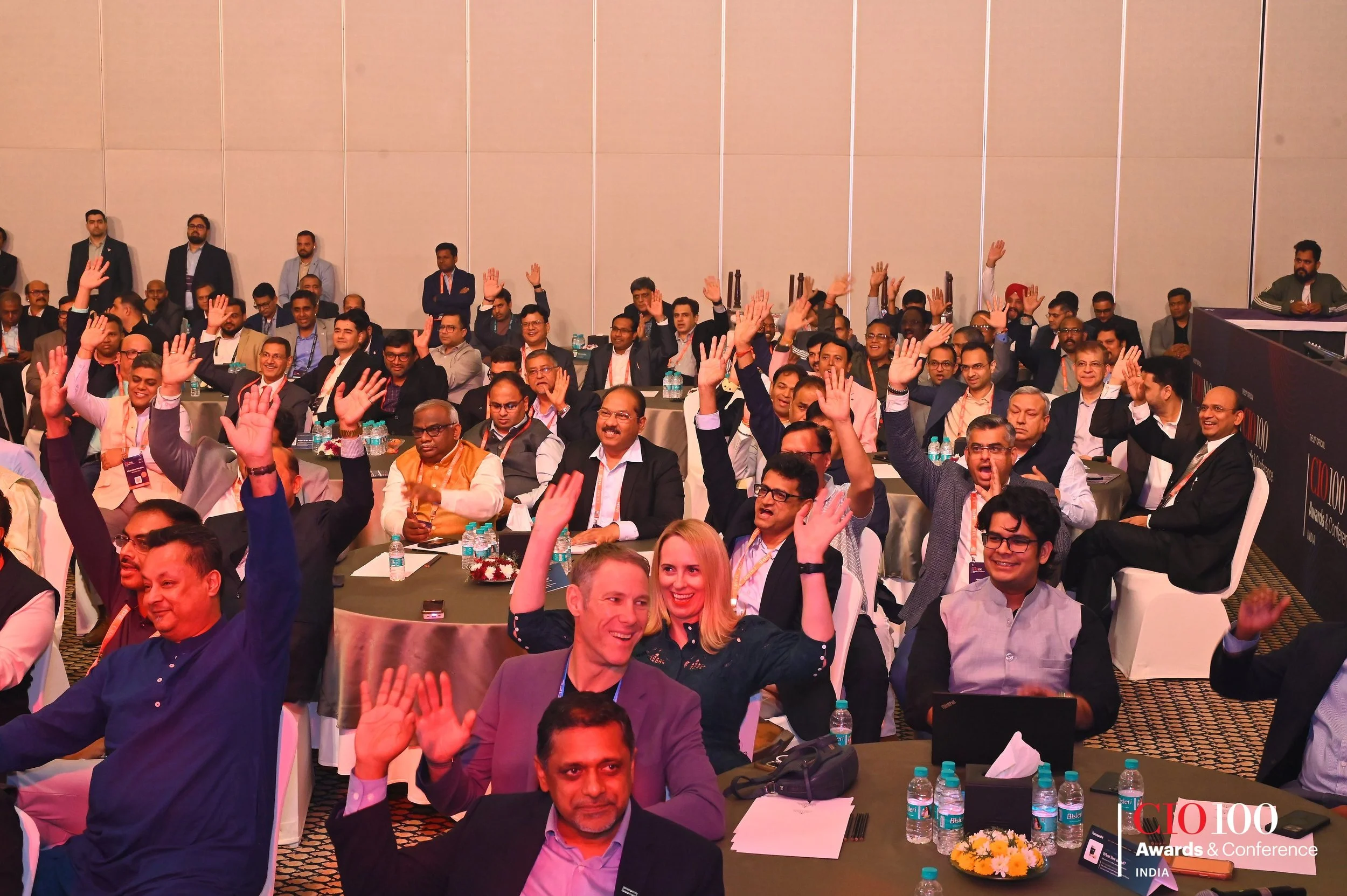
Are leaders transforming themselves as courageously as their organisations
Organisations devote enormous resources to preparing for technological change. They upgrade infrastructure, replace systems, strengthen cybersecurity, redesign operating models, establish transformation offices, develop AI strategies and train employees to use new tools.
Strategies can be rewritten. Technology can be upgraded. Systems can be replaced.
But what happens when the human leader behind that transformation is exhausted, disconnected or quietly struggling?
Nick asked the CIO100 audience to consider one central question:
Are you transforming yourself as courageously as you are transforming your organisation?
It was not a question about technical capability. It was a question about the leader behind the technology.
The leaders in the room carry responsibility for innovation, artificial intelligence, cybersecurity, performance, digital transformation, their teams and the future readiness of their organisations.
Their boards look to them. Their CEOs look to them. Their teams look to them. When something goes wrong, people expect them to remain calm, make a decision and provide an answer.
But when the leader does not have the answer, who do they turn to? When responsibility becomes overwhelming, who is looking after them?
These questions introduced a deeply human conversation within a conference focused on the technological future.
The personal story behind the keynote
Nick's message was grounded in his own experience of senior executive leadership.
A decade ago, he appeared to have everything associated with professional success: the title, income, influence and privileges of corporate leadership. From the outside, his life appeared successful. Behind the title, however, a very different story was developing.
Like many senior leaders, Nick had become accustomed to carrying responsibility while saying very little about what he was experiencing personally. The pressure to perform was visible. The struggle behind the performance was not.
During his keynote, Nick explained that he did not reach the lowest point in his life because he lacked intelligence, experience, ambition or professional capability. He reached it because he had neglected the human being behind the leader.
That distinction is especially relevant in the technology sector. Highly capable leaders can continue delivering results while their health, relationships and personal lives deteriorate. Professional success can conceal personal distress for a long time, sometimes even from the leader themselves.
Executive isolation intensifies the risk. The more senior someone becomes, the more difficult it can feel to admit uncertainty, ask for support or speak openly about fear. Leaders may be surrounded by people throughout the day yet have no one with whom they can be completely honest.
Nick's story challenged the idea that leadership strength means carrying everything alone. Real strength can begin with acknowledging that something needs to change.
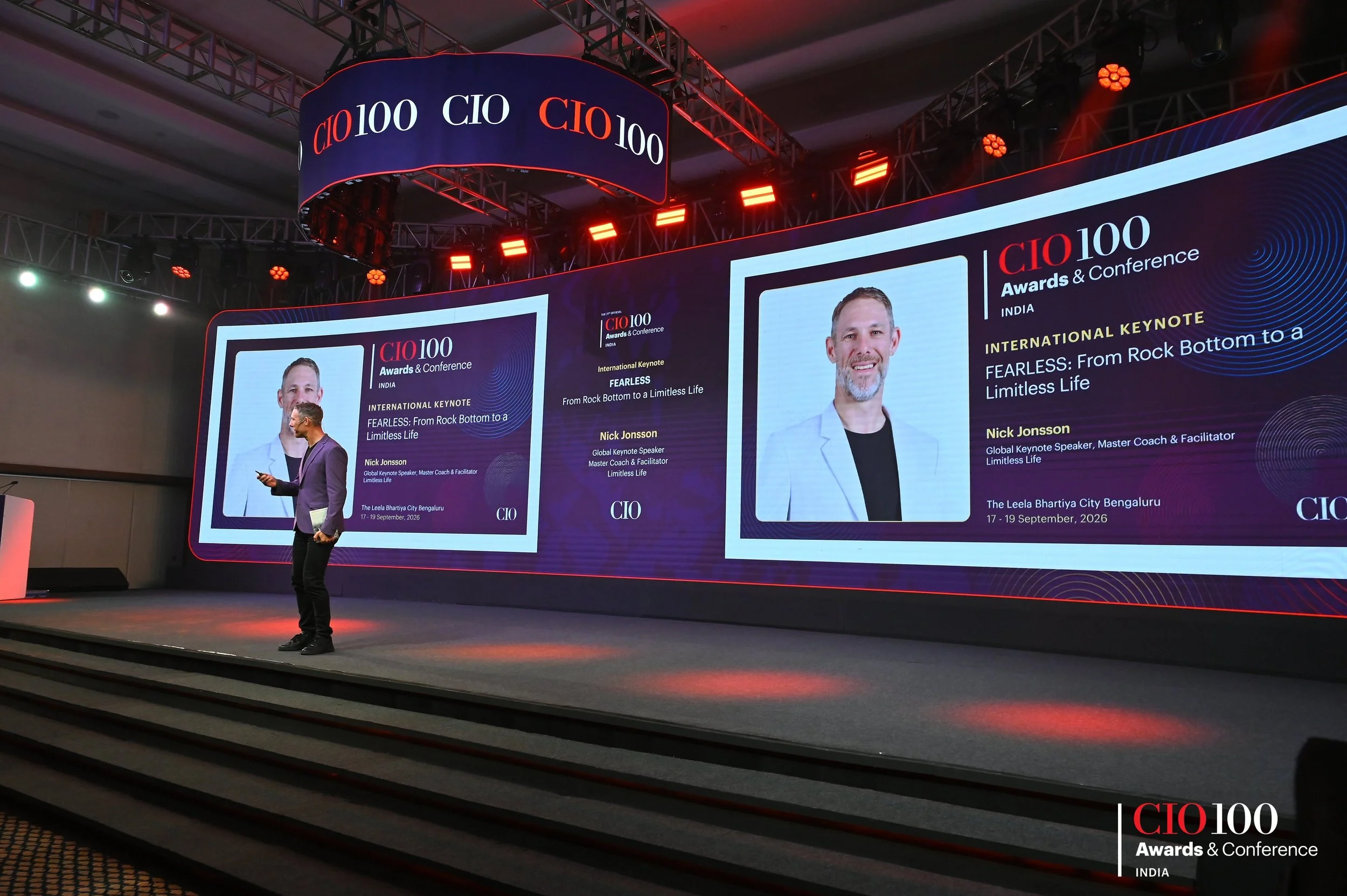
What holistic leadership means
Nick introduced the CIO100 audience to the principle of holistic leadership.
Holistic leadership recognises that professional performance cannot be separated indefinitely from the rest of a leader's life. It brings together:
· Physical health
· Mental health
· Emotional health
· Psychological health
· Social wellbeing
· Personal resilience
· Professional responsibility
When one of these areas is consistently neglected, the effects eventually appear elsewhere.
A leader's physical health affects energy and decision-making. Mental and emotional health influence judgement, patience and communication. Relationships affect resilience and perspective. A sense of purpose influences the ability to navigate uncertainty.
This does not make leadership less commercially focused. It makes sustainable performance possible.
As AI assumes more analytical, administrative and operational work, distinctly human qualities will become even more important: judgement, empathy, courage, trust, connection and the ability to remain grounded during uncertainty.
The development of these qualities begins with the leader.
Five steps towards fearless and holistic leadership
Nick shared a five-step human roadmap for leaders navigating the agentic economy: Surrender, Purpose, Connection, Goals and Discipline.
These five steps were not presented as abstract leadership theory. They emerged from Nick's personal journey of rebuilding his life and learning to lead himself differently.
Step 1 Surrender
Surrender does not mean giving up responsibility. It means letting go of the belief that a leader must control everything or solve every problem alone.
For many executives, the first courageous step is acknowledging that the current situation is not sustainable. It may mean admitting that they are exhausted. It may mean confronting an unhealthy habit, a damaged relationship or a leadership mindset that no longer serves them. It may also mean asking for help.
Nick reminded the audience that a problem shared is often a problem halved. Speaking honestly to a trusted person can interrupt the isolation that allows personal struggles to deepen.
Question for leaders: What is one habit or mindset you need to let go of to lead more fearlessly?
Step 2 Purpose
In a period of relentless technological acceleration, leaders can become consumed by urgency. There is always another implementation, risk, deadline, board presentation or strategic priority demanding attention.
Purpose creates direction within that pressure. It helps leaders distinguish between what is urgent and what is genuinely important. It provides a foundation for decisions when the future is uncertain and the available choices are imperfect.
Nick encouraged the audience to look beyond professional targets and consider what gives their lives meaning. Purpose is not limited to a corporate mission statement. It is a personal understanding of the contribution a leader wants to make through their work, relationships and life.
Question for leaders: What is one action you can take to align your leadership more closely with your purpose?
Step 3 Connection
Leadership can become increasingly lonely as responsibility grows. Senior executives may have large professional networks without having relationships in which they feel safe enough to speak honestly.
Yet connection is not separate from leadership performance. Strong relationships provide perspective, accountability and emotional support. They help leaders recover from setbacks, challenge unhelpful thinking and remain connected to life beyond their executive role.
Connection also affects organisational culture. Leaders who build genuine relationships are better able to create trust, recognise when people are struggling and guide teams through uncertainty. This will become even more important as organisations integrate human employees with increasingly autonomous AI systems.
Question for leaders: Which relationship do you need to repair or strengthen to lead transformation more effectively?
Step 4 Goals
CIOs are accustomed to professional goals. They work with transformation roadmaps, budgets, milestones, performance measures, service levels and key performance indicators.
But many leaders do not apply the same clarity to their personal lives. Nick challenged the audience to consider whether they had meaningful goals for their health, relationships, personal development and overall wellbeing, not only for their careers.
Using the Limitless Life framework, leaders can assess their current level of satisfaction across important areas of life, identify where they want to be and recognise the gaps requiring attention. This process turns a vague desire for change into something that can be addressed deliberately.
Question for leaders: What is one goal that would have the greatest positive effect on your leadership and your life?
Step 5 Discipline
Awareness alone does not create transformation. A leader may understand what needs to change and still remain trapped in familiar habits.
Discipline turns insight into sustained action. It means following through on commitments when the immediate pressure of work makes it tempting to postpone them. It means treating personal wellbeing, relationships and development with the same seriousness applied to organisational priorities.
Discipline is not punishment or relentless self-pressure. It is the consistent practice of choosing what matters.
Question for leaders: How will your leadership and your life transform when you commit to the discipline required to achieve your goals?
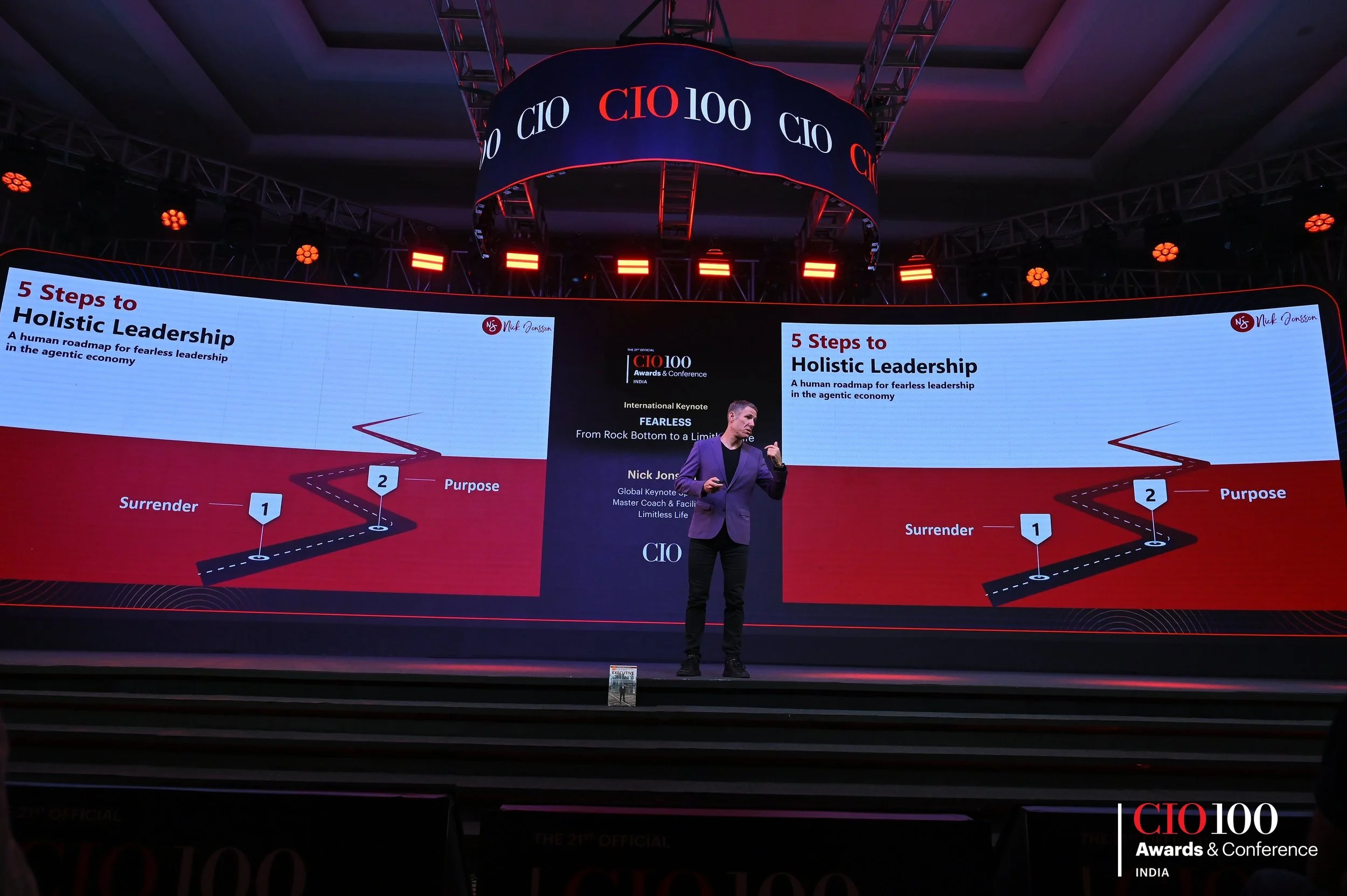
Why this message mattered at CIO100 India
The timing of this conversation was significant. The CIO100 India 2026 programme examined how AI is moving from isolated pilots into the heart of enterprise operations.
Sessions explored the possibility that an organisation's next hire might be an AI agent. Leaders discussed how human and AI teams could work together and how CIOs could manage emerging risks while building more resilient organisations.
These changes will reshape work. They will also reshape leadership.
CIOs will need to guide organisations through uncertainty while employees question how AI will affect their roles, skills and professional identities. They will need to balance innovation with responsibility, speed with governance and automation with human judgement.
This work cannot be led sustainably by executives who are disconnected from their own needs, relationships and sense of purpose.
Nick's keynote brought that reality into the centre of the AI conversation. The future of work is not only a technology challenge. It is a human leadership challenge.
Recognising India's fearless technology leaders
The 2026 event marked the 21st annual edition of CIO100 in India.
Alongside the conference programme, the CIO100 Awards recognised technology leaders who have demonstrated a progressive and forward-thinking approach to innovation and organisational transformation.
The Fearless 100 celebrated CIOs embracing new technologies and ideas to make their organisations future-ready. The Game Changers recognised CIOs and CTOs whose technology strategies have helped move their organisations from traditional IT management towards wider digital transformation. The Hall of Fame honoured leaders who have demonstrated consistent innovation across successive years.
Within this environment, the idea of fearless leadership carried particular weight.
Fearlessness is often associated with decisive action, ambitious transformation and a willingness to embrace emerging technology. Nick's keynote expanded that definition.
Fearlessness also means being honest about pressure. It means asking for support before reaching a crisis. It means repairing important relationships, reconnecting with purpose and accepting that sustainable transformation must include the leader.
The leadership advantage technology cannot replace
Artificial intelligence can process enormous amounts of information. It can identify patterns, generate recommendations and complete tasks at a speed no human team can match.
But AI cannot take responsibility for the kind of leader a person chooses to become.
It cannot replace courage, trust, compassion or human connection. It cannot decide whether a leader will continue struggling in silence or reach out for support. It cannot rebuild a neglected relationship, define a meaningful purpose or make a personal commitment to change.
Those responsibilities remain human.
The future will require organisations to develop advanced technological capability. It will also require leaders with the emotional, psychological and social capacity to use that technology responsibly.
That is why holistic leadership belongs in the conversation about AI.
Fearless leadership begins with leading yourself
The message Nick left with the CIO100 India audience was simple: Fearless leadership begins with leading yourself.
Technology will continue to accelerate. AI systems will become more capable. The agentic economy will transform how organisations plan, decide and operate.
But organisational transformation cannot remain sustainable if the leaders responsible for it are exhausted, isolated or disconnected from themselves.
The question is not only whether organisations are ready for the future. It is whether their leaders are preparing themselves for the human demands of creating it.
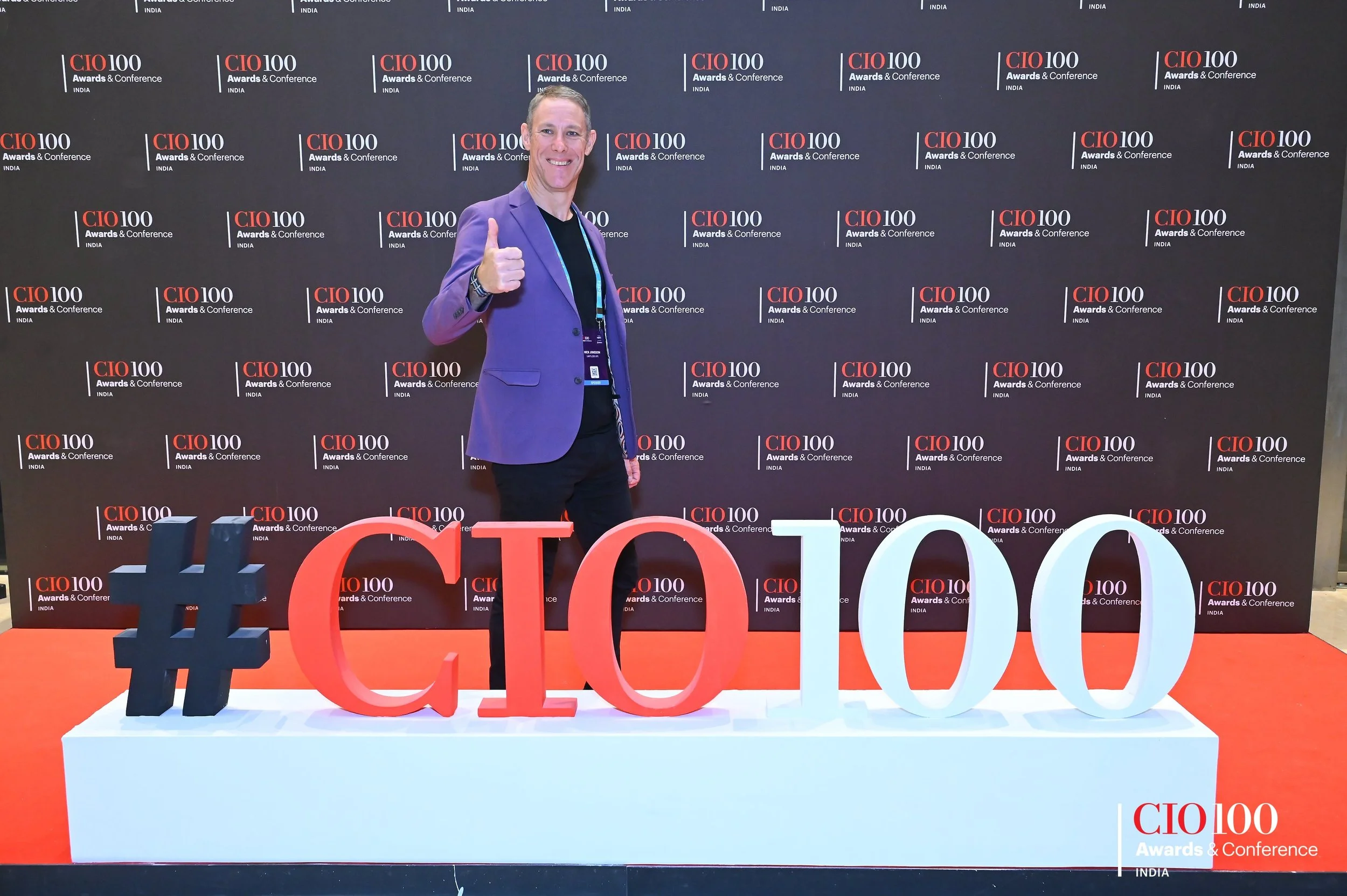
What was the CIO100 India 2026 conference about?
The 21st CIO100 Awards and Conference India focused on The Fearless Vision CIO Leadership for the Agentic Economy. Held in Bengaluru from 17-19 September 2026, the event examined how CIOs and technology leaders can guide organisations through AI adoption, workforce transformation, enterprise innovation, emerging risk and the growing use of autonomous AI agents.
Where was CIO100 India 2026 held?
CIO100 India 2026 was held at The Leela Bhartiya City in Bengaluru, India. Bengaluru, also widely known as Bangalore, is one of India's most important centres for technology, digital innovation and enterprise leadership.
Who delivered the international keynote at CIO100 India 2026?
Global keynote speaker, master coach and facilitator Nick Jonsson delivered the Fearless and Limitless international keynote. His session connected the conference's focus on AI and the agentic economy with the human pressures experienced by CIOs and senior business leaders responsible for transformation.
What did Nick Jonsson speak about at CIO100 India?
Nick spoke about the human side of AI transformation and asked whether leaders are transforming themselves as courageously as they are transforming their organisations. He explored executive pressure, isolation, resilience, purpose, relationships and the need to protect the human being behind the leadership role.
What is the agentic economy?
The agentic economy describes an emerging business environment in which AI agents can plan, make recommendations, take actions and complete work with increasing autonomy. For CIOs, it creates opportunities to improve productivity and decision-making, while also raising important questions about governance, accountability, workforce design, trust and human leadership.
Why does human leadership matter during AI transformation?
AI can analyse data, automate processes and support decisions, but it does not replace human judgement, responsibility, courage, empathy or trust. Organisations need leaders who can manage the technical demands of AI adoption while helping people navigate uncertainty and change. A transformation strategy is difficult to sustain when the leaders responsible for it are exhausted, isolated or disconnected.
What is holistic leadership?
Holistic leadership is an approach that connects professional responsibility with physical health, mental health, emotional health, psychological health, social wellbeing and resilience. It recognises that long-term leadership performance depends on the condition of the whole person, not only their professional expertise or job title.
What are Nick Jonsson's five steps to holistic leadership?
The five steps are Surrender, Purpose, Connection, Goals and Discipline. Surrender means acknowledging reality and becoming willing to ask for support. Purpose gives direction. Connection reduces isolation and strengthens relationships. Goals turn intentions into clear commitments. Discipline creates the consistent action required for lasting change.
How can CIOs reduce executive isolation and leadership burnout?
CIOs can begin by speaking honestly with a trusted person, strengthening important relationships, setting personal as well as professional goals and treating their wellbeing as a leadership responsibility. Leaders do not need to wait for a crisis before asking for help. Early, honest connection can protect both the individual and the organisation they lead.
Is Nick Jonsson an AI keynote speaker?
Nick speaks about the human leadership required to guide AI and digital transformation successfully. His work complements technical AI content by addressing executive resilience, workplace loneliness, vulnerability, purpose and holistic performance. This makes the keynote relevant for AI conferences, CIO events, digital transformation programmes and future-of-work discussions.
What can audiences expect from the Fearless and Limitless keynote?
Audiences can expect an honest personal story, practical leadership reflection and a clear five-step framework they can apply to their own lives. The keynote challenges high-performing leaders to consider what is happening behind their professional role and what they may need to change to lead more sustainably.
How can an organisation book Nick Jonsson for a leadership or technology conference?
Conference organisers can invite Nick Jonsson to speak on fearless leadership, the human side of AI transformation, executive resilience, workplace loneliness, vulnerability and holistic wellbeing. The Fearless and Limitless keynote can be adapted for CIOs, technology executives, senior leadership teams and broader corporate audiences.

Bringing the human side of AI leadership to the global stage
Nick Jonsson is a global keynote speaker, master coach and facilitator who brings lived executive experience to conversations about leadership, AI transformation, workplace loneliness, vulnerability and holistic wellbeing.
His Fearless and Limitless keynote complements technology-focused conference programmes by addressing the human capacity required to lead change successfully.
For conferences exploring artificial intelligence, the future of work, CIO leadership, digital transformation, executive resilience or sustainable performance, Nick gives audiences a practical framework for examining how they are leading their organisations and how they are leading themselves.

Or follow Nick on LinkedIn for weekly insights on coaching, leadership, wellbeing, and performance.