Episode 339: Seline Shenoy - Finding Your Way Back to Yourself
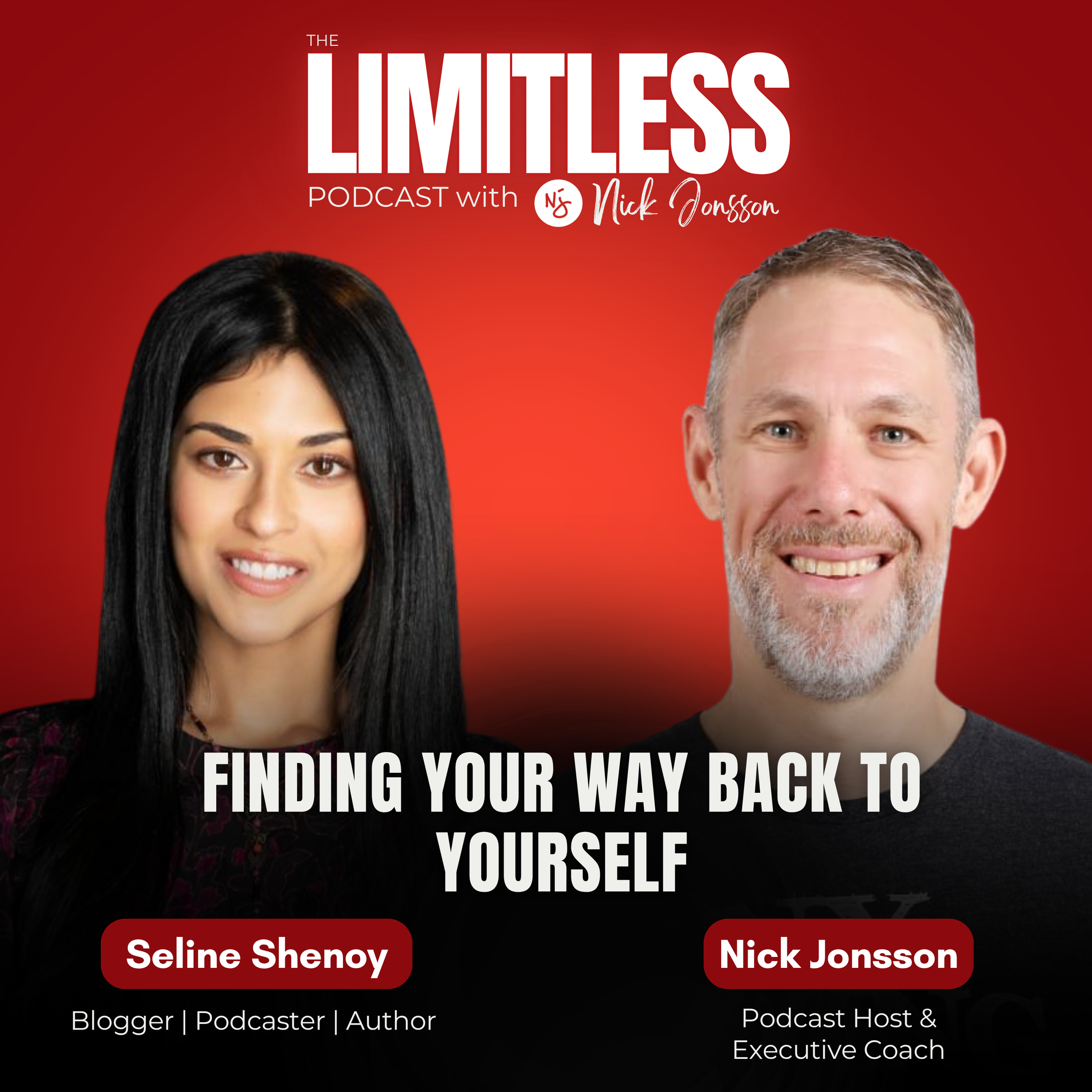
Seline Shenoy gave her life away in pieces, and each piece looked reasonable at the time. She had a career path mapped out in the United States, visa and sponsorship in place, and she let it go to move back to Dubai for the man she was seeing. She stopped mentioning the books she read. She stopped bringing up the research on human behaviour she found fascinating. At parties in his affluent circle, she left her brain at home.
Seven years in, when it ended, she looked in the mirror and did not recognise the person there.
What I did not expect is that she had known for a long time. Friends had warned her. She could see what the relationship was doing to her. What she lacked was not insight but someone to walk her out, which is eventually what a relationship coach did — after first trying to save it, then telling her plainly that it was not healthy and she needed to end it.
The real work came after. Two years without dating anyone, spent looking for her own part in what happened rather than cataloguing his.
"You have to do that inner excavation. You must."
That excavation became The Dream Catcher, the blog she started in 2014 while she was still raw from it, and later the podcast she has run since 2018.
For anyone who has quietly edited themselves down to fit somewhere they do not belong.
Connect with Seline Shenoy to collaborate:
Episode Transcript
Nick Jonsson: Welcome back to another episode of Limitless. Today I'm very excited, because we have a guest from Dubai. We have Seline with us. She's an author, a blogger, a podcaster, and the founder of The Dream Catcher. We're going to dig into all of that today, and also into the underlying motivation for the work she does. Seline, a warm welcome to you. How are you?
Seline Shenoy: I'm doing terrific. Nick, thank you so much for having me on the show. I'm so looking forward to having a conversation with you today, and getting into some really interesting topics that I hope will be helpful for your listeners.
Nick Jonsson: That sounds fantastic. I know we're going to talk about belonging, authenticity, self-worth, life transitions, and also the cost of sacrificing yourself to be accepted. Are those topics that resonate with you, Seline?
Seline Shenoy: Absolutely, that's all in my wheelhouse.
Nick Jonsson: Okay, so let's start there. Let's go back in time. When I read your bio and your profile, I understood that you went through some challenges in your 20s. Unless it's too painful, would you be able to elaborate a little? What happened then?
Seline Shenoy: I think most people can relate to this, because our 20s tend to be the years when most of us have our biggest challenges. We're still trying to figure things out, we're young adults, and we don't quite know the ropes yet.
Just to give some context: I just turned 43, so this was a while ago. Looking back, I feel like the 20-year-old me was really just trying to work with the knowledge she had at the time. We do the best we can with the knowledge we have.
At that time, I had graduated from college. I have a degree in marketing and a degree in global communications, and I'm proud of that. But I also had a very tumultuous relationship for seven years, which is most of my 20s. That was a really big source of learning for me. More than anything else, Nick, I realised it wasn't really the emotional turmoil I went through during those seven years. It was the fact that somewhere along the way, I lost myself.
I began building my identity around somebody else's world, and when the relationship ended, I couldn't recognise myself anymore. I was looking at myself in the mirror saying, "Who am I?" Because over those years, I was sacrificing different aspects of myself. I was giving up my hobbies. I wasn't focused on my career. All because I was so bedazzled by the world I was immersed in. The person I was with came from wealth and had high status, so I was in that kind of world.
And I was conditioned to believe that this is something I should be aiming for. In my culture, women are sort of taught to find a partner who will elevate them. Sure, they can do well in their career and pursue their own interests, but don't forget to also find that coveted partner, someone who can take your life to the next level.
So I was doing everything based on my cultural conditioning, and also on the wounds I had growing up. I had very deep wounds around belonging and self-worth, and those originate from the days when I wasn't feeling good about myself. I was overweight growing up, and I was bullied as a kid, so I still had wounds from those years. My need to be accepted and to be loved was even more pronounced, and I was willing to give up aspects of myself so that I could get that.
I had to forgive the 20-year-old me, and realise that she was just trying to make up for all of that. She was just trying to feel loved at the end of the day. I'm sure so many people can identify with that: that we would do anything just to feel that someone finds us special, that someone can see the beauty and the worth in us.
But ultimately, it's only you who can do that. If you don't feel comfortable in your own skin, and you don't recognise your strengths and your skills and express them in the world, you're always going to feel hollow, and you're going to be vulnerable to other people's actions and their views of you.
So yes, it was a very difficult time. I like to call it the dark ages of my life. But so much came from it. What came was wisdom, and the impetus to build my platform, The Dream Catcher, and to find a place where I could express myself.
I thought that maybe everything I was going through was something other people out there in the world could relate to. And I was right, because I started writing my blog in 2014, and I started hearing from people all over the world saying, "Yes, we resonate with everything you're saying." I think the reason the platform did so well is that I was speaking from a place of authenticity, and I was so raw. I was just coming off the heels of that difficult relationship.
Finding myself really came from spending that time reflecting, studying different books, the teachings of philosophers and authors I admired, and then reflecting on how that related to my own life. So that's pretty much how I would summarise that chapter of my life.
Nick Jonsson: Thank you for sharing that, Seline. I believe most of us who have lived, and I'm 51 years of age myself, and many of our listeners are 40, 50, 60, that kind of age bracket, would also have gone through some broken relationships and the emotional pain that comes with them. As you reflect back on your breakup, can you remember what part of yourself disappeared first?
Seline Shenoy: I would say my ambition. I had certain career goals. I wanted to pursue a certain path in the United States, and I abandoned that and moved back to Dubai to be with the person I was dating. That was a big step, because I had been established over there. My visa, everything was taken care of. As a non-American, getting a visa and work sponsorship there is really hard. So I left all of that and returned to Dubai.
I would say I gave up on the career path, the trajectory I saw for myself. I'd worked really hard, I got my bachelor's degree, I got my master's, and I was all set. I knew what I wanted to do, I knew where I was going to take my life. But I was so attached. I had this whole codependency pattern going on. I wasn't thinking clearly; my whole strategic mind was clouded. So I followed what I felt was the right thing to do, and I relocated.
So I abandoned my career dreams, and then I was kind of stuck in all kinds of weird internships and jobs in Dubai that did not fulfil me and did not pay well. Fortunately, my family are doing well, so it wasn't that I couldn't pay the bills. But personally, I felt unfulfilled as a professional, because I am ambitious. There are things I wanted to do and achieve, and that all took a backseat.
Nick Jonsson: Yeah, so you sacrificed your own path and your career, and made a big move, while you had everything already set up and going for you. It was really a setback. So looking back at that time, was it hardest to lose the relationship, or to realise that you had lost so much of yourself, and the things you had set up, and the path you were on?
Seline Shenoy: I also think I lost my authenticity. The things that made Seline kind of dissipated, because it was a very different world I was in, definitely driven by more superficial ideals. It was an affluent community, and everyone was in their 20s, so it was all about socialising, connecting and partying. I don't want to judge them. It's fine to live that way, it works for some people, but it just wasn't my world.
Anyone who has tried to fit into a social group or a community that doesn't quite align with their values and who they are can relate to that. I tried to change myself. I tried to hide the parts of me that I felt wouldn't be seen as acceptable or cool. I didn't mention my love for books. I didn't mention the latest study I'd read about human behaviour. I just left my brain at home and attended all these events and parties.
It was fun in the beginning, I have to admit, but slowly I realised, gosh, this is not who I am. It started to take a toll on me, because it didn't feel authentic, and I didn't feel like I was in integrity with the truth of who I am.
Nick Jonsson: And from there you catapulted yourself out, and eventually found your path and your way. Thinking back to that time, who were the people by your side? You said your family could support you, but were there other people you leaned on? What support tools did you have to move forward at that difficult juncture?
Seline Shenoy: I had a couple of good friends who chimed in at certain times. Funnily enough, some of his friends were warning me. They were like, "Hey, are you sure this is what you want?" Those were the ones who cared about me; there were others who did not want me there, and they made that very clear.
But I was proactive in getting the help I needed. I was still reading books, I was still watching YouTube videos. At that time we didn't have podcasts; this was in the 2000s. But I was reaching out for information. I did get a relationship coach, who eventually opened my eyes. She said, "No, you've got to get out of this, this is toxic."
So I was definitely aware that I was not in a good situation. I just needed someone to help me move past it, because it was hard. As I said, there was a very strong attachment, not just to him, but to that world, and to the identity I had built to fit into that world. Remember, this was seven years, a long time, a major chunk of my life. To just throw it all away and start again felt scary. I felt like I was going to jump into a dark void, and that seemed scary to me. So I needed somebody to hold my hand and say, "It's okay, you can do this."
Nick Jonsson: And what role did the relationship coach play in that? You said that person was supporting you and helping you break free. Can you share a little more? I think that could offer some hope and some ideas for listeners who might be in a toxic relationship but don't know how to move on.
Seline Shenoy: I think it's really essential to have somebody support you if you're in a relationship you can't break out of. It's very, very hard. You don't have that objectivity, and you might be intensely attached to that person. You might have an anxious attachment style, which is what I had.
A relationship coach can see it from a rational perspective. Initially she said, "Okay, let's try to rescue this." She gave me certain tasks to do, like how I could change my behaviour towards him, and change my attitude towards his friends and his world. I tried that. It did not go as planned. And then she said, "We've tried everything. I don't see this working. It's not healthy for you in the long run. I think you need to end it."
So I did it. It was the hardest thing. It was so hard for me. But she gave me the assurance that I was going to be okay. Yes, it was going to hurt. It was going to hurt like hell, and it did. It took me a while to heal. I actually took two years off. I didn't date anybody for two years, and I used that time to date myself, to rediscover myself, and the me that I had abandoned seven years earlier.
So she was instrumental in helping me move forward. It was tough, but once you get to the other side, you feel relief, you feel liberated, and you think, "Thank God I did that." I released myself from that bondage that trapped me and prevented me from moving forward, and that contaminated my energy and my soul.
I'm not going to sugarcoat it. It's not an easy process. But you will be really, really happy and thankful once you walk through that dark cloud.
Nick Jonsson: Kudos to you, Seline, first of all for admitting this to yourself and reaching out and getting that help, because so many people are reluctant to take that step out of fear of vulnerability, fear of being judged and so on, but you really dove straight into it. And then you decided to take two years to focus on yourself. With that intention, that makes a difference, and I would imagine it's a big part of who you are today. So many people, especially coming out of a long relationship, find it too hard to be by themselves, and they end up in another relationship, and many times that relationship can be just as bad as the last one, or even worse. Can you share more about that decision to take those two years for yourself?
Seline Shenoy: I learned something very interesting from Dr Phil McGraw. Have you heard of him? He's written some fabulous books. He's an American self-help figure who was popularised by Oprah Winfrey's show. I love his books because he's so practical. He doesn't have much fluff in the way he presents things.
He described this very interesting exercise you should do after a relationship. It's called a relationship autopsy. You know how, after somebody dies, a coroner does an autopsy to find out what happened, what actually led to the death? Similarly, when a relationship dies, you want to look at it and dissect it and ask, "What was it that went wrong? What led to its death, to its end?"
That's what I did. And what I focused on was where I went wrong. Most people will blame it on the other person. They'll say, "Oh, he was a jerk," or "She was too demanding," or whatever. But even if 90% of it was because of their bad behaviour, 10% was because of you. So I looked at how I contributed to the relationship's demise. That's where the wisdom comes in. Without that wisdom, you cannot create a healthy dynamic in your next relationship. And not just a romantic relationship, but with anybody.
You have to look deep down inside and ask, "What caused me to behave this way?" I won't say I was an angel in that relationship. I was reactive at times, and I could have been better in so many ways. So I asked myself, "What part of me can I improve? What do I need to look at? What are the parts of me that felt abandoned when I wasn't being loved the way I wanted to be?" These are deep, hard questions to ask, Nick.
But it's essential. It's absolutely essential, if you want to feel liberated, if you want to feel free in the true sense of the word. You have to do that inner excavation. You must. Because that's where the wisdom comes in, and that's when you can actually move forward in a healthy way, and reach a place of wholeness and authenticity. So yes, those two years were pivotal. Even though I had opportunities, I just didn't take them.
Nick Jonsson: That's great to hear, Seline. In my own recovery, when I had adversity in my life, going through the loss of a job and a divorce and so on, I turned to alcohol as a way to medicate myself through it, and that landed me in a 12-step programme. Interestingly enough, what I learned there was all about looking at my part. Just like you shared about looking at your part: what can I learn from this, how can I move forward, and how do I clean up my side of the street so I'm ready to move forward. It sounds like you really did that, that intentional cleanup of yourself, and didn't hold resentment or anger towards the other person, but asked what we can learn and grow from this and how we can move forward.
Seline Shenoy: I have to admit that there was resentment and anger, so I had to work on forgiveness. Not just for him, but for myself, and for the people around him who I felt did not have my best interests at heart. Being in that world is quite treacherous. It's a jungle when you enter it, when you're playing the whole status game. In that kind of crowd, there's a lot of competition.
Anyone who's been in that kind of place, even in the corporate world, where you're trying to climb up the ladder, is going to face people who are an impediment, who will put you down and make you feel inferior. So it was also about forgiving the people who did that to me when I was in that situation. I was vulnerable, I didn't know how things worked.
A book that really helped me was Robert Greene's The 48 Laws of Power. I knew nothing about such things. I was very naive. Knowing how the power game works can also inform how you deal with such places. I know I'm taking this discussion in another direction, but that was part of the curriculum I had to go through: understanding interpersonal dynamics and how they affected me when I was in that world, because I was clueless. I didn't know what I was doing. I didn't have the tools and the skills to fit into that world.
Nick Jonsson: But at this time you found your way forward, and you also decided to be there for others. These days you work on personal development, self-esteem, productivity and culture, and The Dream Catcher is helping thousands of readers and listeners around the world. So when did that idea come up? Was it during this time?
Seline Shenoy: I've always been interested in psychology and human behaviour. In fact, in college I would be sitting in Barnes & Noble reading books on a Saturday night while other people were partying, as they do in college. So it's a passion I've always had.
Coupled with everything I went through, the experience of the past 10 years, the relationship and the pain from it, the career fog, and even familial problems, I thought, "Okay, I've got to find an outlet for this. I've got to express myself in a way that would help others."
So I started the blog back in 2014. Blogging was still in the early stages, so I had that first-mover advantage. But it was never about becoming popular or reaching thousands of readers. For me it was just, "I need to get this out there." It was part of me getting in touch with who I really am deep down inside, because I had not given myself permission for this part of me to come out: the part that wants to help others, the part that wants to construct these articles based on what I've learned and what I've gone through.
So this creative outlet was really part of my healing process, but it was also me saying, "Hey, I want to give back to others." I had been so self-focused. I was thinking about how I could make it, how I could feel good about myself. So I said, "Okay, let me take the focus off me and put it onto others."
I also started coaching in my late 20s. I was a life coach for six years, and that got me in touch with the empathetic side of me, and that informed my writing. Then, in 2018, I started the podcast. That's when I really feel the part of me that enjoys speaking with people, and curating knowledge and information, started blooming, because I am so stimulated by intellectual conversations. I feel so blessed that I now get to speak to all these smart, interesting people. I'm so glad I went on that journey, and I'm excited about how far it can go.
Nick Jonsson: That's wonderful. Can you tell the listeners a little more about The Dream Catcher? What can they find there if they look you up? Is it a blog? Do you also do coaching through it, or what services are there?
Seline Shenoy: Right now it's just a content platform. I don't do any coaching anymore. There's The Dream Catcher blog, where you'll find articles; I update the blog every week, and I send out a newsletter every week. I'm active on Instagram too, and I post some really interesting things there. Don't worry, I'm not posting selfies. My Instagram account is about serving.
And on The Dream Catcher Podcast, I feature best-selling authors, spiritual leaders and academic professionals. These conversations do a deep dive into so many aspects of personal development, philosophy and spirituality. So if those are topics you're interested in, you'll find these conversations compelling.
Nick Jonsson: I also came across The Nomadic Soul, and belonging differently. Can you elaborate on what that is?
Seline Shenoy: The Nomadic Soul is a book I wrote about two primary needs that I feel we have: a need for connection and a need for expansion. I feel these are two sides of the same coin. The book is really about getting in touch with those two aspects of ourselves and finding ways to meet those needs. I created a framework that people can follow in order to quench that thirst for exploration and that need for connection.
That book was really birthed from my own journey, because I consider myself a seeker. As you can tell, a sense of belonging was something I've always been looking for. But at the same time, I'm fiercely independent, and there's a part of me that is super curious about the world. I feel that when we honour these two aspects of our being, we can reach a place of wholeness and a place of wisdom.
I use a lot of case studies to illustrate how this can be done. I've chosen six historical figures and illustrated how they've been able to demonstrate that in their own lives, because I feel stories can be really effective in communicating and accentuating how we can actually live those principles. The book has done really well, and there's an audiobook version too, so if people don't want to read, they can just listen to it.
Nick Jonsson: Sounds really meaningful, Seline. And what lies next for you?
Seline Shenoy: What lies next for me? I just finished writing my next book, and I'm in the process of finding a publisher. I don't know how long that's going to take, but probably one to two years before it comes out into the world, if all goes well. And just building the platform, getting more interesting guests.
Perhaps doing some speaking in the future. I'm quite busy with my own business, which is also something I do on the side. I'm a director of a software distribution company, so that keeps me busy too.
But eventually, yes, I definitely want to get out there and do something more audience-facing, because there's nothing like getting that instant feedback from others. If you're behind a laptop, just typing and creating content, you don't really get that feedback and interaction from people live. You do a lot of events, so you know how fulfilling and enjoyable that can be. I definitely want to experience that in the near future.
Nick Jonsson: Sounds very exciting, Seline. I might see you on the speaking circuit, and hopefully I'll see you next time I'm in Dubai as well.
Seline Shenoy: Yes, of course, I hope so.
Nick Jonsson: Well, thank you so much, Seline, for coming on the Limitless show today. I just want to ask you if there's anything I forgot to ask, or any last message you want to share with the listeners before we let you go.
Seline Shenoy: If you are facing rock bottom, I would say: don't give up hope. Keep moving forward, take the next step, and get the help you need. Don't feel like you're alone on this journey. There are so many people out there who are willing to lend a hand. Just speak up. Don't isolate yourself. And be willing to educate yourself about what you're going through as well. There are so many resources out there. Know that you're not alone. You can get out of whatever situation you're in. Believe in yourself. All the answers are within you.
Nick Jonsson: Wonderful. A beautiful landing. Thank you so much, Seline, and thanks to all the listeners as well.
Seline Shenoy: Nick, thank you for having me on the show, and I hope your audience gains something from this conversation.
Nick Jonsson: Thank you, and bye for now.