


By Nick Jonsson - Psychotherapist, Counsellor, Executive Coach and Author of Executive Loneliness
You can be successful in business and still be struggling in life. You can lead hundreds of employees, make difficult decisions, deliver impressive results and earn the respect of your colleagues. Yet when you finally close your laptop at the end of the day, you may feel anxious, exhausted, disconnected or completely alone.
I know this because I have lived it. For years, I was the person who appeared to have everything under control. I had senior leadership responsibilities, professional recognition and a career that looked successful from the outside. But behind that image, I was increasingly isolated, disconnected from the people who mattered most and using alcohol to cope with what I was experiencing. I had become very good at hiding what was happening, including from myself.
Today, as a psychotherapist, counsellor and executive coach, I work with professionals who recognise something of themselves in that story. They are highly capable at work but privately wonder why they feel unhappy, why they cannot switch off, or why asking for help feels so difficult when they have spent their careers solving problems for everyone else.
Counselling for high-functioning professionals provides a confidential space to explore emotional difficulties that may be hidden behind professional success. These can include anxiety, work-related stress, loneliness, burnout-related concerns, unhealthy coping patterns, relationship difficulties and questions about identity or self-worth.
You do not have to wait for a crisis before exploring what is happening.
What Does It Mean to Be a High-Functioning Professional?
The term high-functioning professional describes someone who continues to perform well in a demanding role while experiencing significant personal or emotional difficulties. It is not a clinical diagnosis. Rather, it describes a situation many executives, founders, business owners and senior professionals may recognise.
Perhaps you are delivering strong business results but experiencing persistent anxiety. You may be leading a successful organisation while feeling deeply lonely, or meeting every professional obligation while neglecting your sleep, relationships and health. You might even be the person everyone turns to for advice while feeling that there is nobody you can turn to yourself.
The difficulty is that professional success can conceal personal distress, sometimes even from the person experiencing it. We tell ourselves that we are simply busy, that everything will improve after the next deal or promotion, or that exhaustion is the unavoidable price of ambition. Because we are still performing, we assume we must be coping.
But being able to function does not necessarily mean we are well.
For many people, recognising that distinction is an important first step. The question is not whether you can continue working. It is whether the way you are living feels healthy and sustainable, and what the pressure may be costing you outside your professional role.
The Hidden Emotional Cost of Executive Success
Senior leadership can be deeply rewarding, but it also places demands on people that are difficult to explain to those who have not experienced them. Executives are often expected to remain calm under pressure, project confidence and make decisions that affect employees, shareholders, customers and families. At the same time, there may be limited space to acknowledge uncertainty or admit personal difficulties.
I have seen this pattern in my own life and in conversations with professionals who are carrying enormous responsibilities. Four common challenges frequently emerge.
1. Anxiety, Work-Related Stress and Burnout
You may wake up thinking about work and go to bed mentally reviewing everything you have not finished. Even during a holiday, it can be hard to truly switch off, and your mind stays active. When you're used to always being on, slowing down can actually feel uncomfortable, and a quiet moment becomes an opportunity to worry about what might go wrong next.
For some executives, this state becomes so familiar that they stop recognising how much stress they are carrying.
The World Health Organization defines burnout as an occupational phenomenon associated with chronic workplace stress that has not been successfully managed. It can involve exhaustion, increasing distance or cynicism towards work, and reduced professional effectiveness. Burnout is not itself classified as a medical condition, although symptoms may overlap with difficulties that require clinical assessment.
Emotional distress does not always fit neatly into one definition. It may appear as irritability, poor sleep, reduced patience, withdrawal from loved ones or an inability to enjoy achievements that once felt meaningful.
Counselling offers space to understand these experiences, explore the expectations and patterns contributing to pressure, and consider what might need to change. This may include personal changes, workplace adjustments or additional professional support. The answer is not always to become better at managing an unreasonable workload.
2. Executive Loneliness and Isolation
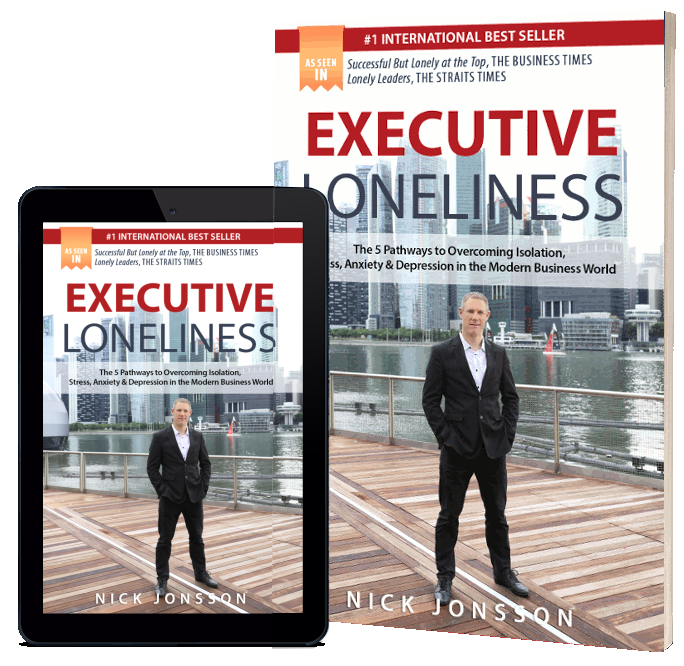
Executive loneliness is a subject particularly close to my heart. When I wrote my bestselling book, Executive Loneliness, I wanted to bring attention to something that many leaders experience but rarely discuss openly.
The more senior your position, the more complicated it can feel to share your concerns. You may hesitate to speak honestly with your team because you are responsible for leading them. You may avoid burdening your partner or family with work pressures. Over time, your social circle may become increasingly connected to your professional identity.
You can be surrounded by people and still feel that nobody really knows you.
I experienced that isolation myself. One of the hardest parts was not simply being alone, but believing I could not tell anyone how much I was struggling. I had spent years developing a reputation for being capable and dependable, and I feared what might happen if people saw a different side of me.
Counselling provides an opportunity to explore that loneliness without having to maintain the image of the confident executive. It allows us to examine what makes connection difficult and how our relationships, identity and expectations may have changed over time.
3. Alcohol and Other Unhealthy Coping Patterns
For some professionals, alcohol becomes a way to switch off after a demanding day. For others, it may be excessive work, compulsive exercise, constant travel, emotional withdrawal or another behaviour that provides temporary relief.
Not every coping habit is an addiction. But it is worth paying attention when something begins to cause harm, affects relationships or feels increasingly difficult to control.
Alcohol played a significant role in my own struggles. For years, I rationalised my drinking because I continued to work and perform. I pointed to my professional responsibilities and achievements as evidence that everything was fine, even as my wellbeing and relationships were deteriorating.
Recovery required me to become honest about what was happening and accept support. It also taught me that changing a behaviour often involves understanding what we have been using that behaviour to manage.
In counselling, we can explore drinking patterns, emotional triggers and underlying difficulties without approaching the conversation through shame or judgement. Where dependence or withdrawal is a concern, medical assessment and specialist addiction support may be necessary. For someone physically dependent on alcohol, stopping suddenly can be dangerous.
The goal is not to judge how someone has coped. It is to understand what is happening and identify a safer, healthier way forward.
For support specifically related to alcohol or other unhealthy habits, you can also explore my Sobriety & Recovery programme.
4. Relationships, Identity and Self-Worth
Many executives invest an enormous amount of energy into building successful careers. But when professional achievement becomes the main measure of personal worth, setbacks can start to feel like personal failure.
A difficult financial quarter may affect your confidence far beyond work. Retirement, redundancy or a major career transition may leave you unsure who you are without your title. And relationships can quietly deteriorate when professional responsibilities consistently receive the best of your time, attention and emotional energy.
I know what it feels like to look back and realise that success has come at a personal cost. Rebuilding important relationships in my own life required humility, patience, accountability and a willingness to change how I showed up for people.
In counselling, questions about relationships and identity often go deeper than work-life balance. They may involve self-worth, shame, attachment, loss, fear of rejection or beliefs we have carried for many years. Understanding those patterns can help us develop a different relationship with ourselves and the people around us.
Why High-Performing Executives Find It Difficult to Ask for Help
One of the biggest barriers to counselling is not always a lack of awareness. Sometimes it is the belief that we should be able to solve everything ourselves.
Successful professionals are often rewarded for independence, decisiveness and resourcefulness. Those are valuable qualities in business, but when applied rigidly to emotional wellbeing, they can become obstacles.
You may recognise thoughts such as:
“I should be able to handle this.”
“Other people have bigger problems.”
“I cannot afford to appear weak.”
“I just need to work harder.”
“I'll deal with it when things calm down.”
I recognise these thoughts because I lived by many of them. I believed that admitting I needed help would undermine the professional identity I had worked so hard to build.
What I eventually learned was that asking for help did not make me less capable. It allowed me to stop pretending, begin understanding what was happening and make changes that I had been avoiding.
You do not need to lose everything before giving yourself permission to seek support. Sometimes the decision to speak with someone comes simply from recognising that your current way of living no longer feels sustainable.
How Counselling Can Help Successful Professionals
Counselling is not another performance review. You do not need to arrive with a plan, clear objectives or polished answers. You can begin by describing what life feels like at the moment, even when you are not entirely sure why something is wrong.
Depending on your circumstances, counselling may involve exploring patterns of anxiety or self-criticism, understanding the relationship between past experiences and present behaviour, examining unhealthy coping habits, or finding new ways to approach boundaries, relationships and emotional wellbeing.
One of the most valuable aspects of the process is having a place where you do not need to be the leader, the provider, the problem-solver or the person who has everything under control.
The purpose of counselling is not to make you perform even harder. It is to give proper attention to your wellbeing as a person, independently of what you achieve.
That work is personal. There is no universal timeline and no guarantee that change will be quick or straightforward. Different people need different forms of support, and sometimes counselling is most helpful alongside medical care, workplace changes or other appropriate services.
Executive Coaching vs Counselling: Which Support Is Right for You?
Executive coaching and counselling can both be valuable, but they are not interchangeable.
Executive coaching generally focuses on leadership development, goals, decision-making, communication, performance and future-oriented professional growth. A leader may seek coaching because they are taking on a larger role, managing organisational change or wanting to become more effective in their leadership.
Counselling and psychotherapy focus more directly on emotional distress, psychological wellbeing, relationships, past experiences and personal difficulties that may be affecting daily life.
For example, someone seeking to improve how they manage difficult boardroom conversations may benefit from executive coaching. Someone experiencing persistent anxiety, problematic drinking, depression or unresolved emotional difficulties may need counselling, psychotherapy or another form of clinical support instead.
Some professionals benefit from both, provided the boundaries between the services remain clear and the approach is appropriate to their needs.
My background in senior leadership and executive coaching helps me understand the context of high-pressure professional roles. My counselling and psychotherapy training informs a different kind of conversation, one that gives greater attention to the person's emotional and psychological wellbeing.
The important thing is finding suitable support, not trying to fit every difficulty into the same programme.
How Online Counselling Can Support Busy Executives
For many senior professionals, regular in-person appointments are difficult to arrange around international travel, demanding schedules and unpredictable responsibilities. Online counselling can provide a practical alternative by allowing suitable clients to speak with a professional from a private location without travelling to an office.
Privacy matters, particularly when a client holds a senior or public-facing position. Professional counselling involves clear confidentiality arrangements, but confidentiality is not absolute. Before sessions begin, clients should understand the approach to privacy, recordkeeping, consent and any relevant legal or safeguarding limits.
Online counselling is not appropriate for every person or situation. Suitability also depends on the client's location, applicable professional requirements and whether specialist or in-person support is needed.
These questions should be addressed during an initial suitability conversation rather than assuming that online sessions are appropriate for everyone.
What Can You Expect From Counselling With Nick Jonsson?
My approach begins with listening. I am not interested in judging someone by their title, income, achievements or mistakes. I want to understand the person behind those things and what they may have been carrying for a long time.
Having worked as a senior executive, I recognise the demands of leadership: responsibility, expectations, confidentiality, travel and the difficulty of switching off. My recovery journey also means I understand how much courage it can take to speak openly when you have spent years appearing strong.
Through my supervised counselling and psychotherapy practice, I aim to offer a compassionate, professional space where we can explore what is troubling you, the patterns that may be keeping you stuck and the kinds of changes or additional support that might help.
That conversation may involve difficult subjects. It may mean examining past experiences, acknowledging shame or grief, or developing a different relationship with achievement, alcohol, anxiety or self-worth.
There is no promise of a quick fix. But there is an opportunity to begin looking at your life more honestly, without needing to have every answer before you start.
You can learn more about my work on the Individual Counselling & Psychotherapy page.
What Successful Professionals Often Ask About Counselling
Can successful executives experience anxiety or depression?
Yes. Professional achievement does not prevent someone from experiencing anxiety, depression or other emotional difficulties. Some people continue meeting demanding work responsibilities while privately experiencing substantial distress. Where symptoms are persistent or significant, appropriate professional assessment is important.
Do I need to be in crisis before seeking counselling?
No. People seek counselling for many reasons, including persistent stress, loneliness, relationship difficulties, emotional exhaustion or simply feeling disconnected from the life they are living. You do not need to wait until everything falls apart.
Can counselling help with executive burnout?
Counselling can help someone explore their experience of chronic work-related stress, personal expectations, emotional patterns and boundaries. It may be part of a broader response that includes changes at work and other appropriate support.
Is counselling confidential for senior executives?
Confidentiality is fundamental to professional counselling, subject to applicable legal, ethical and safety limits. The arrangements for confidentiality, privacy and records should be explained before the work begins.
Can counselling help if I am worried about my drinking?
Counselling may help you examine your relationship with alcohol, emotional triggers and the changes you want to make. Where dependence is suspected, a medical assessment and specialist addiction support may also be needed.
Is online counselling suitable for executives who travel frequently?
It can be, particularly when a suitable client has a private space and reliable access to online sessions. Availability depends on the client's needs, location, professional requirements and whether another form of support would be more appropriate.
You Do Not Have to Wait Until Everything Falls Apart
One of the things I wish I had understood earlier is that professional success does not cancel out the need for emotional support. I spent too long believing that my achievements meant I should be able to handle everything myself, even when my personal life was telling a different story.
Today, I encourage people to ask a question that goes beyond their career:
Am I building a successful professional life at the expense of my wellbeing and relationships?
You may be delivering excellent results and still need support. You may be financially secure and still feel lonely. You may be respected by everyone around you and still struggle with your sense of self-worth.
Those experiences deserve attention, regardless of how successful you appear.
If any part of this article feels familiar, I invite you to get in touch for a confidential introductory conversation. We can explore what you are experiencing and whether counselling or another form of support is appropriate for you.
You do not need to have everything figured out before taking that first step.
Or follow Nick on LinkedIn for weekly insights on coaching, leadership, wellbeing, and performance.
Online counselling is subject to an initial suitability assessment and applicable professional and jurisdictional requirements. It is not an emergency or crisis service.