One Choice Can Change Everything: Nick Jonsson on Living Your Legacy Now

A Motivational Keynote on Human Connection, Relationships, Service and the Small Choices That Shape How We Are Remembered
What if your legacy isn’t something you leave behind?
What if you’re already living it?
I recently explored that question aboard Royal Caribbean’s Quantum of the Seas while sailing across the Pacific from Los Angeles through Hawaii to Tahiti.
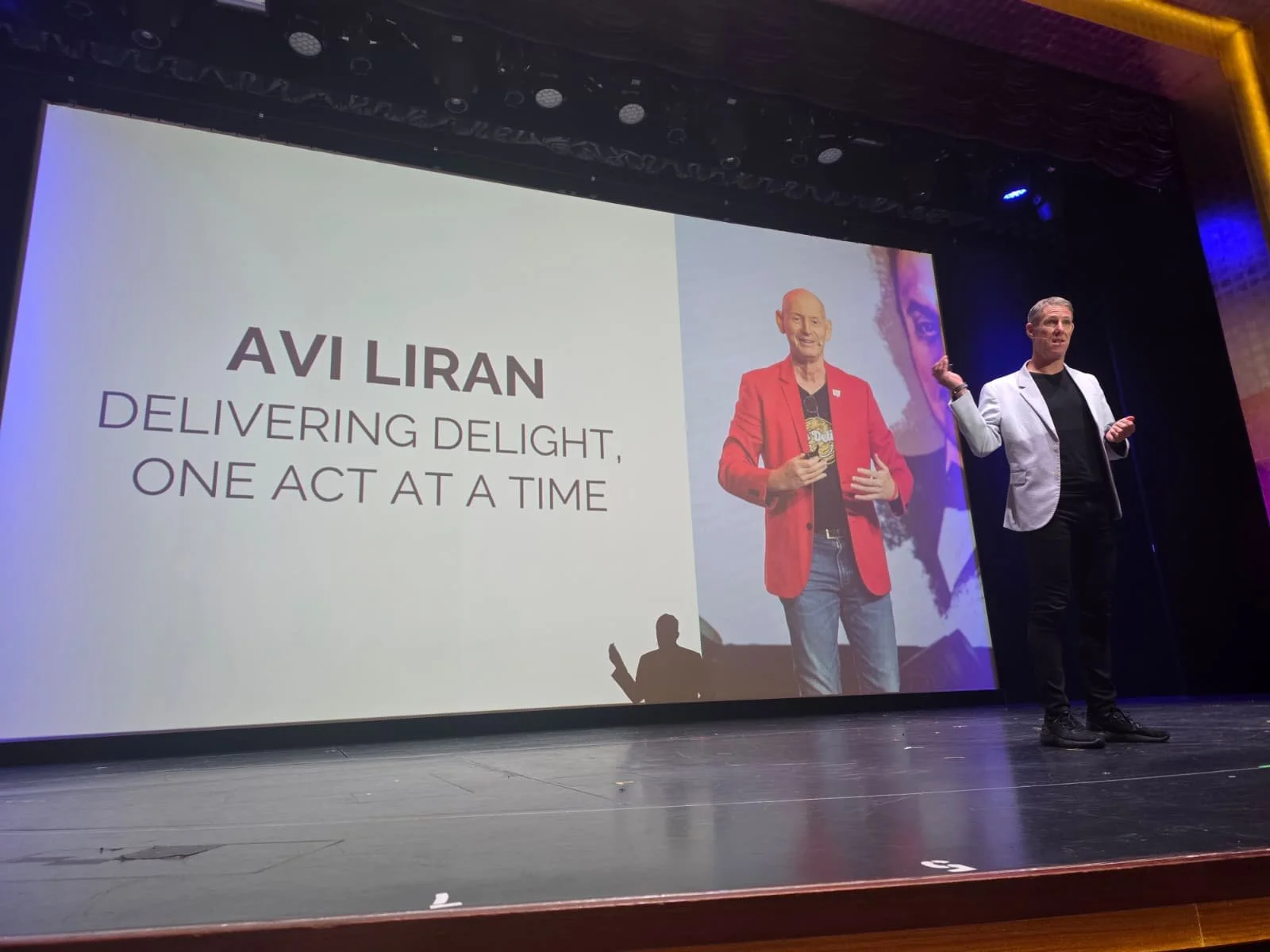
As part of the ship’s enrichment programme, I delivered a talk called One Choice Can Change Everything.
It wasn’t really a talk about death or simply what we leave behind.
It was about life.
About the choices we make today. The conversations we have. The people we notice. The relationships we repair. The moments when we decide to listen rather than fix, to call rather than postpone, and to show up when someone needs us.
Because I’ve come to believe that our legacy isn’t created someday in the future.
We are living it right now.
WE MAKE THOUSANDS OF CHOICES
Every day, we make thousands of choices.
Most don’t feel life-changing.
We decide what to eat, what to wear, whether to answer a message, whether to make that phone call, whether to listen properly when someone speaks to us.
But occasionally, a seemingly insignificant choice becomes something much bigger.
A conversation changes a relationship.
A phone call reaches someone at exactly the right moment.
An apology repairs something that has been broken for years.
A few minutes of attention make another human being feel seen.
That’s what I wanted to explore with the audience aboard Quantum of the Seas.
Not:
What will I leave behind?
But:
What are people receiving from me now?
THE LEGACY WE LEAVE VS. THE LEGACY WE LIVE
We often think about legacy as something that remains after we’re gone.
Our achievements. Our career. Our possessions. Perhaps a business we built, a book we wrote, money we accumulated or something with our name attached to it.
That’s the legacy we leave.
But there’s another kind.
The legacy we live.
It’s what people experience from us while we’re still here.
How did I make you feel?
Did I listen?
Did I notice when you were struggling?
Could you call me when things went wrong?
Did I make you feel safer, more loved, more seen or less alone?
The résumé records our titles, awards and milestones.
The dinner table remembers the stories, moments and feelings.
WHAT IF YOU COULD READ YOUR OWN OBITUARY?
One story I shared during the keynote was that of Alfred Nobel.
Nobel famously had the unusual experience of seeing an obituary published about him while he was still alive after a newspaper confused him with his deceased brother.
Whatever the complexities of the historical account, the story raises an extraordinary question:
What if you could see today how people would remember you?
Would you change anything?
Would you spend your time differently?
Would you repair a relationship?
Would you call somebody?
Would you become more generous with your attention?
Would you keep living exactly the same way?
Those questions matter because every life leaves a mark.
The question is what kind of mark we are creating while we still have the opportunity to influence it.
WE REMEMBER THE PERSON WHO NOTICED
One of the lessons life keeps teaching me is remarkably simple:
We remember the person who noticed.
We remember the colleague who realised something wasn’t right.
The friend who called.
The person who sat with us when life became uncomfortable.
The leader who saw the human being behind the performance.
And sometimes we don’t discover until much later how much those moments mattered.
I shared the story of my late friend Stuart Remphrey.
After Stuart died, his wife told me:
“Your discussions with him were greatly appreciated.”
That stayed with me.
Sometimes you have no idea what a conversation means to another person.
Sometimes you never find out.
And sometimes, much later, somebody tells you.
WHO NEEDS YOU TO SHOW UP?
There is another question I’ve learned to ask:
Who needs you to show up, especially when life becomes difficult?
We often avoid people when we don’t know what to say.
Someone loses their job.
A marriage ends.
Someone becomes ill.
Someone is struggling with addiction, loneliness or their mental health.
We’re frightened of saying the wrong thing, so sometimes we say nothing.
But I’ve learned that the conversation we avoid may be the one that matters most.
You don’t necessarily have to solve anything.
You don’t need the perfect words.
Sometimes:
“I’m thinking about you.”
“How are you really doing?”
“Do you want to talk?”
…is enough.
WHAT MY SON TAUGHT ME ABOUT SHOWING UP
Some of the most important lessons I’ve learned about legacy haven’t come from books, research or leadership.
They’ve come from being a father.
There are years of my life I cannot rewrite.
There were times when ambition, work and my own struggles affected how I showed up for the people closest to me.
I cannot change those years.
But I can decide how I show up today.
When my son Percy needed me, I realised something incredibly simple:
He didn’t need a lecture.
He needed his dad.
That experience reinforced four lessons for me:
Listen.
Ask.
Don’t rush to fix.
Be there.
Sometimes that’s the whole job.
LOVE IS USUALLY ORDINARY
We often imagine love through its big moments.
Weddings. Anniversaries. Holidays. Celebrations. Photographs.
But I’ve learned something different.
Love is usually ordinary.
It lives in the small moments.
It lives between the photographs.
It’s making time.
It’s paying attention.
It’s putting the phone away.
It’s asking how somebody is and staying long enough to hear the real answer.
It’s showing up repeatedly, particularly when nobody is watching.
Those ordinary moments eventually become something extraordinary:
A relationship.
WHAT THE WORLD’S LONGEST STUDY OF ADULT LIFE TEACHES US
During the talk, I also referenced the Harvard Study of Adult Development and the work described by Robert Waldinger and Marc Schulz in The Good Life.
Its message connects powerfully with what I have experienced personally:
Strong relationships help us live happier, healthier lives.
Success matters.
Meaningful work matters.
Purpose matters.
But our relationships matter enormously.
And relationships aren’t maintained by one enormous gesture every ten years.
They’re built through deposits.
One conversation.
One meal.
One message.
One apology.
One hour together.
One choice.
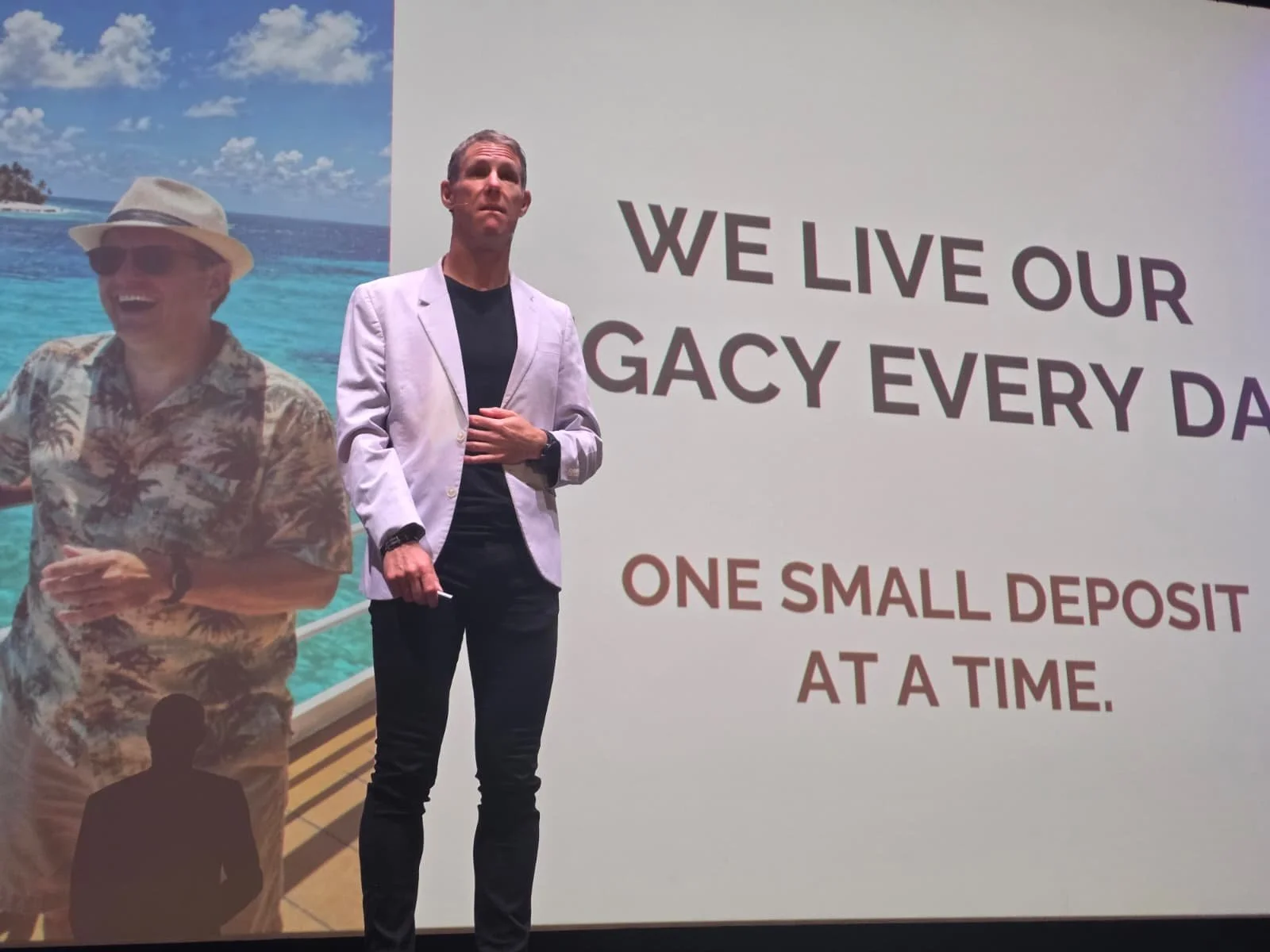
One small deposit at a time.
LIVING YOUR LEGACY THROUGH SERVICE
Legacy also extends beyond our immediate family and friends.
It asks:
How can I use what I have to be of service?
During the presentation, I shared the example of the JBJ Soul Kitchen, created by Jon Bon Jovi and his wife Dorothea.
The concept demonstrates a different way of supporting a community. People who can contribute financially do so, while others can contribute through volunteering. The model is designed around dignity rather than simply giving something away.
It raises a powerful question:
What can I do for my community?
That doesn’t require being a rock star.
It doesn’t require millions of dollars.
It starts with looking at what we already have.
Our experience.
Our network.
Our time.
Our attention.
Our skills.
Perhaps our financial resources.
Then asking:
How could I use some of this to help somebody else?
WHY I CREATED THE LIMITLESS MEN’S COMMUNITY
For me, one answer has been the Limitless Men’s Community.
Many of the men who come into my world have been senior executives, entrepreneurs, founders and high achievers.
But titles don’t protect us from life.
Men go through divorce.
They lose jobs.
They struggle with relationships.
Some experience addiction.
Some become isolated.
Some simply need somewhere they can say:
“I’m not doing very well.”
Our community includes spaces for general sharing, gratitude and accountability.
I read what people share.
And sometimes I see somebody going through a difficult period and think:
Do I have five minutes to call him today?
That’s it.
Not fixing his life.
Just five minutes.
“How are you doing?”
That’s one way I try to live my own legacy.
SERVICE ABOVE SELFIE
One of the men in our community has been a Rotarian for more than three decades.
Rotary has the famous principle:
Service Above Self.
He jokingly calls his version:
Service Above Selfie.
After surviving a near-death experience, he was encouraged to practise acts of kindness.
He kept doing them.
And I’ve sometimes been on the receiving end.
An introduction.
A connection.
A thoughtful gesture.
He doesn’t necessarily announce:
“That was my act of kindness today.”
But sometimes, as I joked during the talk, I can smell it.
That’s another reminder that living our legacy doesn’t require something monumental.
It requires action.
PEOPLE OUTLAST TITLES
Another member of our community shared something during my Royal Caribbean presentation that beautifully captured this idea.
For much of his life, he had measured success through mission, titles and accomplishments.
When those titles disappeared, he initially felt that he’d lost something important.
Instead, he began discovering the power of presence.
Being available.
Building trust.
Helping the people around us know they don’t have to face life alone.
That’s something I see repeatedly in my work with executives and leaders.
Titles pass.
Relationships continue.
People outlast titles.
MAKING AMENDS IS ALSO PART OF LEGACY
Living our legacy isn’t only about doing more good things.
Sometimes it means going backwards.
Owning what we did.
Taking responsibility.
Apologising.
Making amends where possible.
I’ve experienced this personally.
Today, my relationship with my former wife is better than it was when we were married.
During a recent visit to Sweden, my former wife’s parents invited me to their home.
We sat together.
We had coffee and cake.
That may sound like a very small thing.
To me, it wasn’t.
It represented years of owning mistakes, healing relationships and choosing not to allow a painful chapter to determine the rest of the story.
That, too, is living a legacy.
FOUR CHOICES WE CAN MAKE TODAY
Toward the end of the talk, I brought everything back to four choices.
GRATITUDE
Notice what is already good.
Tell people you appreciate them while they’re still here to hear it.
LISTENING
Listen without immediately preparing your answer.
Listen to understand rather than fix.
PRESENCE
Put down the phone.
Look at the person.
Be where you are.
SERVICE
Ask:
Who could I help today?
Not someday.
Today.
These aren’t enormous interventions.
They’re small acts, done often.
A DEPOSIT MAY TAKE LESS THAN A MINUTE
Sometimes we make connection too complicated.
We think we need to solve somebody’s problem.
We don’t.
As I said during the presentation:
“Just saying hi, just checking in. Those are small things. It can take less than a minute.”
Perhaps somebody has already come into your mind while reading this.
Someone you’ve been meaning to contact.
Someone having a difficult time.
Someone you love but haven’t told recently.
Someone with whom something remains unresolved.
You don’t necessarily need to fix anything.
Send the message.
Make the call.
Ask the question.
Listen.
Show up.
HOW DO PEOPLE FEEL AFTER BEING WITH YOU?
This was one of the final questions I left with the audience aboard Quantum of the Seas:
How do people feel after being with you?
Do they feel:
Safer?
Seen?
More loved?
Less alone?
Those questions may ultimately tell us more about the legacy we’re living than any title on our résumé.
ONE CHOICE CAN CHANGE EVERYTHING
We don’t have to wait until the end of our lives to think about legacy.
We don’t need another achievement first.
We don’t need to become wealthy enough, successful enough or important enough.
We can choose to live our legacy now.
One conversation.
One apology.
One act of service.
One moment of presence.
One person who needs us.
One choice.
We live our legacy every day, one small deposit at a time.
ONE CHOICE CAN CHANGE EVERYTHING – MOTIVATIONAL & ENRICHMENT KEYNOTE
One Choice Can Change Everything is a motivational and inspirational keynote by Nick Jonsson exploring legacy, human connection, relationships, service, vulnerability and the everyday choices that shape the impact we have on others.
The talk was delivered as part of the Royal Caribbean enrichment programme aboard Quantum of the Seas during a Pacific crossing from Los Angeles through Hawaii to Tahiti.
Drawing on personal experiences as a father, husband, former senior executive, coach, counsellor and psychotherapist, together with stories of recovery, relationships, leadership and community, Nick challenges audiences to reconsider a traditional idea of legacy:
Legacy isn’t only what we leave behind.
It’s what people experience from us while we’re here.
KEY THEMES
Living your legacy rather than simply leaving one
Human connection and meaningful relationships
Leadership, presence and listening
Purpose and service
Vulnerability and asking for help
Family and repairing relationships
Executive loneliness and isolation
Gratitude and everyday wellbeing
Making amends and starting again
The power of small choices and consistent action
ABOUT NICK JONSSON
Nick Jonsson is an international keynote speaker, executive coach, author, psychotherapist and counsellor whose work focuses on leadership, human connection, resilience, wellbeing and the often-hidden challenges that accompany professional success.
He is the author of the international bestselling book Executive Loneliness and has spoken to audiences internationally about executive loneliness, psychological safety, resilience, connection, purpose and holistic leadership.
His work combines professional experience with lived experience and a deeply personal understanding of recovery, relationships, leadership and starting again.
Through his speaking, coaching and counselling work, Nick encourages people to move beyond achievement alone and build lives characterised by stronger relationships, greater connection, meaningful contribution and sustainable wellbeing.
SPEAKING & EVENT ENQUIRIES
One Choice Can Change Everything can be adapted for:
Corporate conferences
Leadership conferences
Executive retreats
Company offsites
Leadership development programmes
Wellbeing events
Associations and professional groups
Cruise ship enrichment programmes
Cruise line guest speaker programmes
International conferences
Community and membership organisations
For keynote speaking, motivational speaking, enrichment programmes, leadership events and other speaking enquiries, contact Nick Jonsson through the website.
FAQ SECTION
What is One Choice Can Change Everything about?
One Choice Can Change Everything is a motivational keynote by Nick Jonsson about living your legacy now rather than thinking of legacy only as something left behind after death. The talk explores human connection, relationships, presence, service, gratitude and the small everyday choices that influence how other people experience us.
Who is the keynote suitable for?
The talk is suitable for corporate conferences, leadership events, executive retreats, company offsites, associations, wellbeing programmes, community organisations and cruise ship enrichment programmes.
Does Nick Jonsson speak on cruise ships?
Yes. Nick Jonsson has delivered enrichment talks aboard Royal Caribbean, including One Choice Can Change Everything aboard Quantum of the Seas during a Pacific crossing from Los Angeles through Hawaii to Tahiti.
What are the key takeaways from One Choice Can Change Everything?
Audience members are encouraged to reconsider what legacy means and focus on four choices they can make today: gratitude, listening, presence and service. The keynote also explores relationships, making amends, showing up for others and the cumulative impact of small acts performed consistently.
Does the keynote cover leadership as well as personal life?
Yes. The talk connects personal relationships with leadership, presence, human connection and service. It challenges leaders to consider not only what they achieve but how people feel after interacting with them.
Can Nick Jonsson deliver this talk for corporate audiences?
Yes. One Choice Can Change Everything can be adapted for corporate conferences, leadership teams, executive retreats, company offsites, wellbeing programmes and other organisational audiences.
Can the keynote be adapted for cruise and enrichment audiences?
Yes. The talk combines personal storytelling, reflection, research and practical takeaways, making it suitable for cruise enrichment programmes and other audiences interested in purpose, relationships, wellbeing and meaningful living.
Or follow Nick on LinkedIn for weekly insights on coaching, leadership, wellbeing, and performance.